
Genus · Colubridae
Cercophis
The genus Cercophis contains a single species. It is not considered dangerous to humans.
About golden snakes
A little-known South American colubrid known from a single slender, arboreal species.
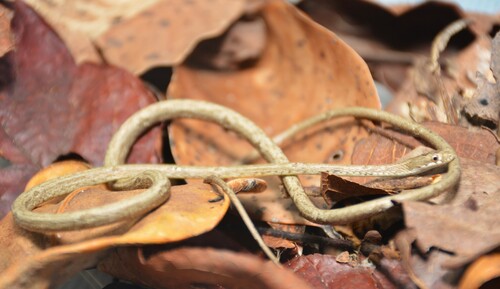
Cercophis is a small genus in the family Colubridae, the largest and most diverse snake family on Earth. It is best known from Schlegel's Golden Snake (Cercophis auratus), a slender South American species. Genera like this one sit on the vast non-front-fanged side of the colubrid radiation, a sprawling group that includes most of the world's harmless and mildly venomous snakes. Because the genus contains very few species, it is poorly documented compared to its larger colubrid relatives, and much of what can be said reliably comes from the patterns shared across the family rather than from detailed study of the genus itself.
Members are South American snakes associated with the warm, humid forests and forest edges typical of the continent's lowland tropics. Like many slim-bodied colubrids, they are built for moving through vegetation and leaf litter rather than for burrowing or open ground. In general terms, a snake of this type is recognized by a long, thin body, a tapering tail, and the smooth scaling common to many tree-dwelling and semi-arboreal colubrids. Precise field identification is best confirmed against regional guides for a given country, since several unrelated South American colubrids share a similar slender build.
On safety, Cercophis belongs to the broad colubrid assemblage that poses no meaningful danger to people, and it is not a front-fanged venomous snake like a viper or an elapid. Many colubrids are completely harmless, while some carry mild rear-fanged secretions used to subdue small prey; the specifics for this obscure genus are not well established, so it should be treated with ordinary caution rather than handled. As with the wider family, the expected diet is small live prey such as frogs, lizards, and similar animals, and reproduction is most likely egg-laying as in the majority of colubrids. If anyone is ever bitten by a wild snake they cannot confidently identify, do not attempt to treat it yourself; contact emergency services or US Poison Control at 1-800-222-1222.
Cercophis belongs to the Colubridae family (Colubrids). The largest snake family, and the one most snakes you meet belong to. Typically round pupils, a head only slightly wider than the neck, and no heat-sensing facial pit or rattle. Scales may be smooth and glossy or keeled and matte depending on the species.
Danger: Almost all colubrids are harmless. A small number are rear-fanged with medically significant venom, the boomslang and the twig (vine) snakes of Africa being the dangerous exceptions. Most colubrids will flee or bluff rather than bite.
All species (1)
Keep learning
- What Is a Snake? Anatomy and the BasicsA clear overview of what makes a snake a snake: limbless body plan, anatomy, evolution from lizards, species diversity, and why they are ectothermic.
- How Snakes Move, Hunt, and EatHow snakes move without legs, hunt as ambushers or active foragers, kill by constriction or venom, and swallow prey wider than their head.
- What Do Snakes Eat?All snakes are carnivores. Learn what snakes eat, how diet changes with size and age, how often they feed, and how they hunt and swallow prey.
- Venomous vs Nonvenomous: How to Tell the DifferenceThe folk rules for telling venomous snakes apart, where each one fails, and why location-based identification beats guessing by sight.