
Genus · Colubridae
Types of scarletsnakes
2 species make up the genus Cemophora, the snakes commonly called scarletsnakes. None are considered dangerous to humans.
About scarletsnakes
Small, secretive burrowers in red, black, and white bands that mimic the venomous coral snake but are completely harmless.
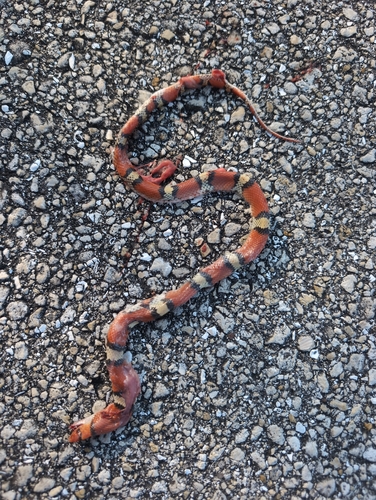
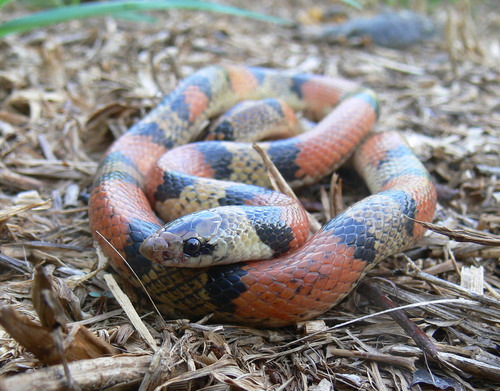
Cemophora is a small genus of nonvenomous snakes in the family Colubridae, the largest snake family, native to the southeastern and south-central United States. The genus is best known for the Scarletsnake (Cemophora coccinea) and the Texas Scarletsnake (Cemophora lineri), both modest in size and rarely seen because they spend most of their lives underground. They favor sandy or loose soils in pine flatwoods, oak scrub, and other well-drained habitats where they can burrow easily and hunt out of sight.
These snakes are easy to misidentify because their red, black, and yellow or white banding resembles the venomous Eastern Coral Snake that shares part of their range. The reliable difference is the band order: on Cemophora the red bands touch black, while on a coral snake red touches yellow. Scarletsnakes also have a pointed reddish snout, a pale belly that lacks the full-body banding seen in coral snakes, and a more rounded body. The old rhyme about red touching black versus red touching yellow applies only to these North American species and should never be trusted elsewhere.
Cemophora snakes are harmless to people. They are not venomous and have no medically significant bite, relying instead on burrowing and a specialized diet, including a fondness for the eggs of other reptiles, which they slit open and consume. They are nocturnal and secretive, lay eggs, and pose no danger to humans. Even so, the resemblance to coral snakes means any red, black, and yellow banded snake you cannot positively identify should be left alone. If a venomous snakebite is ever suspected, do not attempt first aid beyond keeping the person calm and still, and contact emergency services or US Poison Control at 1-800-222-1222 immediately.
Cemophora belongs to the Colubridae family (Colubrids). The largest snake family, and the one most snakes you meet belong to. Typically round pupils, a head only slightly wider than the neck, and no heat-sensing facial pit or rattle. Scales may be smooth and glossy or keeled and matte depending on the species.
Danger: Almost all colubrids are harmless. A small number are rear-fanged with medically significant venom, the boomslang and the twig (vine) snakes of Africa being the dangerous exceptions. Most colubrids will flee or bluff rather than bite.
All species (2)
Keep learning
- What Is a Snake? Anatomy and the BasicsA clear overview of what makes a snake a snake: limbless body plan, anatomy, evolution from lizards, species diversity, and why they are ectothermic.
- How Snakes Move, Hunt, and EatHow snakes move without legs, hunt as ambushers or active foragers, kill by constriction or venom, and swallow prey wider than their head.
- What Do Snakes Eat?All snakes are carnivores. Learn what snakes eat, how diet changes with size and age, how often they feed, and how they hunt and swallow prey.
- Venomous vs Nonvenomous: How to Tell the DifferenceThe folk rules for telling venomous snakes apart, where each one fails, and why location-based identification beats guessing by sight.