
Genus · Colubridae
Calamodontophis
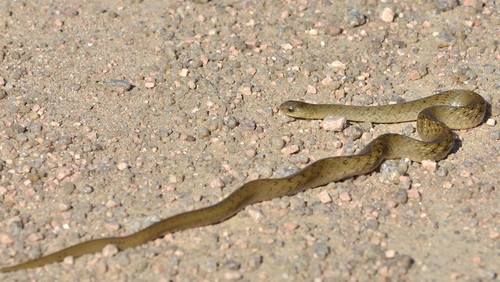
The genus Calamodontophis contains a single species. It is not considered dangerous to humans.
About tropical forest snakes
A rare, little-known South American colubrid genus of small, secretive ground-dwelling snakes.
Calamodontophis is a small genus in the family Colubridae, the largest and most diverse snake family in the world. The genus is poorly known and represented in our database by a single species, the Tropical Forest Snake. It belongs to the broad assemblage of New World colubrids native to South America, where the family fills most of the ecological roles that small, ground-living snakes occupy across the continent. Because the genus is so seldom encountered and so little studied, much of what can be said about it comes from solid family-level and regional patterns rather than from detailed species accounts.
Members are small, slender, terrestrial snakes associated with moist subtropical and tropical settings, including grassland, forest edge, and damp ground litter where cover and humidity stay high. In general terms, snakes of this kind are recognized by a modest body size, smooth or weakly keeled scales, and a plain or subtly patterned dorsum that blends with soil and leaf litter. They are easy to overlook and rarely seen, which is part of why the genus remains so thinly documented. Identification to the genus level is a job for herpetologists working from scale counts and locality, not something done at a glance in the field.
Like the great majority of colubrids, these snakes are not considered dangerous to people. They are small, non-confrontational, and pose no meaningful threat. Many colubrids are rear-fanged, meaning any mild saliva-borne secretions are delivered by enlarged teeth at the back of the jaw and matter only to small prey, but the specific dentition and ecology of this obscure genus are not well established, so claims about diet, reproduction, and behavior are best kept general. As a rule, wild snakes should be observed and left alone rather than handled. If anyone is bitten by a snake they cannot confidently identify and symptoms develop, contact emergency services or US Poison Control at 1-800-222-1222.
Calamodontophis belongs to the Colubridae family (Colubrids). The largest snake family, and the one most snakes you meet belong to. Typically round pupils, a head only slightly wider than the neck, and no heat-sensing facial pit or rattle. Scales may be smooth and glossy or keeled and matte depending on the species.
Danger: Almost all colubrids are harmless. A small number are rear-fanged with medically significant venom, the boomslang and the twig (vine) snakes of Africa being the dangerous exceptions. Most colubrids will flee or bluff rather than bite.
All species (1)
Keep learning
- What Is a Snake? Anatomy and the BasicsA clear overview of what makes a snake a snake: limbless body plan, anatomy, evolution from lizards, species diversity, and why they are ectothermic.
- How Snakes Move, Hunt, and EatHow snakes move without legs, hunt as ambushers or active foragers, kill by constriction or venom, and swallow prey wider than their head.
- What Do Snakes Eat?All snakes are carnivores. Learn what snakes eat, how diet changes with size and age, how often they feed, and how they hunt and swallow prey.
- Venomous vs Nonvenomous: How to Tell the DifferenceThe folk rules for telling venomous snakes apart, where each one fails, and why location-based identification beats guessing by sight.