
Genus · Elapidae
Types of shovel-nosed snakes
8 species make up the genus Brachyurophis, the snakes commonly called shovel-nosed snakes. All of them are venomous.
About shovel-nosed snakes
Small, burrowing Australian elapids with a flattened shovel-like snout built for digging up reptile eggs.
Brachyurophis is a genus of small, fossorial snakes in the family Elapidae, the same family that includes cobras, taipans, and sea snakes. Like all elapids, its members are front-fanged and venomous, but Brachyurophis snakes are tiny, secretive burrowers rather than the large, conspicuous species the family is known for. They are found only in Australia, where they are commonly called shovel-nosed snakes for the distinctive shape of the head.
The feature that names and defines the genus is the snout. The front of the head is flattened and projecting, with a sharp, wedge-like edge to the rostral scale. This shovel-shaped snout is an adaptation for burrowing through loose soil and sand and for excavating the buried eggs of other reptiles. The body is slender and rarely long, with most species measuring under about 40 centimeters, and the animals spend most of their lives underground or hidden beneath surface cover.
Shovel-nosed snakes are widespread across much of mainland Australia, favoring dry and semi-arid habitats: sandy soils, woodlands, shrublands, and spinifex country. Because they are fossorial and largely nocturnal, they are seldom seen above ground. In general terms they are recognized by their small size, the projecting shovel-like snout, smooth scales, and often a banded or blotched pattern with a dark mark across the head or neck. Several species share a similar look, so reliable identification usually comes down to scale counts and locality rather than color alone.
Ecologically these snakes are specialists. Their diet centers heavily on the eggs of other reptiles, especially small lizards, which they dig out of the soil, and they also take small lizards themselves. Like most Australian elapids they are egg-laying. Their behavior is shy and inoffensive; rather than fight, a disturbed shovel-nosed snake typically tries to escape back underground. They are not aggressive toward people and are very rarely encountered in a way that leads to bites.
On safety: Brachyurophis snakes are venomous front-fanged elapids, so they should be treated as venomous and never deliberately handled. That said, they are small, have a mild venom, and are not considered dangerous to humans, with no record of causing serious envenomation. Even a low-risk venomous snake can still bite, so the right response to any bite from a wild snake is to stay calm, keep the limb still, and seek emergency care without delay. In the United States contact Poison Control at 1-800-222-1222 or call local emergency services; in Australia call 000. Do not attempt to capture or handle a wild snake to identify it.
Brachyurophis belongs to the Elapidae family (Cobras, mambas, coral & sea snakes). Front-fanged venomous snakes, many with potent neurotoxic venom. Usually slender with a head barely wider than the neck and fixed front fangs (not the folding fangs of vipers). Coral snakes are boldly ringed; sea snakes have a flattened, paddle-like tail.
Danger: All elapids are venomous and the family is responsible for a large share of fatal snakebites worldwide. Many are shy, but bites can be life-threatening. Treat any bite as a medical emergency.
All species (8)
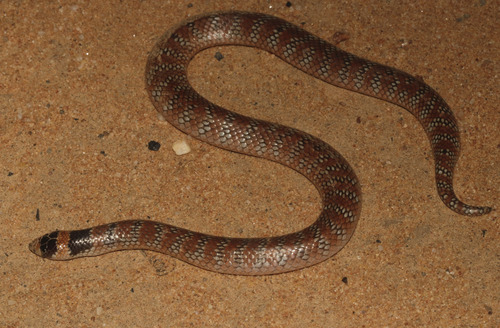 Eastern Shovel-nosed SnakeBrachyurophis australisVenomous
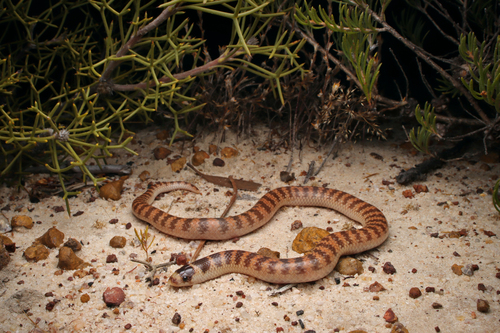 Southern Shovel-nosed SnakeBrachyurophis semifasciatusVenomous
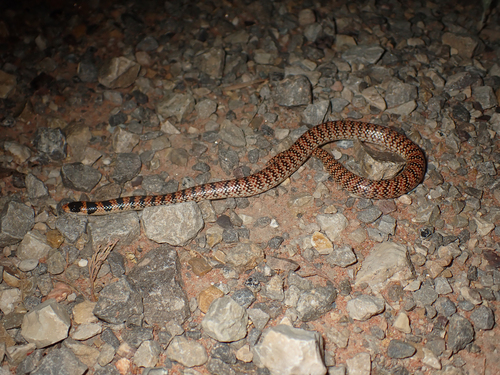 Narrow-banded Shovel-nosed SnakeBrachyurophis fasciolatusVenomous
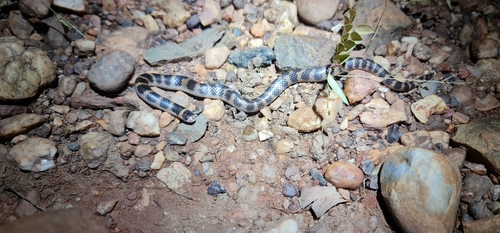 Northern Shovel-nosed SnakeBrachyurophis roperiVenomous
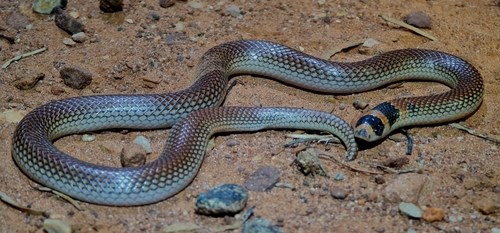 Unbanded Shovel-nosed SnakeBrachyurophis incinctusVenomous
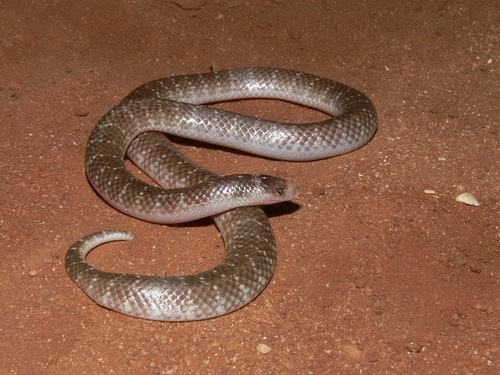 North-western Shovel-nosed SnakeBrachyurophis approximansVenomous
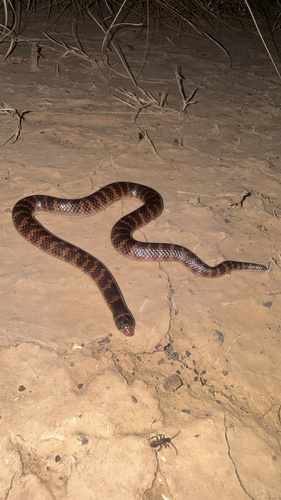 Cape York Shovel-nosed SnakeBrachyurophis campbelliVenomous
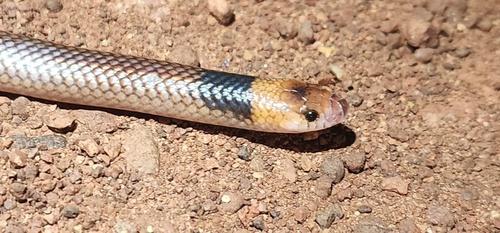 Arnhem Shovel-nosed SnakeBrachyurophis morrisiVenomous
Keep learning
- Venomous vs Nonvenomous: How to Tell the DifferenceThe folk rules for telling venomous snakes apart, where each one fails, and why location-based identification beats guessing by sight.
- Are Snakes Dangerous? The Real Risk, in PerspectiveMost snakes are harmless and avoid people. Here is the honest picture of snakebite risk worldwide and how to lower your own.
- Snake Venom Explained: How It Works and WhyWhat snake venom actually is, why it evolved, the main venom types, fang delivery, how antivenom works, and why ranking the most venomous snake is hard.
- How Snakes Move, Hunt, and EatHow snakes move without legs, hunt as ambushers or active foragers, kill by constriction or venom, and swallow prey wider than their head.