
Genus · Colubridae
Boiruna
2 species make up the genus Boiruna. None are considered dangerous to humans.
About false mussuranas
South American snake eaters that mimic the true mussurana and kill by constriction.
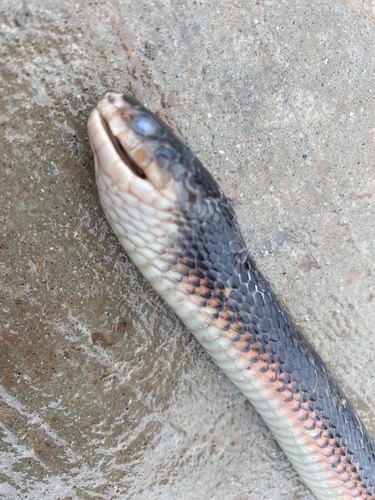
Boiruna is a small genus of New World snakes, with two species recognized in our database, including the False Mussurana (Boiruna maculata). These are large, robust, ground-dwelling snakes of South America, traditionally placed in the broad assemblage that older references call Colubridae. They belong to the pseudoboine group, the same lineage as the true mussuranas of the genus Clelia, which is why the common name carries the word mussurana. Adults are typically dark, often glossy black or steel-gray in mature animals, while juveniles can show a strikingly different banded or blotched pattern that fades with age.
These snakes occupy a range across southern and central South America, including parts of Argentina, Brazil, Bolivia, Paraguay, and Uruguay. They favor open and semi-open habitats such as savanna, grassland, scrub, and the edges of forest and farmland, and they spend much of their time on or near the ground. Like their mussurana relatives, they are best known as predators of other snakes, a habit called ophiophagy, and they subdue prey by constriction. Their broader diet can include lizards and small mammals, and they are egg-laying snakes.
Members of the pseudoboine group are rear-fanged, meaning they have enlarged grooved teeth toward the back of the upper jaw and a mild venom delivery suited to subduing prey rather than threatening people. They are not considered dangerous to humans and are generally regarded as harmless in normal encounters, though any wild snake can bite if handled. Because precise venom details for obscure species are not well documented, the safe practice is to leave wild snakes alone, never attempt to handle one, and treat any bite that causes a concerning reaction as a medical matter. In the United States contact Poison Control at 1-800-222-1222 or call local emergency services; elsewhere use your local emergency number.
Boiruna belongs to the Colubridae family (Colubrids). The largest snake family, and the one most snakes you meet belong to. Typically round pupils, a head only slightly wider than the neck, and no heat-sensing facial pit or rattle. Scales may be smooth and glossy or keeled and matte depending on the species.
Danger: Almost all colubrids are harmless. A small number are rear-fanged with medically significant venom, the boomslang and the twig (vine) snakes of Africa being the dangerous exceptions. Most colubrids will flee or bluff rather than bite.
All species (2)
Keep learning
- What Is a Snake? Anatomy and the BasicsA clear overview of what makes a snake a snake: limbless body plan, anatomy, evolution from lizards, species diversity, and why they are ectothermic.
- How Snakes Move, Hunt, and EatHow snakes move without legs, hunt as ambushers or active foragers, kill by constriction or venom, and swallow prey wider than their head.
- What Do Snakes Eat?All snakes are carnivores. Learn what snakes eat, how diet changes with size and age, how often they feed, and how they hunt and swallow prey.
- Venomous vs Nonvenomous: How to Tell the DifferenceThe folk rules for telling venomous snakes apart, where each one fails, and why location-based identification beats guessing by sight.