
Genus · Homalopsidae
Bitia
The genus Bitia contains a single species. It is not considered dangerous to humans.
About keel-bellied water snake
Bitia is a tiny genus of mud-dwelling Asian water snake built for hunting in tidal estuaries.
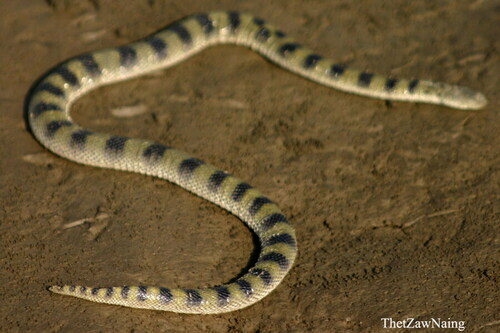
Bitia is a genus in the family Homalopsidae, the Indo-Australian mud snakes and water snakes. It is represented in our database by a single species, the Keel-bellied Water Snake (Bitia hydroides). Homalopsids are a group of mostly aquatic, rear-fanged snakes adapted to soft-bottomed wetlands, mangroves, rivers, and tidal flats across South and Southeast Asia and into northern Australia, and Bitia sits firmly in the coastal, brackish-water end of that family. Its members are found around the coasts of the Malay Peninsula, Thailand, and nearby parts of Southeast Asia, where it lives in muddy estuaries, mangrove channels, and shallow tidal waters rather than on dry land.
Recognizing this group means thinking about an animal shaped by life in the water. Like other homalopsids it has eyes and nostrils set high on the head so it can lurk at the surface, and its nostrils can close with valves to keep mud and water out. The common name points to its most distinctive trait, a strongly keeled belly that helps it move through and brace against soft mud and water. It is a small to moderate snake with smooth, somewhat slick scales and a body suited to a slow, ambush style of life in murky shallows rather than fast overland travel.
Bitia is rear-fanged and mildly venomous, using enlarged grooved teeth at the back of the jaw and a weak venom to subdue small aquatic prey, primarily fish and likely small fish such as gobies in its estuarine habitat. Like most homalopsids it is not considered dangerous to people and tends to be secretive and non-aggressive, and many members of the family give birth to live young rather than laying eggs. Even so, no wild snake should be handled. Rear-fanged species can still cause local reactions through a sustained bite, so observe it in place and leave it alone. If a bite occurs, do not attempt home treatment; seek emergency care right away through local emergency services or, in the United States, Poison Control at 1-800-222-1222.
Bitia belongs to the Homalopsidae family (Mud & water snakes). Aquatic, mud-dwelling snakes with upward-facing eyes and nostrils. Stout, often drab snakes with upturned nostrils, found in or near muddy water.
Danger: Rear-fanged with mild venom; not considered dangerous to humans.
All species (1)
Keep learning
- What Is a Snake? Anatomy and the BasicsA clear overview of what makes a snake a snake: limbless body plan, anatomy, evolution from lizards, species diversity, and why they are ectothermic.
- How Snakes Move, Hunt, and EatHow snakes move without legs, hunt as ambushers or active foragers, kill by constriction or venom, and swallow prey wider than their head.
- What Do Snakes Eat?All snakes are carnivores. Learn what snakes eat, how diet changes with size and age, how often they feed, and how they hunt and swallow prey.
- Venomous vs Nonvenomous: How to Tell the DifferenceThe folk rules for telling venomous snakes apart, where each one fails, and why location-based identification beats guessing by sight.