
Genus · Colubridae
Baliodryas
The genus Baliodryas contains a single species. It is not considered dangerous to humans.
About Steinbach's snake
A rare, little-known colubrid from the highlands of Bolivia, set apart by enough distinct features to earn its own genus.
Baliodryas is a genus in the family Colubridae, the largest and most varied snake family in the world. Our database lists a single species, Steinbach's Snake, which makes Baliodryas a monotypic genus: the genus and the species are effectively the same animal. It was placed in its own genus because its combination of scale, skull, and body traits did not fit neatly with the related New World colubrids it was once grouped near. Colubridae as a whole contains the majority of harmless, typical snakes people encounter, and Baliodryas sits within that broad, ground-level part of the snake tree rather than among the cobras, vipers, or other front-fanged groups.
This genus is South American, known from Bolivia and associated with the country's montane and Andean-foothill landscapes rather than lowland jungle. As a colubrid of that region it would be expected to live a fairly typical terrestrial life, moving through ground cover, grass, and forest edges. Because the genus is rare and seldom studied, much of what can be said about its exact habits comes from its family and its region rather than from a long record of field observation. When a taxon is this obscure, the honest approach is to lean on solid colubrid and Bolivian-highland context instead of inventing specifics.
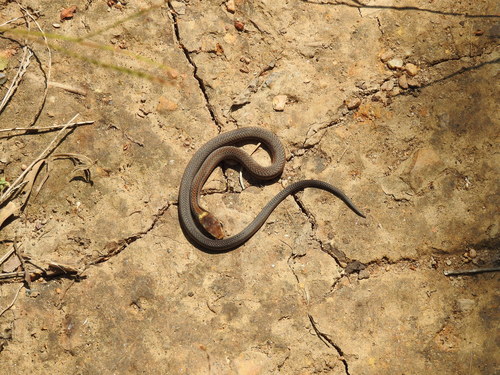
In general terms, members of Baliodryas look like the slender, smooth-scaled, alert-eyed snakes that define most of Colubridae, with a head only modestly distinct from the neck and round pupils. Like the great majority of colubrids, this is not a dangerously venomous snake and poses no meaningful threat to people. Many colubrids are completely harmless, while some carry mild rear-fanged secretions used only on small prey; either way, the right posture toward any wild snake is to observe it and leave it alone, never to handle it. If anyone is bitten by a snake they cannot confidently identify, treat it as a medical matter and contact emergency services or, in the US, Poison Control at 1-800-222-1222 rather than attempting field first aid.
Baliodryas belongs to the Colubridae family (Colubrids). The largest snake family, and the one most snakes you meet belong to. Typically round pupils, a head only slightly wider than the neck, and no heat-sensing facial pit or rattle. Scales may be smooth and glossy or keeled and matte depending on the species.
Danger: Almost all colubrids are harmless. A small number are rear-fanged with medically significant venom, the boomslang and the twig (vine) snakes of Africa being the dangerous exceptions. Most colubrids will flee or bluff rather than bite.
All species (1)
Keep learning
- What Is a Snake? Anatomy and the BasicsA clear overview of what makes a snake a snake: limbless body plan, anatomy, evolution from lizards, species diversity, and why they are ectothermic.
- How Snakes Move, Hunt, and EatHow snakes move without legs, hunt as ambushers or active foragers, kill by constriction or venom, and swallow prey wider than their head.
- What Do Snakes Eat?All snakes are carnivores. Learn what snakes eat, how diet changes with size and age, how often they feed, and how they hunt and swallow prey.
- Venomous vs Nonvenomous: How to Tell the DifferenceThe folk rules for telling venomous snakes apart, where each one fails, and why location-based identification beats guessing by sight.