
Genus · Viperidae
Atropoides
The genus Atropoides contains a single species. It is venomous.
About jumping pit vipers
Stocky Central American pit vipers known for a thick body and a defensive lunge that can carry much of their length forward.
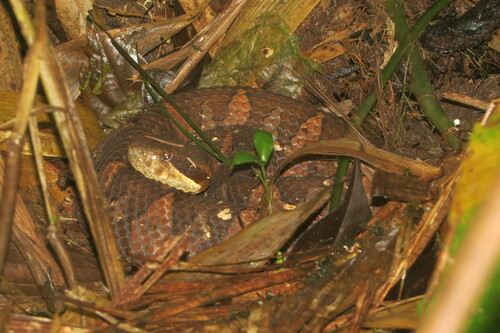
Atropoides is a small genus of pit vipers in the family Viperidae, subfamily Crotalinae, the same New World group that includes rattlesnakes, lanceheads, and copperheads. Its members are heavy bodied, short, terrestrial snakes of Mexico and Central America. Picado's Pit Viper is a representative species, found in the highlands and forested slopes of southern Central America. The genus has been revised repeatedly, with several species moved in and out over the years, so the exact membership has shifted between Atropoides, Metlapilcoatzl, and Porthidium in different treatments.
Like other pit vipers, these snakes carry the defining crotaline trait, a heat sensing loop pit on each side of the head between the eye and the nostril, used to detect warm prey. They are recognized in general terms by a broad triangular head set off from a narrow neck, vertical pupils, keeled scales that give a rough textured look, and a short, notably thick body. The common name jumping pit viper comes from the forceful defensive strike these heavy snakes can deliver, which sometimes lifts the body off the ground. They favor leaf litter and the forest floor in humid montane and lowland forest, where their muted brown and gray patterning blends into the substrate.
These are venomous snakes and should be treated as dangerous. Their venom is typical of pit vipers, acting on tissue and blood, and a bite is a medical emergency. Never attempt to handle, capture, or kill a wild pit viper, since most bites happen during those attempts. If a bite occurs, keep the person calm and still, remove rings and tight items, and seek emergency care immediately. In the United States contact Poison Control at 1-800-222-1222 or call local emergency services; in their native range contact local emergency medical services. Ecologically these are ambush predators that lie in wait for small mammals and other prey, and like many vipers they give birth to live young rather than laying eggs.
Atropoides belongs to the Viperidae family (Vipers & pit vipers). Heavy-bodied venomous snakes with long, hinged, hollow fangs. Broad, triangular head distinct from a narrow neck, heavy body, and (usually) vertical, cat-like pupils. Pit vipers also have a heat-sensing pit; true vipers do not.
Danger: Every viper is venomous, and the family includes some of the world's most medically important snakes. Venom is typically hemotoxic, causing pain, swelling, tissue damage, and bleeding. Treat any viper bite as a medical emergency.
All species (1)
Keep learning
- Venomous vs Nonvenomous: How to Tell the DifferenceThe folk rules for telling venomous snakes apart, where each one fails, and why location-based identification beats guessing by sight.
- Are Snakes Dangerous? The Real Risk, in PerspectiveMost snakes are harmless and avoid people. Here is the honest picture of snakebite risk worldwide and how to lower your own.
- Snake Venom Explained: How It Works and WhyWhat snake venom actually is, why it evolved, the main venom types, fang delivery, how antivenom works, and why ranking the most venomous snake is hard.
- How Snakes Move, Hunt, and EatHow snakes move without legs, hunt as ambushers or active foragers, kill by constriction or venom, and swallow prey wider than their head.