
Genus · Elapidae
Types of crown snakes
3 species make up the genus Aspidomorphus, the snakes commonly called crown snakes. All of them are venomous.
About crown snakes
Small, secretive elapids from New Guinea named for the dark crown-like markings on the head.
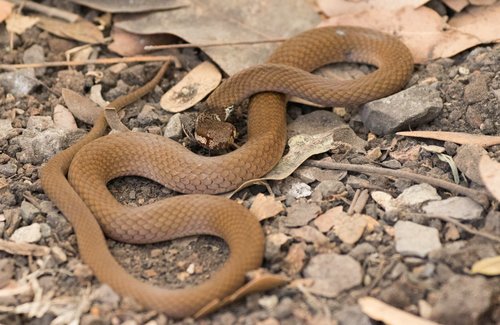
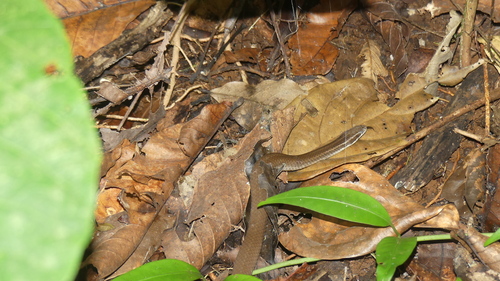
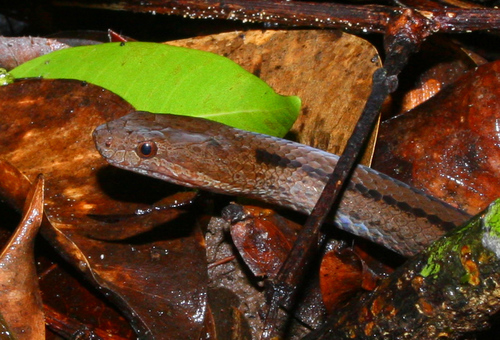
Aspidomorphus is a genus of small front-fanged snakes in the family Elapidae, the same family that includes cobras, coral snakes, mambas, and the Australian and New Guinean venomous snakes. The common name crown snakes comes from the dark head markings many members carry, which can look like a band or cap across the crown of the head. Three species are recognized in our database, including Müller's Crown Snake, the Striped Crown Snake, and Schlegel's Crown Snake.
The genus is centered on New Guinea and the surrounding islands of the region, where it occupies forests and forest edges. Like many elapids of this part of the world, these are ground-dwelling snakes associated with leaf litter, low vegetation, and the damp floor of tropical lowland and hill forest. They are part of the broad Australasian elapid radiation, the group that dominates the snake fauna of New Guinea and Australia.
Members are recognized as slender, modestly sized snakes rather than large or heavy-bodied. Crown snakes are generally small, and in broad terms they are identified by the combination of a smooth-scaled body, the characteristic darker pigment on the head, and the fixed front fangs typical of elapids. Precise scale counts and color details vary between species, so confident identification of any individual snake is best left to regional field guides and local experts rather than general description.
As elapids, crown snakes are venomous and possess fixed front fangs. They are small and not considered a major medical threat compared with larger elapids, but no wild snake should be picked up or handled. Identification mistakes are easy and the consequences are not worth the risk. If a bite occurs, treat it as a medical emergency: keep the person calm and still, do not cut, suck, or apply a tourniquet, and seek professional care at once. In the United States contact Poison Control at 1-800-222-1222, and elsewhere contact local emergency services.
Ecologically these are quiet, low-profile snakes. Like related small New Guinean elapids they are believed to feed on small prey such as lizards and skinks found among the leaf litter, and they tend to be most active in cooler hours rather than the heat of the day. Reproductive details for the genus are not well documented, which is common for obscure tropical elapids; the safest framing is that specific habits should be read from primary herpetological sources rather than assumed.
Aspidomorphus belongs to the Elapidae family (Cobras, mambas, coral & sea snakes). Front-fanged venomous snakes, many with potent neurotoxic venom. Usually slender with a head barely wider than the neck and fixed front fangs (not the folding fangs of vipers). Coral snakes are boldly ringed; sea snakes have a flattened, paddle-like tail.
Danger: All elapids are venomous and the family is responsible for a large share of fatal snakebites worldwide. Many are shy, but bites can be life-threatening. Treat any bite as a medical emergency.
All species (3)
Keep learning
- Venomous vs Nonvenomous: How to Tell the DifferenceThe folk rules for telling venomous snakes apart, where each one fails, and why location-based identification beats guessing by sight.
- Are Snakes Dangerous? The Real Risk, in PerspectiveMost snakes are harmless and avoid people. Here is the honest picture of snakebite risk worldwide and how to lower your own.
- Snake Venom Explained: How It Works and WhyWhat snake venom actually is, why it evolved, the main venom types, fang delivery, how antivenom works, and why ranking the most venomous snake is hard.
- How Snakes Move, Hunt, and EatHow snakes move without legs, hunt as ambushers or active foragers, kill by constriction or venom, and swallow prey wider than their head.