
Genus · Colubridae
Types of racers
4 species make up the genus Arrhyton, the snakes commonly called racers. None are considered dangerous to humans.
About West Indian racerlets
Small, slender Caribbean ground snakes that spend their lives hunting tiny prey in leaf litter and low vegetation.
Arrhyton is a genus of small snakes in the family Colubridae, the largest and most diverse snake family in the world. Like most colubrids, these are non-constricting or lightly constricting ground dwellers built for an active, low-key life rather than for subduing large prey. The genus belongs to the West Indian radiation of dipsadine-allied snakes, a group that diversified across the Greater Antilles and nearby islands.
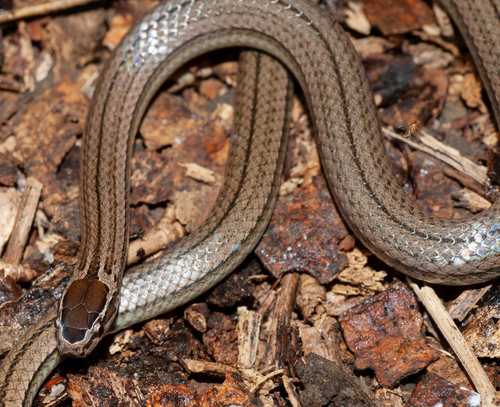
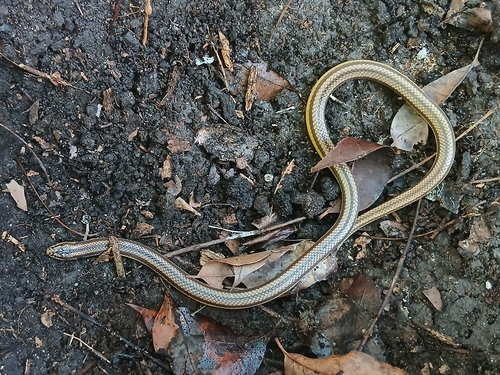
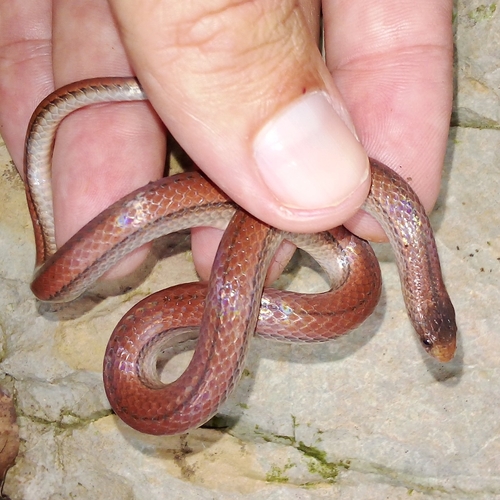
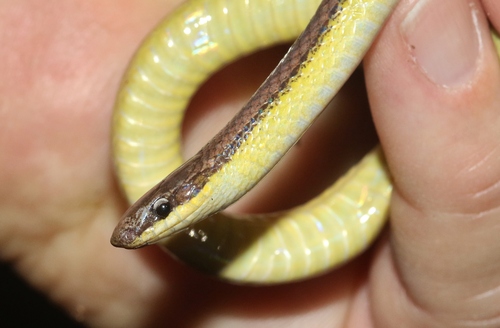
The members in our database are island endemics from the Caribbean, including the Oriente brown-capped racerlet, Gunther's Island Racer, the Common Island Racer, and the San Vincente Island Racer. This kind of one-island-one-species pattern is typical of Antillean herpetofauna, where populations become isolated on separate islands and diverge over time. Their ranges are small and tied to specific islands and habitats, which makes several of them of conservation interest.
In general terms these are slim, modestly sized snakes, often well under a meter, with smooth scales, a relatively narrow head only slightly distinct from the neck, and round pupils. Many have a darker cap or head marking over a brownish or grayish body, the source of names like brown-capped racerlet. Because several Arrhyton species are obscure and look alike, reliable identification usually depends on locality, scale counts, and color pattern rather than a single field mark.
Ecologically they fit the classic small-colubrid mold. They are typically diurnal and secretive, foraging through leaf litter, grass, and low cover for small prey such as lizards, frogs, and invertebrates. Like the great majority of colubrids they are egg-layers. They are non-aggressive and rely on hiding and fleeing rather than confrontation when disturbed.
Arrhyton snakes are not considered dangerous to people. Some colubrids in this broader group are technically rear-fanged, meaning they have enlarged teeth toward the back of the jaw and a mild saliva that helps with subduing small prey, but they pose no medical threat to humans through normal contact. There is no antivenom indication for these snakes. That said, no wild snake should be handled casually. If anyone is bitten by a snake and there is any doubt about the species or the reaction, treat it as a medical situation: do not try to catch or kill the snake, and contact emergency services or US Poison Control at 1-800-222-1222 (or your local emergency number).
Arrhyton belongs to the Colubridae family (Colubrids). The largest snake family, and the one most snakes you meet belong to. Typically round pupils, a head only slightly wider than the neck, and no heat-sensing facial pit or rattle. Scales may be smooth and glossy or keeled and matte depending on the species.
Danger: Almost all colubrids are harmless. A small number are rear-fanged with medically significant venom, the boomslang and the twig (vine) snakes of Africa being the dangerous exceptions. Most colubrids will flee or bluff rather than bite.
All species (4)
Keep learning
- What Is a Snake? Anatomy and the BasicsA clear overview of what makes a snake a snake: limbless body plan, anatomy, evolution from lizards, species diversity, and why they are ectothermic.
- How Snakes Move, Hunt, and EatHow snakes move without legs, hunt as ambushers or active foragers, kill by constriction or venom, and swallow prey wider than their head.
- What Do Snakes Eat?All snakes are carnivores. Learn what snakes eat, how diet changes with size and age, how often they feed, and how they hunt and swallow prey.
- Venomous vs Nonvenomous: How to Tell the DifferenceThe folk rules for telling venomous snakes apart, where each one fails, and why location-based identification beats guessing by sight.