
Genus · Colubridae
Types of glossy snakes
3 species make up the genus Arizona, the snakes commonly called glossy snakes. None are considered dangerous to humans.
About glossy snakes
Glossy snakes are smooth, faded-looking colubrids of the arid American Southwest, often mistaken for the gopher snakes they resemble.
Arizona is a small genus in the family Colubridae, the largest and most diverse snake family in the world. The genus contains the glossy snakes, named for the polished, almost varnished sheen of their dorsal scales. They sit comfortably among the typical New World colubrids: nonvenomous constrictors and active foragers with smooth scales and round pupils. The three species recognized in our database fall under this genus, including the Glossy Snake, the Western Glossy Snake, and the Peninsular Glossy Snake.
These snakes are animals of dry, open country. Their range covers the southwestern United States and northern Mexico, with the Peninsular form reaching down the Baja California peninsula. Typical habitat is desert, semidesert, sandy flats, scrubland, grassland, and other loose-soiled places where they can burrow. They favor terrain with sandy or gravelly substrate that lets them push beneath the surface, and they are largely nocturnal, emerging after dark to hunt when the desert heat eases.
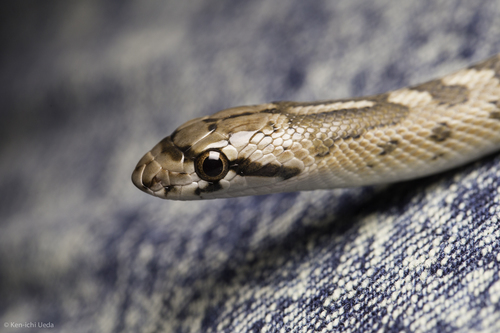
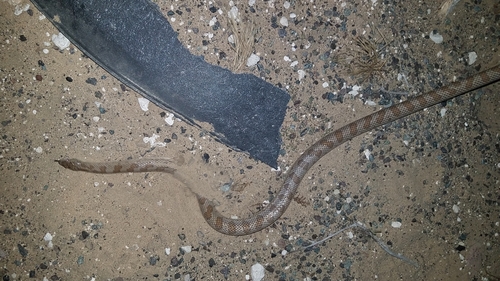
In general terms, a glossy snake is a slender to moderately built snake with a pale, washed-out look: tan, cream, gray, or light brown ground color marked with darker brown or gray blotches down the back. The scales are smooth and glossy rather than keeled, the belly is usually plain and unmarked, and the head is only slightly wider than the neck with a somewhat flattened, pointed snout suited to burrowing. They are frequently confused with gopher and bull snakes, but glossy snakes are typically smaller, paler, and have that distinctive sheen.
Glossy snakes are harmless to people. They are nonvenomous and kill prey by constriction, and they are not dangerous to humans. When threatened they tend to be mild mannered and may simply try to flee or burrow, though any wild snake can bite defensively if grabbed. There is no medical risk from their bite beyond the minor scratch any small animal can cause. Identification should still be done from a respectful distance, and wild snakes are best left undisturbed.
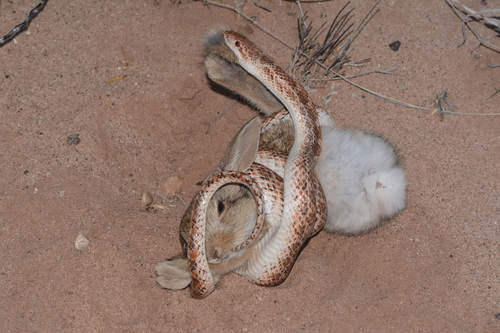
Ecologically these are nocturnal hunters that feed mainly on small mammals such as mice, along with lizards and occasionally other reptiles, subduing prey by constriction. Like most colubrids in the region they are egg layers, producing a clutch of eggs in the warm months that hatch later in the season. Their burrowing habit and night activity keep them largely out of sight, which is part of why they are less familiar to most people than the lookalike gopher snakes that share their range.
Arizona belongs to the Colubridae family (Colubrids). The largest snake family, and the one most snakes you meet belong to. Typically round pupils, a head only slightly wider than the neck, and no heat-sensing facial pit or rattle. Scales may be smooth and glossy or keeled and matte depending on the species.
Danger: Almost all colubrids are harmless. A small number are rear-fanged with medically significant venom, the boomslang and the twig (vine) snakes of Africa being the dangerous exceptions. Most colubrids will flee or bluff rather than bite.
All species (3)
Keep learning
- What Is a Snake? Anatomy and the BasicsA clear overview of what makes a snake a snake: limbless body plan, anatomy, evolution from lizards, species diversity, and why they are ectothermic.
- How Snakes Move, Hunt, and EatHow snakes move without legs, hunt as ambushers or active foragers, kill by constriction or venom, and swallow prey wider than their head.
- What Do Snakes Eat?All snakes are carnivores. Learn what snakes eat, how diet changes with size and age, how often they feed, and how they hunt and swallow prey.
- Venomous vs Nonvenomous: How to Tell the DifferenceThe folk rules for telling venomous snakes apart, where each one fails, and why location-based identification beats guessing by sight.