
Genus · Colubridae
Archelaphe
The genus Archelaphe contains a single species. It is not considered dangerous to humans.
About bella rat snake
A single secretive Asian rat snake split off from the larger Elaphe group.
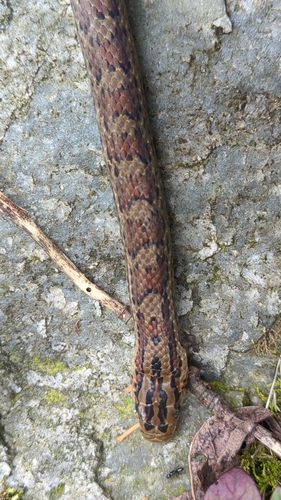
Archelaphe is a small genus in the family Colubridae, the largest and most diverse snake family worldwide. It was carved out of the broader rat snake assemblage when genetic and anatomical study showed that certain Southeast Asian forms did not belong with true Elaphe. The genus is best known for the Bella Rat Snake, a slender, mountain-dwelling colubrid of the kind that herpetologists move between genera as the relationships within rat snakes get clearer. Treating it as its own lineage reflects how rat snakes are sorted by evolutionary history rather than by simple looks.
Members are forest and highland rat snakes of mainland and island Southeast Asia, the region where so much colubrid diversity is concentrated. In general terms a snake like this is recognized by the typical rat snake build: a long, fairly slim body, smooth to weakly keeled scales, and a patterned dorsal surface that helps it disappear against leaf litter, bark, and rock. As with most rat snakes, it climbs and forages well rather than living a strictly burrowing life. Exact field marks are best confirmed against a regional guide rather than assumed.
Like the great majority of rat snakes in Colubridae, this genus is non-venomous and harmless to people. Rat snakes kill prey by constriction, not venom, and pose no medical threat. They typically eat small vertebrates such as rodents, birds, and eggs, and they reproduce by laying eggs, which is the norm across the family. A non-venomous label is not an invitation to handle a wild snake: any snake can bite if cornered, and for any serious bite or uncertainty contact local emergency services or US Poison Control at 1-800-222-1222.
Archelaphe belongs to the Colubridae family (Colubrids). The largest snake family, and the one most snakes you meet belong to. Typically round pupils, a head only slightly wider than the neck, and no heat-sensing facial pit or rattle. Scales may be smooth and glossy or keeled and matte depending on the species.
Danger: Almost all colubrids are harmless. A small number are rear-fanged with medically significant venom, the boomslang and the twig (vine) snakes of Africa being the dangerous exceptions. Most colubrids will flee or bluff rather than bite.
All species (1)
Keep learning
- What Is a Snake? Anatomy and the BasicsA clear overview of what makes a snake a snake: limbless body plan, anatomy, evolution from lizards, species diversity, and why they are ectothermic.
- How Snakes Move, Hunt, and EatHow snakes move without legs, hunt as ambushers or active foragers, kill by constriction or venom, and swallow prey wider than their head.
- What Do Snakes Eat?All snakes are carnivores. Learn what snakes eat, how diet changes with size and age, how often they feed, and how they hunt and swallow prey.
- Venomous vs Nonvenomous: How to Tell the DifferenceThe folk rules for telling venomous snakes apart, where each one fails, and why location-based identification beats guessing by sight.