
Genus · Colubridae
Types of blackheads
20+ species make up the genus Apostolepis, the snakes commonly called blackheads. None are considered dangerous to humans.
About burrowing snakes
Small, secretive South American burrowers that spend almost their whole lives underground.
Apostolepis is a genus of small, slender burrowing snakes found across South America. In our database they sit within the broad family Colubridae, the largest and most varied snake family in the world. Many colubrids are familiar surface-active snakes, but Apostolepis went the other direction and specialized for a life spent under soil, leaf litter, and sand. Modern herpetologists often group these snakes and their close relatives among the elapomorph dipsadids, but whichever label is used, the defining theme is the same: a body built for tunneling.
These are classic fossorial snakes, meaning they live and hunt mostly below the surface rather than out in the open. The body is cylindrical and smooth-scaled, the head is small and barely set off from the neck, the snout is rounded or slightly pointed for pushing through substrate, and the eyes are reduced because vision matters little in the dark. The tail is short. Many species carry a striking, repeated color pattern: a dark head cap and dark tail tip set against a reddish, orange, or pale body, sometimes with dark stripes running the length of the back. This bright banded look is why several members carry common names like blackhead.
The genus is diverse. Examples in our database include Reinhardt's Burrowing Snake, Gomes' Burrowing Snake, the Variable Blackhead, and the Tocantins Blackhead. Across the genus the typical habitats are open and seasonally dry environments, including savanna, scrub, grassland, and sandy or loose soils that are easy to dig through, as well as the edges of more humid zones. You are far more likely to turn one up by lifting a log, rock, or debris, or by digging, than to see one cruising in the open.
Apostolepis snakes are rear-fanged, which means they have enlarged grooved teeth set toward the back of the upper jaw and a Duvernoy's gland that produces a mild venom. That venom is adapted for subduing their small prey, not for defense against large animals, and these snakes are not considered dangerous to people. They are small, shy, and far more interested in retreating underground than in confronting anything. Bites to humans are rare and the snakes are generally regarded as harmless, though the honest framing is that any rear-fanged snake should be treated with basic respect rather than handled casually.
Ecologically these are specialist predators of other elongate, soil-dwelling animals. The diet leans heavily on other small burrowing reptiles and amphisbaenians, along with other slender prey they encounter in their tunnels. Like most colubrid-grade snakes in this part of the world they reproduce by laying eggs. Behavior is cryptic and poorly documented for many species precisely because the animals are so rarely seen, and several Apostolepis are known from only a handful of specimens, which means there is still a lot science genuinely does not know about how they live.
Apostolepis belongs to the Colubridae family (Colubrids). The largest snake family, and the one most snakes you meet belong to. Typically round pupils, a head only slightly wider than the neck, and no heat-sensing facial pit or rattle. Scales may be smooth and glossy or keeled and matte depending on the species.
Danger: Almost all colubrids are harmless. A small number are rear-fanged with medically significant venom, the boomslang and the twig (vine) snakes of Africa being the dangerous exceptions. Most colubrids will flee or bluff rather than bite.
All species (21)
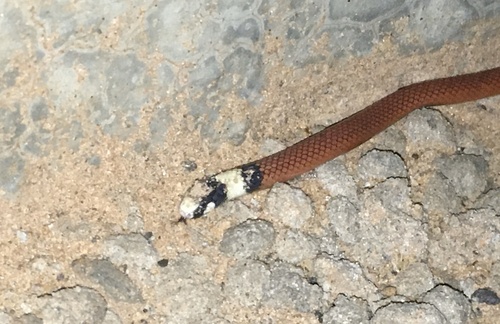 Reinhardt's Burrowing SnakeApostolepis assimilisHarmless
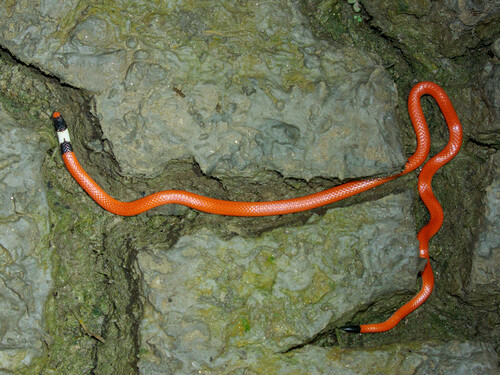 Gomes' Burrowing SnakeApostolepis cearensisHarmless
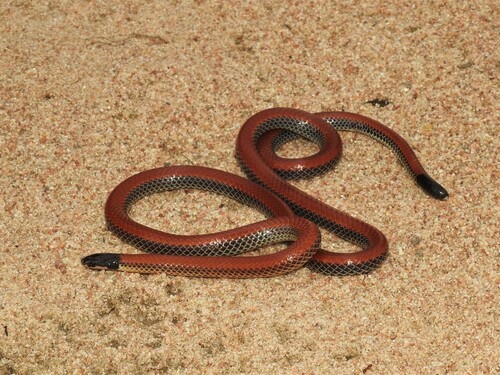 Variable BlackheadApostolepis dimidiataHarmless
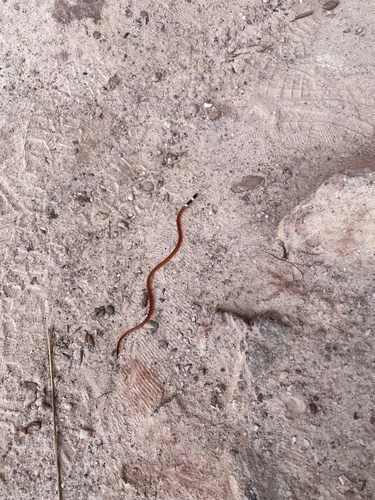 Tocantins BlackheadApostolepis sanctaeritaeHarmless
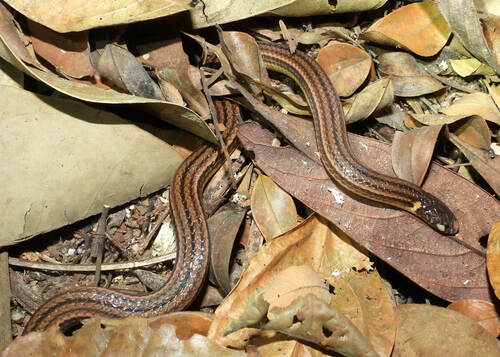 Guyana Burrowing SnakeApostolepis nigrolineataHarmless
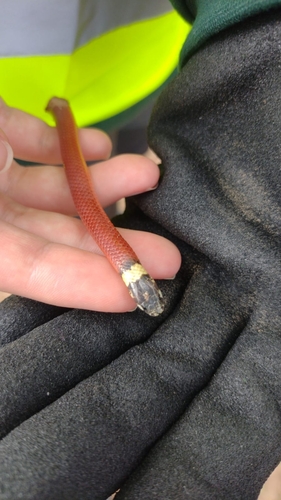 Central Burrowing SnakeApostolepis flavotorquataHarmless
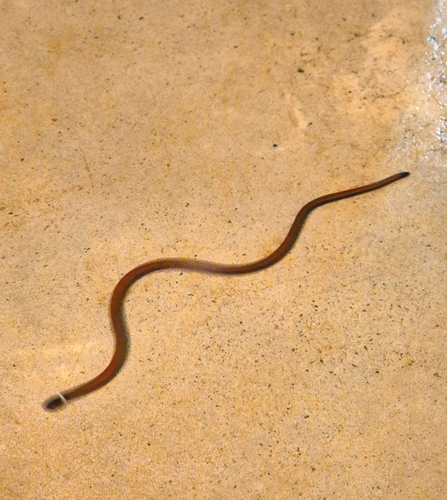 White Collared BlackheadApostolepis albicollarisHarmless
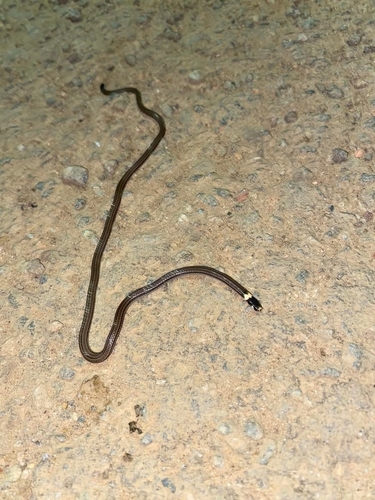 Minacu BlackheadApostolepis nelsonjorgeiHarmless
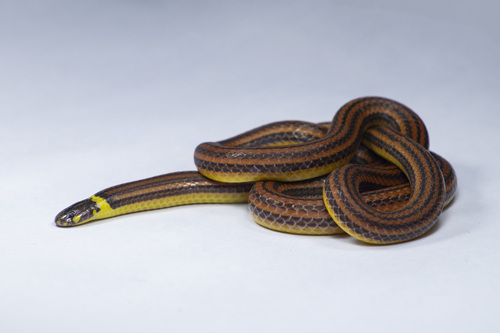 De Lema's Ground SnakeApostolepis thalesdelemaiHarmless
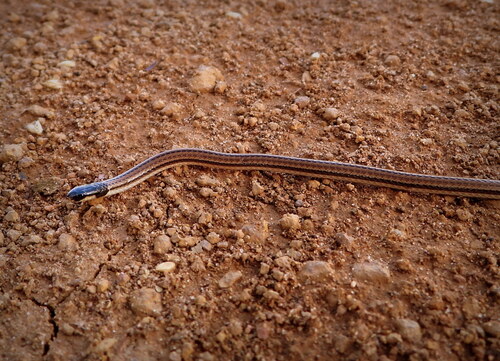 Mato Grosso Burrowing SnakeApostolepis intermediaHarmless
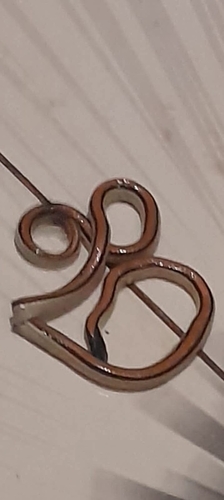 Hawkbeak BlackheadApostolepis polylepisHarmless
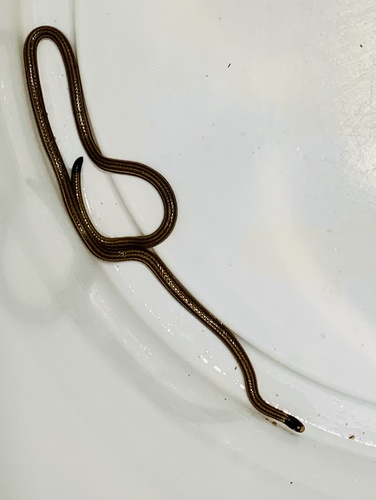 Longhead Burrowing SnakeApostolepis longicaudataHarmless
 Peru Burrowing SnakeApostolepis nigroterminataHarmless
 Apostolepis kikoiHarmless
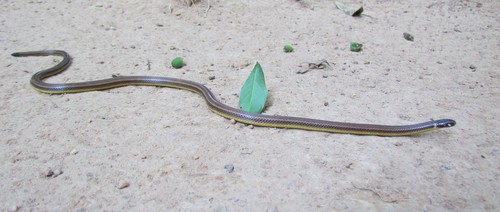 Brazilian Burrowing SnakeApostolepis pymiHarmless
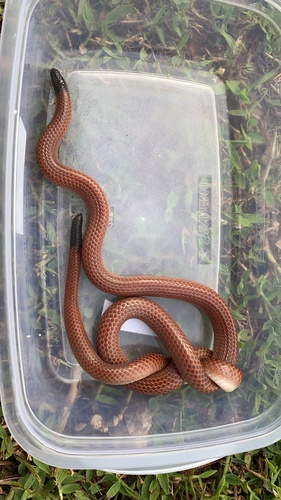 Paraguayan BlackheadApostolepis ambinigerHarmless
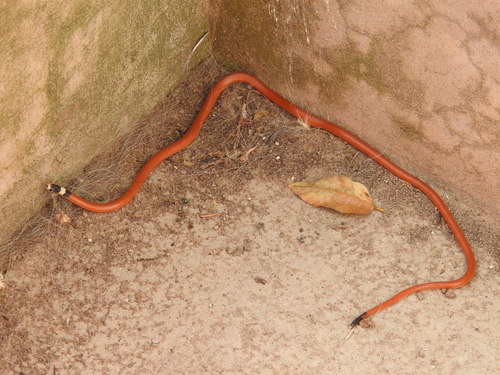 Many Banded BlackheadApostolepis multicinctaHarmless
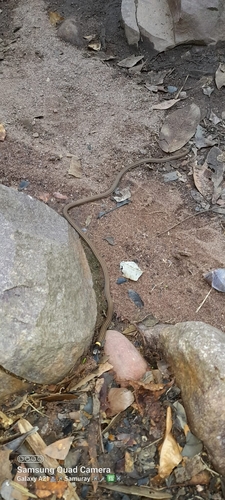 Velasco BlackheadApostolepis phillipsaeHarmless
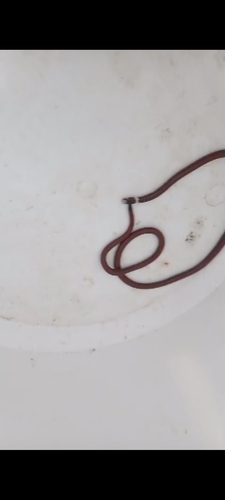 Missiones BlackheadApostolepis quirogaiHarmless
- No photoRuthven's Burrowing SnakeApostolepis tenuisHarmless
- No photoChristine's BlackheadApostolepis christineaeHarmless
Keep learning
- What Is a Snake? Anatomy and the BasicsA clear overview of what makes a snake a snake: limbless body plan, anatomy, evolution from lizards, species diversity, and why they are ectothermic.
- How Snakes Move, Hunt, and EatHow snakes move without legs, hunt as ambushers or active foragers, kill by constriction or venom, and swallow prey wider than their head.
- What Do Snakes Eat?All snakes are carnivores. Learn what snakes eat, how diet changes with size and age, how often they feed, and how they hunt and swallow prey.
- Venomous vs Nonvenomous: How to Tell the DifferenceThe folk rules for telling venomous snakes apart, where each one fails, and why location-based identification beats guessing by sight.