
Genus · Typhlopidae
Types of blindsnakes
10 species make up the genus Antillotyphlops, the snakes commonly called blindsnakes. None are considered dangerous to humans.
About West Indian blind snakes
Tiny burrowing, worm-like snakes of the West Indies that live their whole lives hidden underground.
Antillotyphlops is a genus of blind snakes in the family Typhlopidae. Like all typhlopids, these are small fossorial snakes built for a life spent tunneling through soil, leaf litter, and rotting wood. The genus was split out of the older catch-all genus Typhlops to group together the species native to the Caribbean islands, and the name itself points to that home, combining the Antilles with the typhlopid lineage. Our database holds 10 species, including the Puerto Rican White-tailed Blindsnake, the Puerto Rican Coastal Blindsnake, the Dominican Worm Snake, and the Leeward Blindsnake.
These snakes are easy to mistake for earthworms at a glance. They are slender and cylindrical with smooth, tightly overlapping scales that give the body a glossy, polished look, a blunt head that is barely distinct from the neck, and a short tail that often ends in a tiny spine. Their most defining feature is in the name. The eyes are reduced to dark spots beneath translucent head scales and can detect light and dark but not form real images, which is all a permanently underground animal needs. Most species are small, commonly only a few inches to roughly a foot long, and they tend to be pink, brown, gray, or blackish, sometimes with a paler tail tip.
The range of Antillotyphlops is the West Indies, centered on Puerto Rico, Hispaniola, the Virgin Islands, and the islands of the Lesser Antilles. Many species are island endemics, found on a single island or small island group and nowhere else, which is typical for fossorial animals isolated by water. They favor habitats with loose, workable substrate where they can burrow and where their prey is abundant, including forest floor, coastal scrub, gardens, and disturbed ground. Because they live below the surface, they are far more common than they appear and are most often found when someone turns over a log, a rock, or a shovelful of damp soil.
These are harmless, non-venomous snakes. They have no venom and no fangs, their mouths are tiny, and they pose no danger to people or pets. Their only defense is to flee into the soil, and some may press the tail spine against a handler or release a musky fluid rather than attempt to bite. As a general safety note that applies to wild animals overall, it is still best to leave any wild snake alone and let it move on. If a genuine snake emergency ever occurs, in the United States contact Poison Control at 1-800-222-1222 or call local emergency services.
Ecologically, Antillotyphlops snakes are specialist predators of soft-bodied social insects, feeding mainly on ants and termites and especially on their eggs, larvae, and pupae. They follow chemical trails into nests and feed in bulk on the brood. Reproduction is by laying eggs, and clutches are typically small. Behaviorally they are secretive and largely nocturnal at the surface, doing nearly all of their activity underground, which is why these abundant little snakes are so rarely seen even on the islands where they are common.
Antillotyphlops belongs to the Typhlopidae family (Blindsnakes). Tiny, worm-like burrowing snakes that raid ant and termite nests. Looks like a small, glossy earthworm with smooth scales and no obvious neck, eyes, or pattern.
Danger: Harmless. They do not bite people and have no venom.
All species (10)
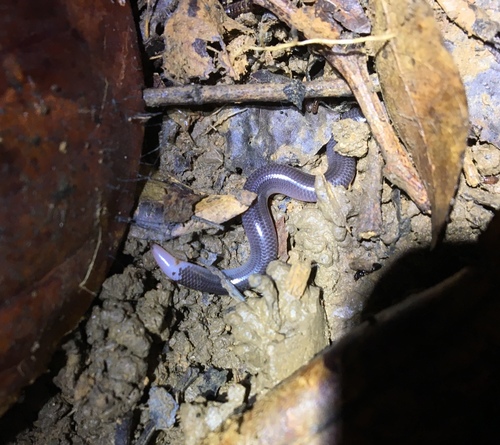 Puerto Rican White-tailed BlindsnakeAntillotyphlops platycephalusHarmless
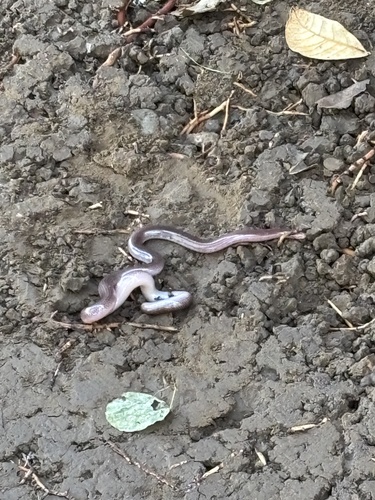 Puerto Rican Coastal BlindsnakeAntillotyphlops hypomethesHarmless
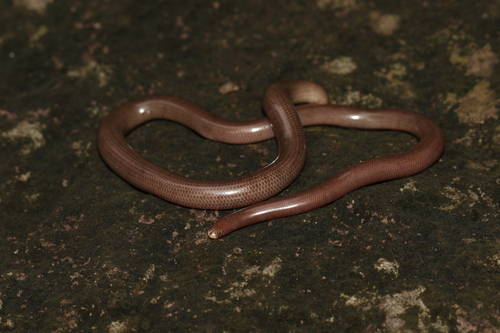 Dominican Worm SnakeAntillotyphlops dominicanusHarmless
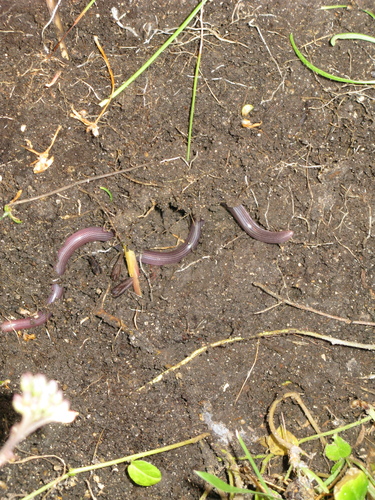 Leeward BlindsnakeAntillotyphlops geotomusHarmless
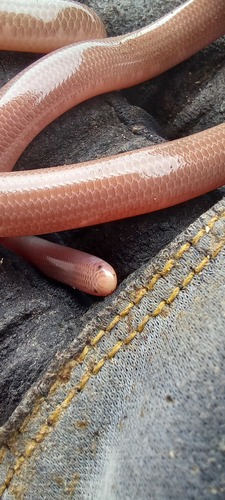 Brown-backed Blind SnakeAntillotyphlops catapontusHarmless
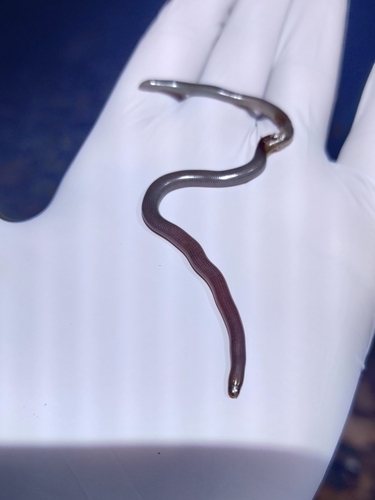 Montserrat Worm SnakeAntillotyphlops monastusHarmless
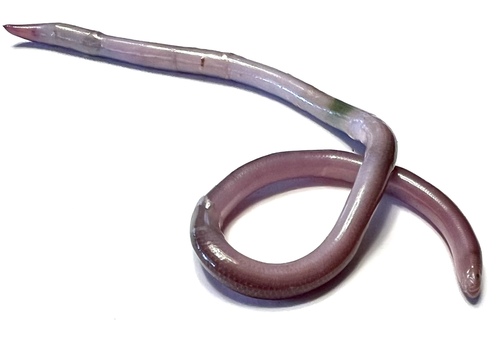 Richard's Worm SnakeAntillotyphlops richardiiHarmless
- No photoAntillotyphlops naugusHarmless
- No photoMona Blind SnakeAntillotyphlops monensisHarmless
- No photoSaint Barts BlindsnakeAntillotyphlops annaeHarmless
Keep learning
- What Is a Snake? Anatomy and the BasicsA clear overview of what makes a snake a snake: limbless body plan, anatomy, evolution from lizards, species diversity, and why they are ectothermic.
- How Snakes Move, Hunt, and EatHow snakes move without legs, hunt as ambushers or active foragers, kill by constriction or venom, and swallow prey wider than their head.
- What Do Snakes Eat?All snakes are carnivores. Learn what snakes eat, how diet changes with size and age, how often they feed, and how they hunt and swallow prey.
- Venomous vs Nonvenomous: How to Tell the DifferenceThe folk rules for telling venomous snakes apart, where each one fails, and why location-based identification beats guessing by sight.