
Genus · Elapidae
Antaioserpens
The genus Antaioserpens contains a single species. It is venomous.
About robust burrowing snakes
A tiny Australian genus of small, secretive burrowing elapids that spend most of their lives out of sight.
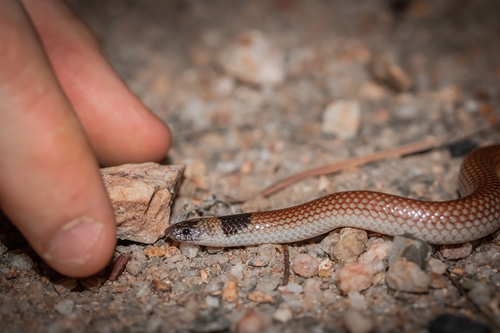
Antaioserpens is a small genus in the family Elapidae, the front-fanged snakes that also includes cobras, taipans, brown snakes, and sea snakes. It is an Australian group, and the snake most often referenced is the Robust Burrowing Snake (Antaioserpens warro), found in Queensland. As the common name suggests, these are burrowing animals built for a life spent largely underground or under cover rather than out in the open. They are part of the radiation of small, fossorial Australian elapids that fill the ecological niches occupied by harmless burrowing colubrids on other continents.
In general terms, members are small, slender snakes with smooth scales, a narrow head not strongly distinct from the neck, and small eyes, all features typical of snakes adapted to digging and moving through soil, leaf litter, and loose ground. They are most often encountered in sandy or loose soils in dry and seasonally dry habitats, and they tend to surface at night or after rain rather than basking in the open. Because they are cryptic and infrequently seen, much of what is known comes from the broader biology of small Australian burrowing elapids rather than from abundant direct observation.
Like all elapids, these snakes are technically venomous and have fixed front fangs, so the honest framing is that they are not harmless in the strict sense. In practice they are very small, secretive, and not considered a serious danger to people, and their diet leans toward small prey such as lizards typical of little burrowing snakes. Even so, never handle a wild venomous snake and never assume a small elapid is safe to pick up. If a bite occurs, treat it as a medical situation and seek emergency care promptly. In the United States contact Poison Control at 1-800-222-1222, and anywhere call local emergency services.
Antaioserpens belongs to the Elapidae family (Cobras, mambas, coral & sea snakes). Front-fanged venomous snakes, many with potent neurotoxic venom. Usually slender with a head barely wider than the neck and fixed front fangs (not the folding fangs of vipers). Coral snakes are boldly ringed; sea snakes have a flattened, paddle-like tail.
Danger: All elapids are venomous and the family is responsible for a large share of fatal snakebites worldwide. Many are shy, but bites can be life-threatening. Treat any bite as a medical emergency.
All species (1)
Keep learning
- Venomous vs Nonvenomous: How to Tell the DifferenceThe folk rules for telling venomous snakes apart, where each one fails, and why location-based identification beats guessing by sight.
- Are Snakes Dangerous? The Real Risk, in PerspectiveMost snakes are harmless and avoid people. Here is the honest picture of snakebite risk worldwide and how to lower your own.
- Snake Venom Explained: How It Works and WhyWhat snake venom actually is, why it evolved, the main venom types, fang delivery, how antivenom works, and why ranking the most venomous snake is hard.
- How Snakes Move, Hunt, and EatHow snakes move without legs, hunt as ambushers or active foragers, kill by constriction or venom, and swallow prey wider than their head.