
Genus · Anomalepididae
Types of blind snakes
2 species make up the genus Anomalepis, the snakes commonly called blind snakes. None are considered dangerous to humans.
About dawn blind snakes
Tiny, worm-like burrowing snakes from Central and South America that almost never see daylight.
Anomalepis is a small genus of blind snakes in the family Anomalepididae, the dawn blind snakes. The family is an ancient, primitive lineage of fossorial snakes, meaning they live underground, and it sits within the larger group of scolecophidians alongside the more familiar thread snakes and typical blind snakes. Anomalepis itself includes only a handful of species, such as the Mexican Blind Snake and the Colombian Blind Snake, found across parts of Central America and northern South America. Like all members of the family, they are defined by a cylindrical, worm-like body, tightly overlapping smooth scales, and eyes reduced to dark spots beneath the head scales rather than functional image-forming eyes.
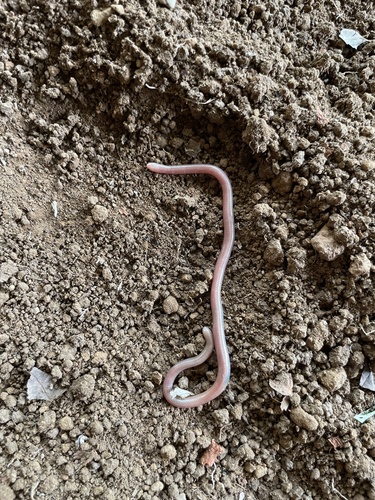
These snakes live in moist soil, leaf litter, and rotting wood in tropical and subtropical habitats, and they spend nearly their entire lives below the surface. Because of that hidden lifestyle they are rarely seen and poorly studied, which is why solid facts about individual Anomalepis species are scarce. In general terms you would recognize one as a very small, slender, shiny snake, often only a few inches long, with no obvious neck, a blunt head, and a short tail. People frequently mistake blind snakes like these for earthworms, though the dry, scaled body and flicking tongue give them away on close inspection.
Anomalepis snakes are completely harmless to people. They have no venom, no fangs, and no interest in or ability to bite a person in any meaningful way. Their tiny mouths are built for feeding on soft-bodied prey, and they are thought to eat small invertebrates such as ants, termites, and their larvae, the same diet typical of related blind snakes. Like many of their kin they are believed to reproduce by laying eggs. There is no safety concern with these animals, but they are delicate and best left undisturbed in the soil where they do quiet work as part of the underground food web.
Anomalepis belongs to the Anomalepididae family (Dawn blindsnakes). Primitive, tiny burrowing snakes of the American tropics. Tiny, shiny, and worm-like, with vestigial eyes.
Danger: Harmless.
All species (2)
Keep learning
- What Is a Snake? Anatomy and the BasicsA clear overview of what makes a snake a snake: limbless body plan, anatomy, evolution from lizards, species diversity, and why they are ectothermic.
- How Snakes Move, Hunt, and EatHow snakes move without legs, hunt as ambushers or active foragers, kill by constriction or venom, and swallow prey wider than their head.
- What Do Snakes Eat?All snakes are carnivores. Learn what snakes eat, how diet changes with size and age, how often they feed, and how they hunt and swallow prey.
- Venomous vs Nonvenomous: How to Tell the DifferenceThe folk rules for telling venomous snakes apart, where each one fails, and why location-based identification beats guessing by sight.