
Genus · Colubridae
Types of burrowing snakes
7 species make up the genus Adelphicos, the snakes commonly called burrowing snakes. None are considered dangerous to humans.
About Middle American burrowing snakes
Small, secretive ground-dwelling snakes of southern Mexico and Central America that spend most of their lives hidden in soil and leaf litter.
Adelphicos is a genus of small snakes in the family Colubridae, the largest and most diverse snake family in the world. The genus holds a handful of closely related species, with about seven recognized in our database, including the Middle American burrowing snake, the Chiapas burrowing snake, Cope's earth snake, and Stuart's burrowing snake. As the common name suggests, these are fossorial animals, meaning they are built for a life spent burrowing through soil rather than climbing or swimming.
These snakes live in the highlands and forests of southern Mexico, especially Chiapas, and parts of Guatemala and the wider Central American region. They favor moist, cool habitats such as cloud forest, pine and oak woodland, and the floor of humid forests where the soil stays damp. You are far more likely to find one under a rock, a rotting log, or a layer of leaf litter than out in the open, which is part of why several members of the genus are poorly known.
In general terms, members of Adelphicos are small and slender with smooth scales, a rounded blunt snout suited to pushing through soil, small eyes, and a short tail. Their coloration tends toward plain browns, reddish browns, or grays, often with darker stripes or a darker head, which helps them disappear against soil and litter. Their burrowing build and modest size separate them from the larger, more conspicuous colubrids people usually notice above ground.
These are harmless snakes to people. They are not front-fanged venomous species, and they pose no medical threat to humans. Their tiny size and reclusive habits mean encounters are rare and bites are not a meaningful concern. As with any wild animal, the right approach is to observe and leave it alone rather than handle it. If anyone is ever bitten by a snake they cannot confidently identify and symptoms develop, treat it as a medical situation and contact emergency services or US Poison Control at 1-800-222-1222.
Ecologically, Adelphicos species are small predators of soft-bodied invertebrates, feeding largely on earthworms and similar prey they encounter while moving through the substrate. Like many colubrids, they reproduce by laying eggs. Their behavior is shy and cryptic, with activity tied to damp conditions, and much of their natural history remains understudied because they spend so little time in view.
Adelphicos belongs to the Colubridae family (Colubrids). The largest snake family, and the one most snakes you meet belong to. Typically round pupils, a head only slightly wider than the neck, and no heat-sensing facial pit or rattle. Scales may be smooth and glossy or keeled and matte depending on the species.
Danger: Almost all colubrids are harmless. A small number are rear-fanged with medically significant venom, the boomslang and the twig (vine) snakes of Africa being the dangerous exceptions. Most colubrids will flee or bluff rather than bite.
All species (7)
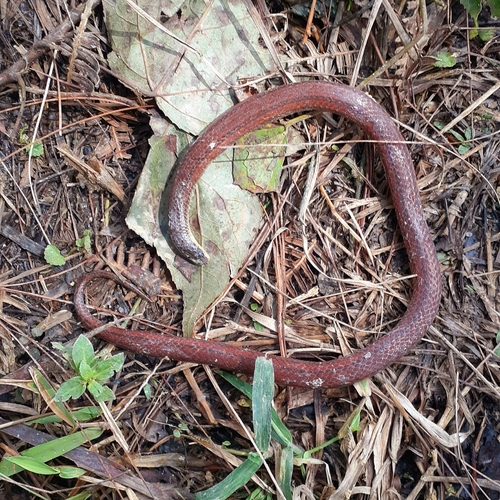 Middle American Burrowing SnakeAdelphicos quadrivirgatumHarmless
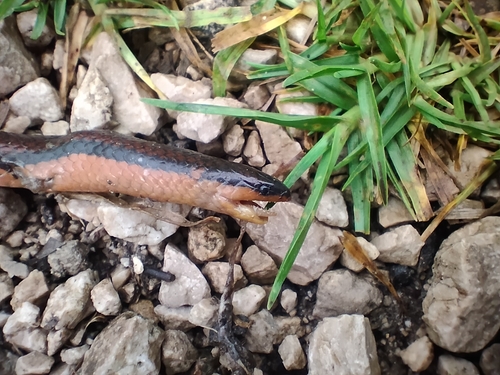 Chiapas burrowing snakeAdelphicos nigrilatumHarmless
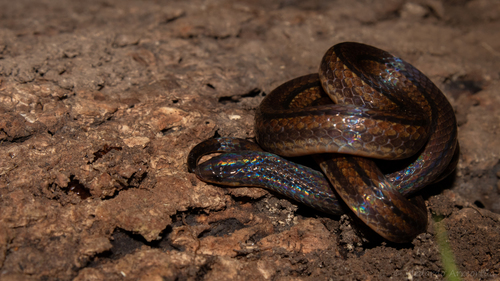 Cope's earth snakeAdelphicos visoninumHarmless
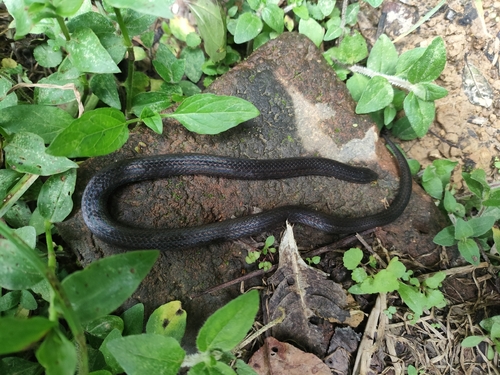 Stuart's Burrowing SnakeAdelphicos veraepacisHarmless
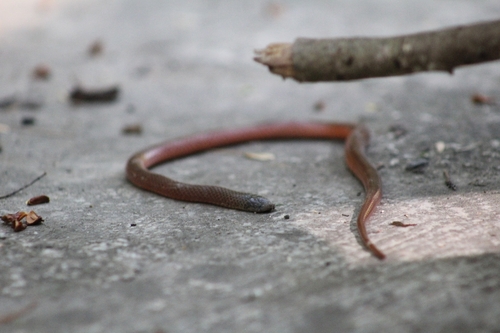 Newmans' Earth SnakeAdelphicos newmanorumHarmless
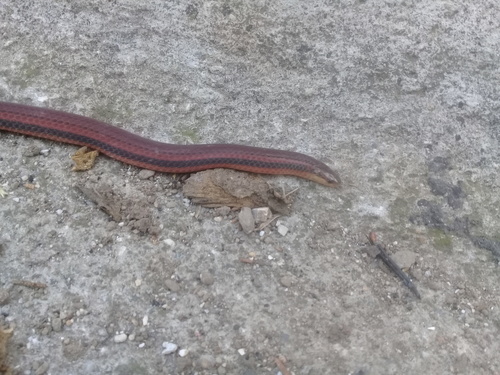 Sargi's earth snakeAdelphicos sargiiHarmless
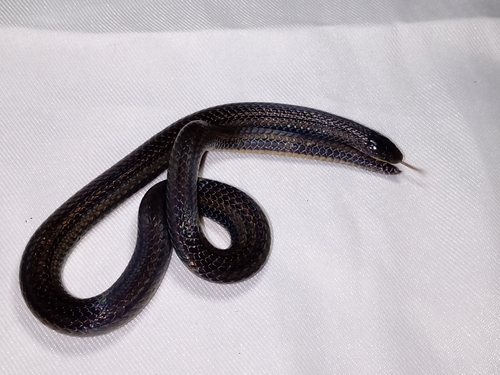 Dary's Burrowing SnakeAdelphicos daryiHarmless
Keep learning
- What Is a Snake? Anatomy and the BasicsA clear overview of what makes a snake a snake: limbless body plan, anatomy, evolution from lizards, species diversity, and why they are ectothermic.
- How Snakes Move, Hunt, and EatHow snakes move without legs, hunt as ambushers or active foragers, kill by constriction or venom, and swallow prey wider than their head.
- What Do Snakes Eat?All snakes are carnivores. Learn what snakes eat, how diet changes with size and age, how often they feed, and how they hunt and swallow prey.
- Venomous vs Nonvenomous: How to Tell the DifferenceThe folk rules for telling venomous snakes apart, where each one fails, and why location-based identification beats guessing by sight.