
Genus · Typhlopidae
Types of blindsnakes
3 species make up the genus Acutotyphlops, the snakes commonly called blindsnakes. None are considered dangerous to humans.
About blind snakes
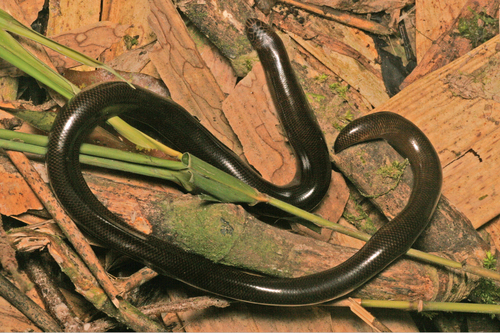
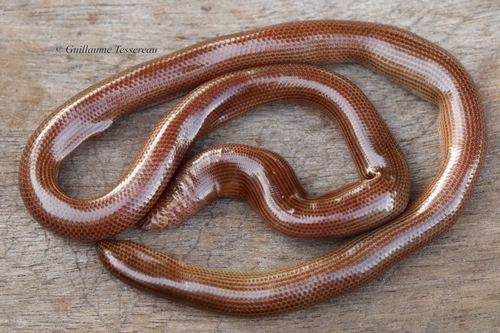
Acutotyphlops are small, burrowing blind snakes from the southwest Pacific that look more like earthworms than snakes.
Acutotyphlops is a genus of blind snakes in the family Typhlopidae. Like all typhlopids, these are small, slender, fossorial snakes that spend nearly their entire lives underground or hidden beneath leaf litter, logs, and soil. The genus is part of the broad group commonly called blind snakes, and its members share the cylindrical, worm-like body that makes the whole family hard to tell apart at a glance. The genus name points to the sharply pointed snout that helps these snakes push through soil.
The genus is restricted to the southwest Pacific, centered on Melanesia. Members are recorded from areas such as the Bismarck Archipelago and the Solomon Islands, where they live in tropical soils and forest floor habitats. Because the genus is small and poorly studied, the precise range of each species is still being worked out, and most of what is known reflects the general biology shared across the blind snake family rather than detailed study of each species.
Recognizing a blind snake in general terms is easier than identifying the exact genus. These snakes are usually small and uniform in width from head to tail, with a blunt tail that often ends in a tiny spine, smooth and shiny scales, and eyes reduced to dark spots beneath the head scales that detect light but not detailed images. The mouth is small and set under the snout. Telling Acutotyphlops apart from other blind snake genera relies on fine scale counts and head features that typically require an expert and a specimen in hand.
These snakes are harmless to people. They are not venomous, they do not have fangs built for defense, and their tiny mouths are made for eating soft-bodied prey, not for biting humans. If handled they may wriggle, release a musky smell, or press the tail spine against the skin, but they pose no medical danger. There is no need to fear a blind snake found in soil or under cover, and they are easy to confuse with earthworms.
Ecologically, blind snakes are specialized predators of social insects. They feed largely on the eggs, larvae, and pupae of ants and termites, following chemical trails into nests and feeding there. Like many typhlopids, members of this group are thought to lay eggs. Their behavior is secretive and mostly nocturnal or subterranean, so they are encountered far less often than their actual numbers would suggest, usually turning up after heavy rain or when soil and cover are disturbed.
Acutotyphlops belongs to the Typhlopidae family (Blindsnakes). Tiny, worm-like burrowing snakes that raid ant and termite nests. Looks like a small, glossy earthworm with smooth scales and no obvious neck, eyes, or pattern.
Danger: Harmless. They do not bite people and have no venom.
All species (3)
Keep learning
- What Is a Snake? Anatomy and the BasicsA clear overview of what makes a snake a snake: limbless body plan, anatomy, evolution from lizards, species diversity, and why they are ectothermic.
- How Snakes Move, Hunt, and EatHow snakes move without legs, hunt as ambushers or active foragers, kill by constriction or venom, and swallow prey wider than their head.
- What Do Snakes Eat?All snakes are carnivores. Learn what snakes eat, how diet changes with size and age, how often they feed, and how they hunt and swallow prey.
- Venomous vs Nonvenomous: How to Tell the DifferenceThe folk rules for telling venomous snakes apart, where each one fails, and why location-based identification beats guessing by sight.