
Saint Helena, Ascension and Tristan da Cunha
Snakes in Saint Helena, Ascension and Tristan da Cunha
1 snake species have been recorded in Saint Helena, Ascension and Tristan da Cunha, and none are venomous.
Snakes of Saint Helena, Ascension and Tristan da Cunha
Saint Helena, Ascension and Tristan da Cunha is a British Overseas Territory made up of remote volcanic islands scattered across the South Atlantic Ocean, separated from each other and from any continent by vast stretches of open water. This deep isolation is the single most important fact about its snake fauna. Land snakes are poor at crossing oceans, so islands this far from any mainland are almost never colonized naturally. The territory has 1 snake species recorded in our database, and none recorded as venomous. The habitats range from arid lowlands and rocky lava fields on Ascension to the cooler, wetter peaks and pastures of Saint Helena and the cold, windswept slopes of Tristan da Cunha, but none of these has produced a native land-snake community.
There are no established venomous land snakes in the territory. Unlike continental regions where front-fanged families such as vipers, cobras, or related elapids shape the local risk picture, these islands sit far outside the range of any such group. The cold, exposed conditions on Tristan da Cunha in particular are unsuitable for snakes year round, and the small, isolated landmasses elsewhere never received colonizing populations. For practical purposes, a person on these islands is not in snake country in the way they would be on a tropical mainland.
The single species reflected in our records is non-venomous, and the great majority of snake species worldwide are likewise harmless. Any snake encountered on the territory is far more likely to be a small, secretive, non-threatening animal than a dangerous one. On isolated oceanic islands like these, snakes that do appear are typically tied to human activity rather than to a long-established wild population, and they pose no meaningful threat to people.
Where snakes do occur, they play the same quiet ecological role they fill elsewhere: controlling populations of insects, small rodents, and other prey, and in turn serving as food for birds and other predators. On fragile island ecosystems, the arrival or removal of any reptile can ripple through the food web, which is one reason these remote territories are studied and protected so carefully. Snakes are part of healthy ecosystems, not a sign of a degraded one.
On safety, the honest picture is reassuring. With no venomous land snakes established here and only non-venomous species in the record, the medical risk from snakes is minimal. Even so, no wild snake should ever be handled, anywhere, regardless of how harmless it appears, because identification in the field is unreliable and a frightened animal can still bite. If a bite occurs or there is any concern, the correct response is professional medical care: contact local emergency services, or in the United States reach Poison Control at 1-800-222-1222. Where venom is ever a factor, the established treatment is hospital care and antivenom administered by clinicians, not field remedies.
Snakes in Saint Helena, Ascension and Tristan da Cunha: FAQ
- Are there venomous snakes in Saint Helena, Ascension and Tristan da Cunha?
- No venomous snakes have verified records in Saint Helena, Ascension and Tristan da Cunha. Every snake recorded here is harmless to humans, though any snake may bite defensively if handled.
- How many snake species live in Saint Helena, Ascension and Tristan da Cunha?
- 1 snake species has verified records in Saint Helena, Ascension and Tristan da Cunha.
- What is the most commonly seen snake in Saint Helena, Ascension and Tristan da Cunha?
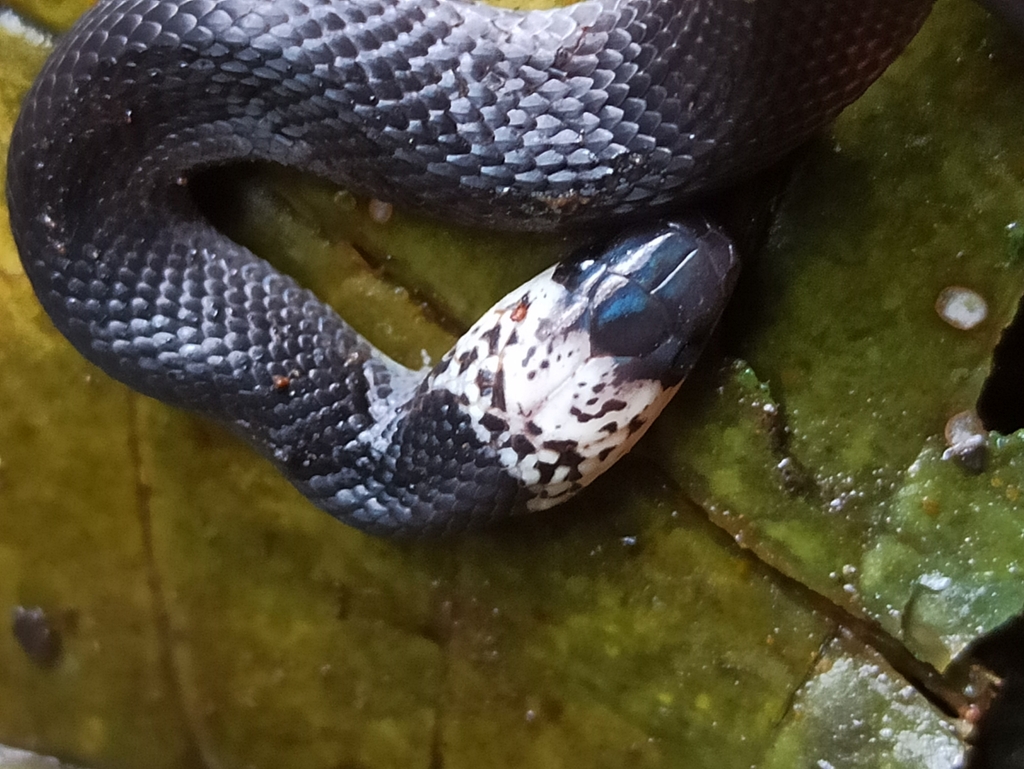
- The Ninia teresitae is the most frequently reported snake in Saint Helena, Ascension and Tristan da Cunha, based on verified wildlife observations.
Every snake recorded in Saint Helena, Ascension and Tristan da Cunha
1 species across 1 families, grouped by family. Venomous flagged.
Colubridae (1)
Compiled from verified GBIF & iNaturalist observations. "How often seen" reflects how frequently a snake is reported here, not how dangerous it is. Informational only.
Keep learning
- What Is a Snake? Anatomy and the BasicsA clear overview of what makes a snake a snake: limbless body plan, anatomy, evolution from lizards, species diversity, and why they are ectothermic.
- What to Do If You Find a SnakeFound a snake at home or on a trail? Here is how to stay calm, give it space, identify it safely, and know when to call a professional.
- How to Keep Snakes Out of Your Yard and HomeA practical guide to keeping snakes out of your yard and home using habitat changes that work, plus what to skip and what to do if one shows up.
- Are Snakes Dangerous? The Real Risk, in PerspectiveMost snakes are harmless and avoid people. Here is the honest picture of snakebite risk worldwide and how to lower your own.