
Species spotlight
Western Diamondback Rattlesnake: The Southwest's Most Notorious Snake
The western diamondback rattlesnake causes more serious bites than any other US snake. Learn its range, how to identify it, and how to stay safe around it.
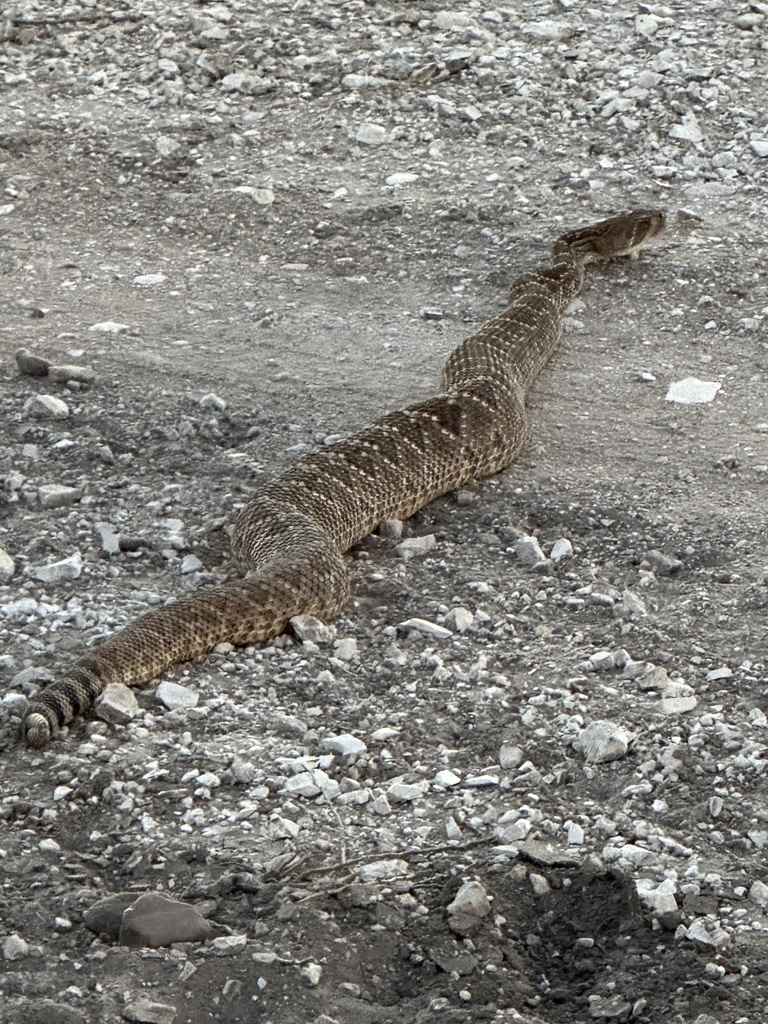
The western diamondback rattlesnake, Crotalus atrox, is the snake most people picture when they think of the American Southwest. It is large, common, and bold for a rattlesnake, and it is responsible for more serious snakebites than any other species in the United States. That track record comes less from aggression than from sheer abundance across a heavily populated, fast-growing region.
Where it lives
The western diamondback ranges across the southwestern United States, from central and western Texas through New Mexico and Arizona to southeastern California, and deep into northern and central Mexico. It is a desert and dry-country generalist, equally at home in creosote flats, rocky canyons, grasslands, and the brushy edges of farms and suburbs. This tolerance for human-altered land is part of why encounters are so frequent.
In the hottest months the western diamondback shifts much of its activity to dusk and night, hunting when temperatures drop and resting in shade or burrows during the day. In cooler weather it is often out basking in the open. It does not hibernate so much as den up in rock crevices and animal burrows during cold snaps, sometimes alongside other snakes, then emerges to bask on warm days. This flexible schedule means it can turn up almost any time of year in the warmer parts of its range.
Size and appearance
Adults typically reach 3 to 5 feet, with some exceeding 6. The body is gray, brown, or dusty tan, marked with darker diamonds that often have fuzzy, indistinct edges rather than crisp borders. The most reliable field mark is the tail: bold black-and-white bands, like a raccoon tail, just ahead of the rattle. Two pale diagonal lines cross the face.
- Faded, rough-edged diamonds on a gray-brown body
- Black-and-white banded tail, the classic coon tail
- Pale diagonal facial stripes
- Heavy body, broad triangular head, and prominent rattle
Venom and danger to people
The western diamondback carries potent hemotoxic venom and can inject a large dose, so every bite is a medical emergency. It tends to stand its ground when threatened, lifting its head, coiling, and rattling loudly rather than retreating. That defensive boldness, combined with how often it lives near people, drives its high bite numbers. Still, the snake is not hunting humans, and most bites trace back to attempts to handle or kill it.
The venom works mainly on blood and tissue, causing pain, swelling, and damage around the bite, and it can have dangerous body-wide effects without treatment. The good news is that effective antivenom is widely available across its range, and outcomes are generally good when bites are treated promptly. The practical lesson for anyone in the desert Southwest is straightforward: most bites are avoidable simply by not reaching into places you cannot see and by leaving any rattlesnake alone.
How to identify it
The coon-tail banding plus faded diamonds usually settle the identification in the Southwest. Several other rattlesnakes share its range, including the Mojave rattlesnake, which can look similar but tends to have wider white tail bands. Compare it with its eastern relative, the eastern diamondback, and review the most venomous snakes guide to see the full rattlesnake lineup.
Notable facts
- It accounts for a large share of venomous snakebites in the United States, largely because it is so widespread and common.
- It can go months between meals and tolerates extreme heat and drought.
- It will stand its ground and rattle vigorously, a behavior that has made it an icon of the desert.
- Like all rattlesnakes, it bears live young rather than laying eggs.
For all its notoriety, the western diamondback plays an important role in its ecosystem, controlling populations of rats, mice, ground squirrels, and rabbits that would otherwise explode in number. Ranchers and farmers who tolerate the snakes on the margins of their land often benefit from that free pest control. The species is not threatened, but needless killing still removes a useful predator from the landscape.
The western diamondback is a reminder that the most dangerous snake is often simply the most common one nearby. Awareness, not fear, is the right response: watch where you put your hands and feet in snake country, and check which species live around you with the county browser or the species hub.