
Regional guide
Types of Rattlesnakes in the United States
A guide to the types of rattlesnakes in the United States: the main species, how to recognize the group, and where the country's rattlesnakes live.
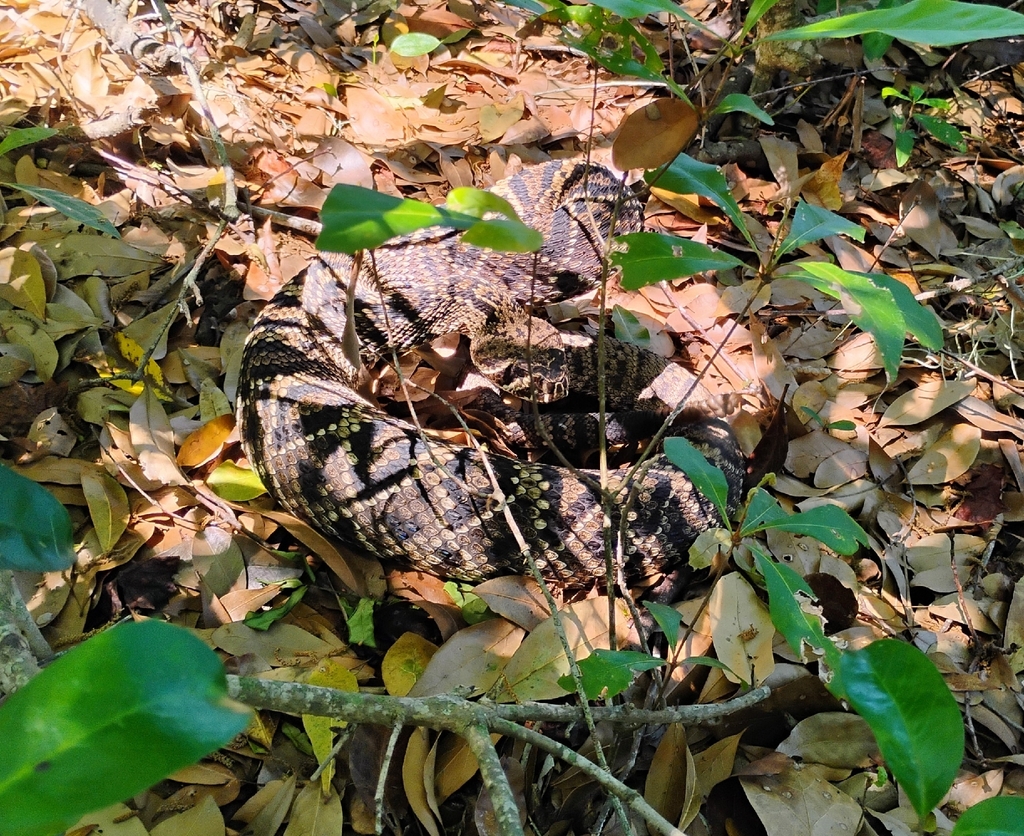
Rattlesnakes are the most widespread group of venomous snakes in the United States, found in nearly every state and across deserts, forests, prairies, and swamps. There are more than two dozen species and many more subspecies, but they all share a recognizable set of traits. This guide explains how to identify rattlesnakes as a group and introduces the main species you are most likely to hear about.
What makes a rattlesnake
All rattlesnakes are pit vipers, and they belong to two genera: Crotalus, the larger group, and Sistrurus, the smaller pygmy rattlesnakes and massasaugas. Every rattlesnake shares the same core features: a heat-sensing pit between each eye and nostril, vertical pupils, a broad triangular head, a heavy body, and the famous rattle at the tail tip. The rattle is made of loose, interlocking keratin segments that buzz when the snake vibrates its tail.
- Triangular, arrow-shaped head clearly wider than the neck
- Vertical, cat-like pupils
- A segmented rattle at the end of the tail (small or absent in very young snakes)
- Heavy, thick body with blotched, banded, or diamond patterning
The diamondbacks
The diamondbacks are the giants of the group. The eastern diamondback rattlesnake of the Southeast is the largest venomous snake in North America, marked with bold dark diamonds outlined in cream. The western diamond-backed rattlesnake ranges across the Southwest and is responsible for a large share of serious bites in that region, partly because it stands its ground when threatened.
Western and prairie rattlesnakes
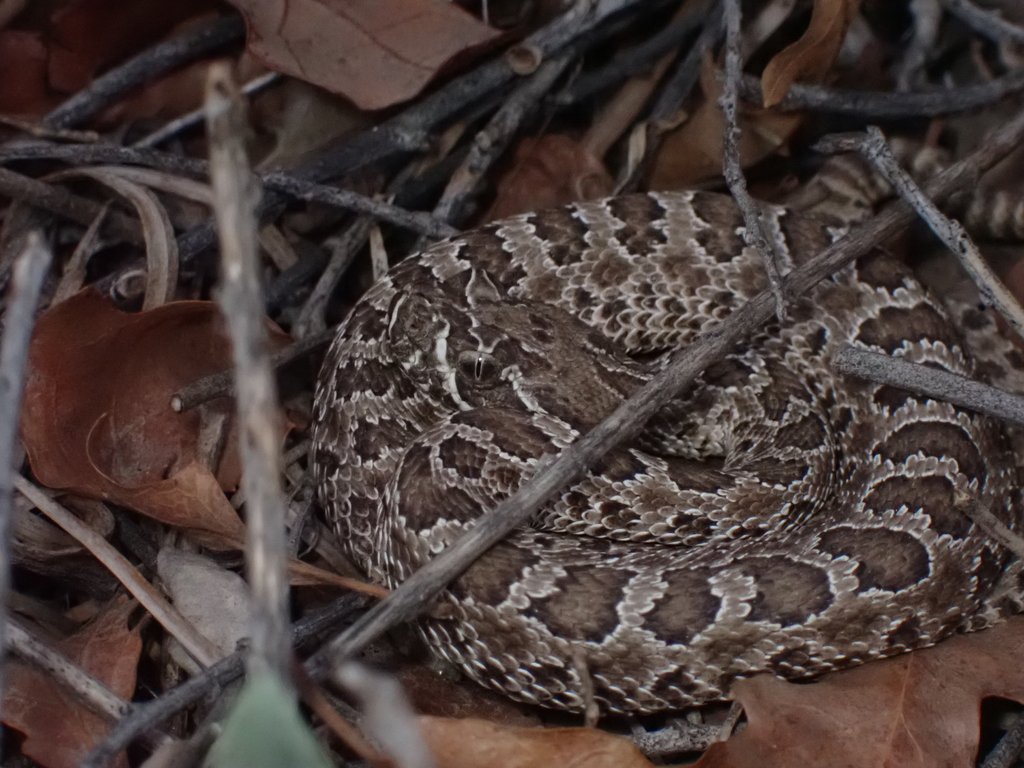
Much of the West is covered by the western rattlesnake complex and the prairie rattlesnake, which ranges across the Great Plains and intermountain West. These are typically tan to greenish snakes with darker blotches that fade into bands toward the tail. They occupy grasslands, rocky outcrops, and prairie dog towns, and are among the most commonly encountered rattlesnakes in the interior of the country.
The timber rattlesnake
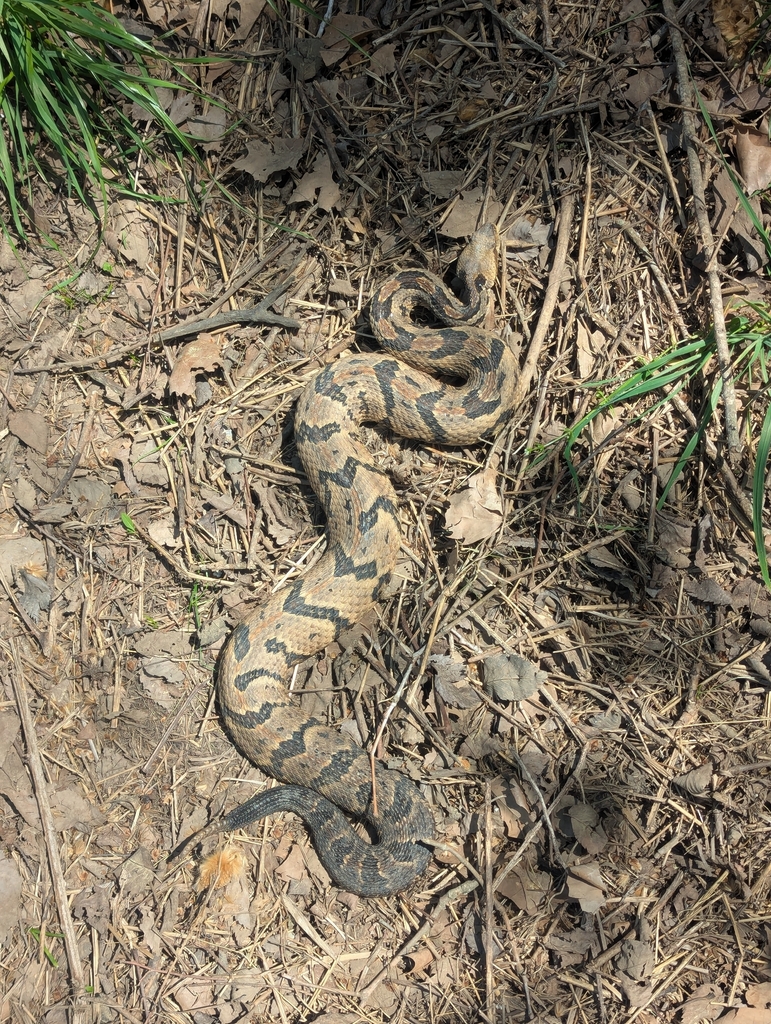
The timber rattlesnake is the rattlesnake of the eastern forests, ranging from the Appalachians into the Northeast and Midwest. It is a large, well-camouflaged snake with dark crossbands over a gray, yellow, or brownish body. Timber rattlesnakes are generally calm and reluctant to bite, but habitat loss has made them rare or protected in many states.
Pygmy rattlesnakes and massasaugas
The genus Sistrurus holds the smaller rattlesnakes. The pygmy rattlesnake of the Southeast is a tiny, secretive snake with a rattle so small it sounds like an insect. The eastern massasauga and western massasauga are stout little rattlers of wetlands and prairies in the Midwest. Their bites are still venomous and require medical care, but their small size and quiet habits mean they are easy to overlook.
Other notable rattlesnakes
Beyond the best-known species, the United States holds many regional rattlesnakes worth a mention. The Mojave rattlesnake of the southwestern deserts has an especially potent venom, while the sidewinder is a small desert specialist that loops sideways across loose sand. The red diamond rattlesnake of southern California and the speckled rattlesnake of rocky southwestern terrain round out a group that is far more varied than most people realize. Many of these species are restricted to specific habitats, so what you might meet depends heavily on where you are.
Where they live and what to do
Between all these species, rattlesnakes reach nearly every corner of the lower 48, though most local areas have only one or two species. They warm themselves on trails, rocks, and sunny edges, especially in spring and fall. Give any rattlesnake plenty of room, since most bites happen when people try to handle or kill them. To see which species occur where you live, start with the states browser, and learn the broader rules on the venomous snakes hub or with our how to tell if a snake is venomous guide.
Rattlesnakes are a remarkably diverse group, but once you learn the shared traits, the triangular head, the heavy body, and the rattle, you can place almost any of them at a glance. Respect the distance they need and most encounters end with the snake simply moving on.