
Identification
Milk Snake vs. Coral Snake: Reading the Bands the Right Way
A milk snake vs coral snake guide. The harmless milk snake copies the venomous coral snake's red, black, and yellow bands. Here is how to read them safely.
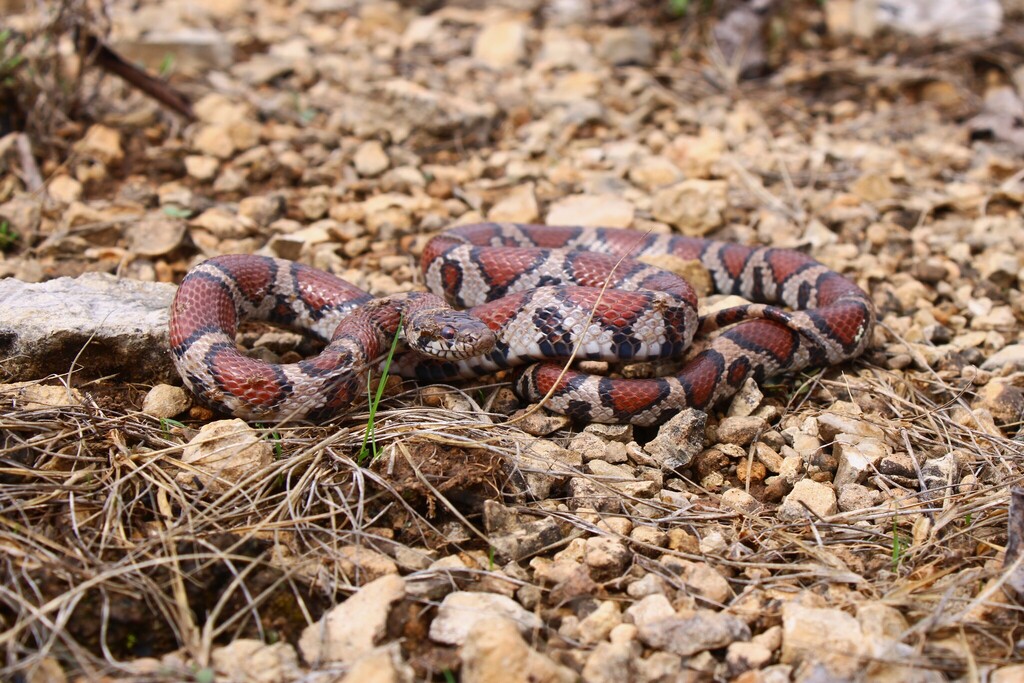
The milk snake and the coral snake are one of nature's most famous look-alike pairs. Both wear bold bands of red, black, and yellow or cream, and at a glance they are easy to mix up. The difference matters: the milk snake is a harmless constrictor, while the coral snake carries a potent venom. The good news is that with a little care you can read the bands, and a few other features, to tell them apart.
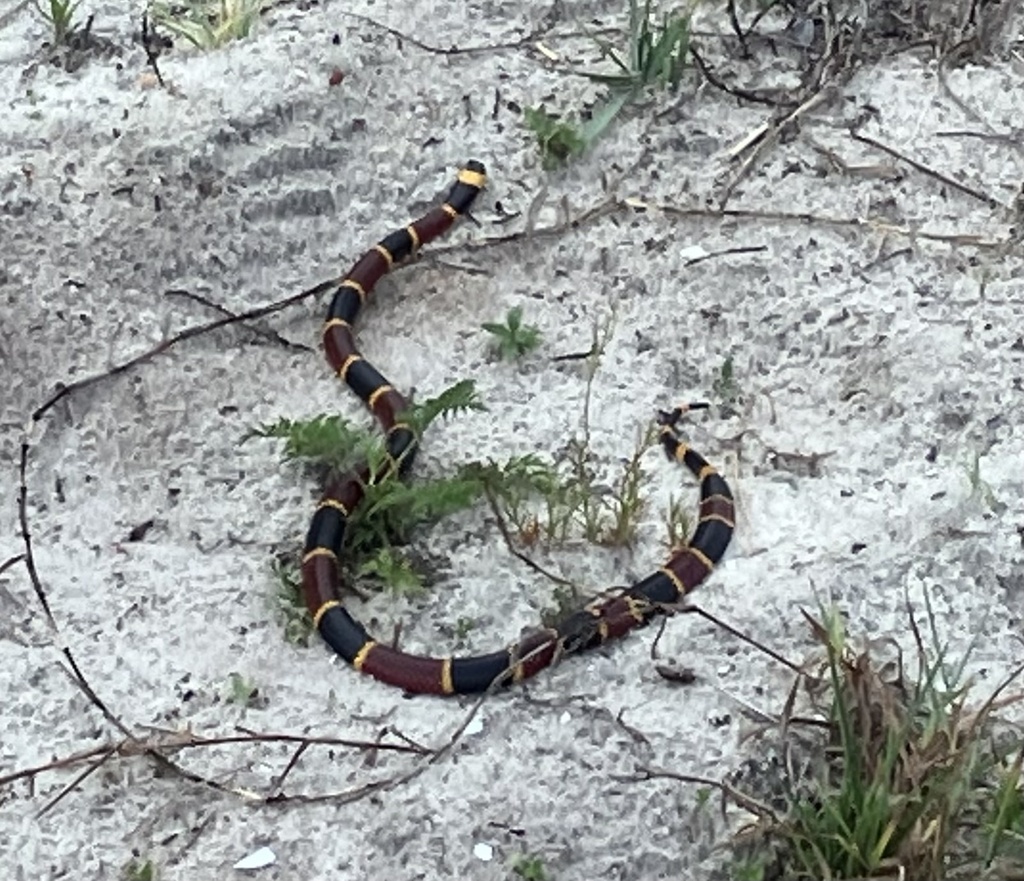
The red-touches-yellow rule, and its limits
The old rhyme is "red touches yellow, kill a fellow; red touches black, friend of Jack." On a U.S. coral snake the red bands sit directly against the yellow bands. On a milk snake the red bands are bordered by black. So in the United States, red against yellow points to a coral snake, while red against black points to a harmless milk snake or kingsnake. It is a useful starting point, but treat it as a clue, not a guarantee.
Why the rhyme fails outside the U.S.
Coral snakes range far into Mexico, Central America, and South America, and many of those species do not follow the red-touches-black-is-safe pattern at all. Some have bands in a different order, some are mostly black, and a few barely show the classic colors. The rhyme was built around the handful of coral snakes in the United States, so outside that range it can give you a dangerously false sense of safety. When in doubt anywhere, keep your distance and do not handle the snake.
Look at the head color
Head color is a strong second check in the U.S. The coral snake has a blunt, rounded black snout, with the black covering the front of the head past the eyes. The milk snake usually has a lighter, patterned head, often with a pale or banded snout rather than a solid black cap. From a clear photo, a snake with a glossy black nose deserves the most caution.
Band order, shape, and shine
Beyond which colors touch, the overall look differs. Compare these features from a safe distance or a zoomed photo:
- Color contact: red against yellow suggests a U.S. coral snake; red against black suggests a milk snake.
- Rings: coral snake bands usually wrap all the way around the body; milk snake blotches can be saddles that do not fully encircle.
- Snout: solid black nose leans coral snake; pale or patterned snout leans milk snake.
- Build: coral snakes are slim and smooth; milk snakes are also slender but often glossier with crisper saddle edges.
Behavior and temperament
Coral snakes are secretive, spend much of their time hidden in leaf litter and burrows, and rarely bite unless handled, though their venom is serious. Milk snakes are common around farms and outbuildings, where the old myth that they drink milk from cows came from, and they are quick to flee or, if grabbed, to bite harmlessly and musk. Neither snake should be picked up, but the milk snake poses no medical danger.
Range matters
Milk snakes are widespread across much of North America. U.S. coral snakes are limited to the Southeast and parts of the Southwest. If you live well outside coral snake range, a banded red-black-yellow snake is almost certainly a milk snake or a kingsnake. Check what lives in your county with the state and county browser and review the dangerous species on the venomous snakes guide.
Confirm it the safe way
Read the full profiles for the eastern milksnake and the eastern coralsnake, or upload a clear photo to our identification tool. The closely related eastern kingsnake is another harmless banded look-alike worth knowing. For the broader rules, see how to tell if a snake is venomous and test yourself with the snake ID quiz.
Banded snakes set off alarm bells for good reason, but most of the ones people meet are harmless mimics. You never need to handle a snake to identify it. Read the bands from a distance, give it space, and let it move on.