
Species spotlight
Black Mamba: Separating the Reputation From the Reality
The black mamba is one of Africa's most feared snakes, fast and highly venomous. Learn its real range and behavior, and how the reputation compares to reality.
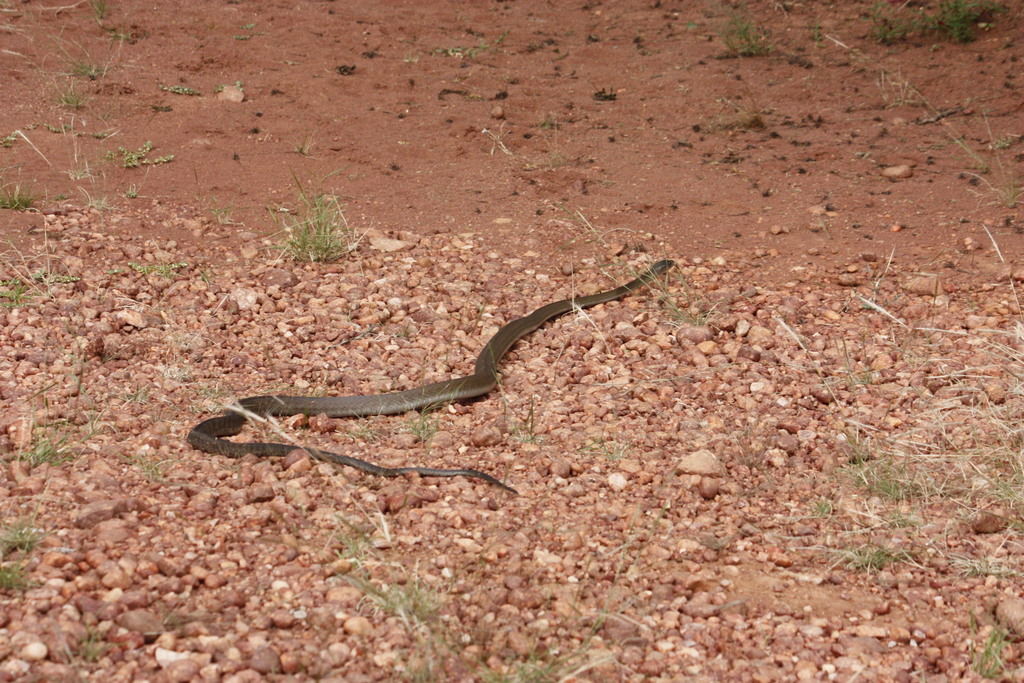
Few snakes carry a heavier reputation than the black mamba, Dendroaspis polylepis. It is genuinely fast, large, and armed with a potent neurotoxic venom, and in sub-Saharan Africa it is treated with deep respect. But much of its mythology, the idea that it chases people down or attacks without reason, gets the animal wrong. The real black mamba is a shy, nervous snake that almost always tries to escape.
Where it lives
The black mamba is widespread across eastern and southern Africa, including South Africa and many countries to its north. It favors savanna, open woodland, rocky hillsides, and scrub rather than dense forest. It often uses a permanent home base such as a termite mound, a hollow tree, or a rock crevice, returning to the same shelter day after day.
This habit of keeping a fixed lair is part of why people occasionally come into conflict with mambas. When farms, sheds, and homes spread into mamba country, the snake may take up residence in a wood pile, a cavity wall, or a barn, simply because it makes a good refuge. The snake is not seeking out people. It is using the same kind of sheltered, rodent-rich space it would choose anywhere, and trouble usually starts only when someone surprises it at close range.
Size and appearance
It is Africa's longest venomous snake, commonly 6 to 9 feet and occasionally longer. The name is misleading: the body is usually gray, olive, or brownish, not black. The black refers to the inky-dark lining of the mouth, which the snake gapes open as a warning when cornered. The body is slender and the head is long and coffin-shaped.
- Long, slender body in gray to olive-brown, not black
- Coffin-shaped head and a slightly grim, fixed expression
- Inky black mouth lining shown in threat displays
- Smooth, fast-moving on open ground
Venom and danger to people
The black mamba's venom is highly toxic and fast-acting, made up mainly of neurotoxins that interfere with the signals between nerves and muscles. An untreated serious bite can be fatal, and this is a snake that demands real caution within its range. Where the reputation breaks down is in behavior: the mamba is not aggressive by nature and does not hunt humans. It strikes defensively when it feels cornered or surprised, and like most snakebites worldwide, incidents often involve people who step on, reach near, or try to kill the snake.
The mamba's threat display is worth understanding because it is a clear warning rather than a prelude to attack. A frightened mamba may raise the front part of its body well off the ground, spread a narrow hood, and gape its dark mouth. This is the snake telling you, in the plainest terms it has, that you are too close. The correct response is to freeze briefly, then back away and open an escape path. Antivenom is effective, and prompt medical care is the difference that matters most after a bite.
How to identify it
Within its African range, the combination of large size, gray-brown color, and the dark mouth gape is distinctive. It can be confused with harmless species and with other elapids, so local knowledge matters. It belongs to the same family as cobras and the king cobra, all front-fanged elapids with neurotoxic venom. To see where it sits among the world's deadliest species, read the guide to the most venomous snakes.
Notable facts
- It is the longest venomous snake in Africa and among the fastest snakes in the world over short distances.
- The black in its name comes from its mouth, not its skin color.
- It is a daytime hunter that preys mainly on small mammals and birds.
- Effective antivenom exists, and prompt treatment dramatically improves outcomes.
The black mamba is a powerful illustration of how reputation and reality can diverge. It is a serious snake that warrants distance and respect, but it is also a shy animal that wants nothing to do with people. Learn how the world's most dangerous snakes actually behave on the species hub, or compare venomous groups in the most venomous snakes guide.