
Snake basics
The Smallest Snakes in the World
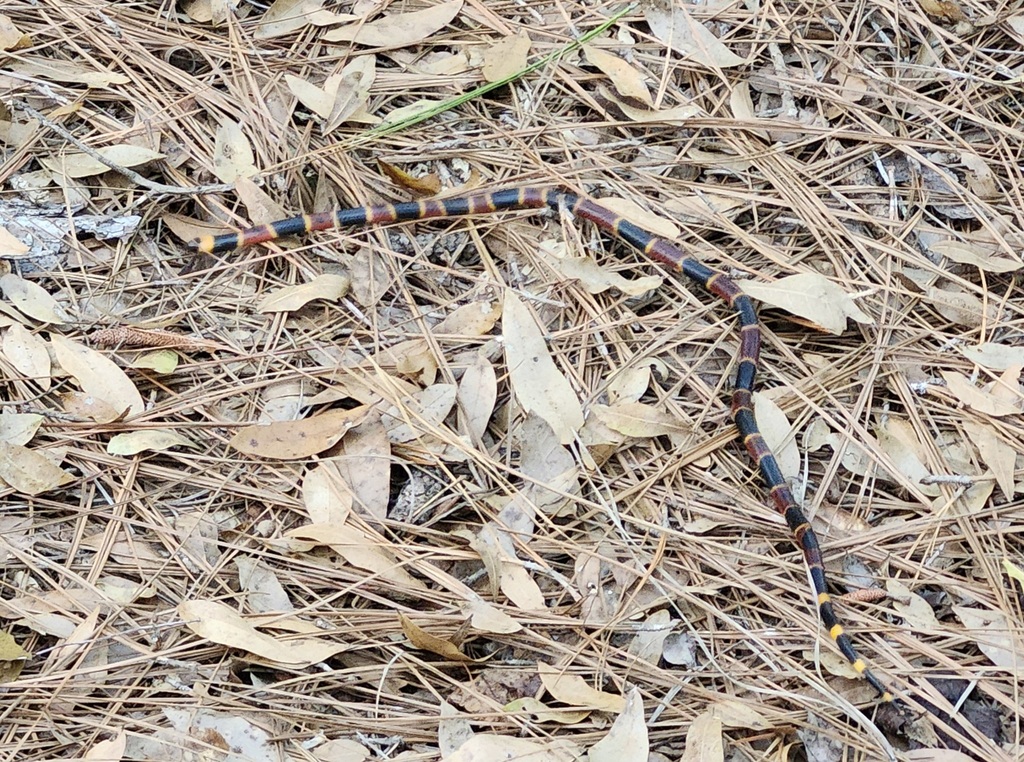
Snakes are famous for getting big, but the smallest ones are easy to miss. The tiniest known species is barely longer than a finger and thin enough to rest curled on a coin. These miniature snakes live mostly out of sight, hunting insect larvae in soil and leaf litter, and they show how far the snake body plan can shrink.
The Barbados threadsnake: the smallest known snake
The Barbados threadsnake (Tetracheilostoma carlae) is the smallest snake species currently described. Adults average around 10 cm (about 4 inches) in total length, with the longest verified specimen near 10.4 cm.
It is roughly the diameter of spaghetti and dark brown with faint lighter stripes. The species was formally described in 2008 from specimens found on the Caribbean island of Barbados, where it lives in soil and forest leaf litter.
Because it is known from only a small area, the Barbados threadsnake is considered rare and its habitat is limited, which adds to scientific interest in the species.
Threadsnakes and blindsnakes: the small-snake families
The smallest snakes nearly all belong to a group of burrowing snakes sometimes called the scolecophidians. This group includes threadsnakes (family Leptotyphlopidae), typical blindsnakes (Typhlopidae), and a few related families.
Threadsnakes are the thinnest snakes on Earth, often looking more like a piece of dark thread or a long worm than a snake. Blindsnakes are usually a bit thicker and are frequently mistaken for earthworms.
Many species in these families stay under 20 cm, and a number of them rival the Barbados threadsnake in size. As more remote habitats are surveyed, scientists may yet describe an even smaller species.
Why these snakes are so small
Body size in snakes is shaped heavily by diet. The smallest snakes are specialists that feed on soft, tiny prey, mainly the eggs, larvae, and pupae of ants and termites.
This brood is abundant and predictable inside ant and termite colonies, so a snake does not need to be large to find a steady meal. A small body fits through narrow tunnels and lets the snake live inside or beside the insect nests it raids.
There may also be a lower size limit. Researchers have suggested that snakes much smaller than the Barbados threadsnake would struggle to produce viable hatchlings, because the egg and the young inside it can only get so small and still survive.
How the smallest snakes live
These are fossorial snakes, meaning they spend most of their lives underground or under cover such as logs, rocks, and leaf litter. They are rarely seen in the open and are most active at night or after rain.
Their bodies are built for burrowing rather than for vision. Eyes are reduced to small dark spots under the skin and can usually detect light and dark but not detailed images, which is why the group is called blindsnakes.
They move through soil and tight crevices using a smooth, cylindrical body and reinforced, blunt head. Some species defend themselves by writhing and releasing a foul-smelling fluid rather than by biting.
What they eat and how they hunt
The diet of most threadsnakes and blindsnakes is built around social insects. They follow chemical trails left by ants and termites to locate nests, then feed on the soft brood inside.
Rather than swallowing prey whole in the dramatic way larger snakes handle a rat, many of these snakes feed on a stream of tiny items. Some are known to suck out the contents of larvae or to consume large numbers of small prey in a single visit to a colony.
This feeding style explains the small jaws and slender body. There is no need for the wide gape and powerful constriction seen in larger snakes when the meal is a soft larva smaller than a grain of rice.
Reproduction at miniature scale
Many of the smallest snakes lay very small clutches. The Barbados threadsnake is known to lay a single elongated egg, and the hatchling emerges at a large fraction of the mother's own length.
This is a different strategy from many larger snakes, which may lay or birth dozens of young that are tiny relative to the parent. In the smallest species, investing in one comparatively large offspring appears to be the workable approach.
Some blindsnake species reproduce in unusual ways. The Brahminy blindsnake, a widespread species spread around the world by the plant trade, is parthenogenetic, meaning females can reproduce without males.
How tiny snakes differ from baby snakes of large species
It is easy to confuse a small adult snake with a juvenile of a bigger species. A hatchling rat snake or racer can be only 20 to 30 cm long and pencil-thin, which overlaps the size of some adult small snakes.
The key difference is that the smallest species stay small for life. A 10 cm threadsnake is a full-grown adult, while a 25 cm hatchling python is just starting a growth path that may end several meters long.
Body shape also helps. Threadsnakes and blindsnakes have blunt, rounded heads barely distinct from the neck, smooth uniform scales, and tiny vestigial eyes. Baby snakes of larger species usually have a more obvious head, clear functional eyes, and the color pattern of their species in miniature.
Are the smallest snakes dangerous?
No. Threadsnakes and blindsnakes are harmless to people. They are non-venomous, and most have mouths far too small to bite a human in any meaningful way.
They are beneficial neighbors where they live, helping keep ant and termite numbers in check. If you find one in soil or under a log, the best response is to leave it alone or gently move it back to cover.
Their secretive, underground lives mean most people will never see one, even in places where they are common.
Frequently asked
- What is the smallest snake in the world?
- The Barbados threadsnake (Tetracheilostoma carlae) is the smallest known snake species. Adults average about 10 cm long, roughly the diameter of spaghetti, and it is found on the island of Barbados.
- Why are some snakes so tiny?
- The smallest snakes specialize in eating the soft eggs, larvae, and pupae of ants and termites. That abundant, easy prey does not require a large body, and a small slender shape lets the snake burrow through soil and into insect nests. There also seems to be a lower size limit set by how small a viable egg and hatchling can be.
- What do the smallest snakes eat?
- Threadsnakes and blindsnakes feed mainly on the brood of social insects, especially ant and termite larvae and pupae. They follow the insects' chemical trails to find a nest and feed on the soft young inside.
- How can I tell a tiny adult snake from a baby snake?
- A baby snake of a large species is still growing and will get much bigger, while the smallest species stay small for life. Tiny adult threadsnakes and blindsnakes also have blunt rounded heads, smooth uniform scales, and reduced eyes, whereas hatchlings of larger snakes show clear eyes, a distinct head, and a miniature version of their adult pattern.
- Are the smallest snakes venomous or dangerous?
- No. Threadsnakes and blindsnakes are non-venomous and harmless to people, and most have mouths too small to bite a human. They are helpful because they eat ants and termites.
- Where do the smallest snakes live?
- They are burrowing snakes that spend most of their lives underground or under logs, rocks, and leaf litter. The smallest species are found in tropical and subtropical regions, and many are most active at night or after rain.
Last reviewed June 22, 2026. Informational only, and not a substitute for professional medical or wildlife advice.