
Species spotlight
Timber Rattlesnake: The Quiet Pit Viper of the Eastern Woods
The timber rattlesnake is a widespread venomous snake of the eastern US, including the southern canebrake form. Learn where it lives and how to identify it.
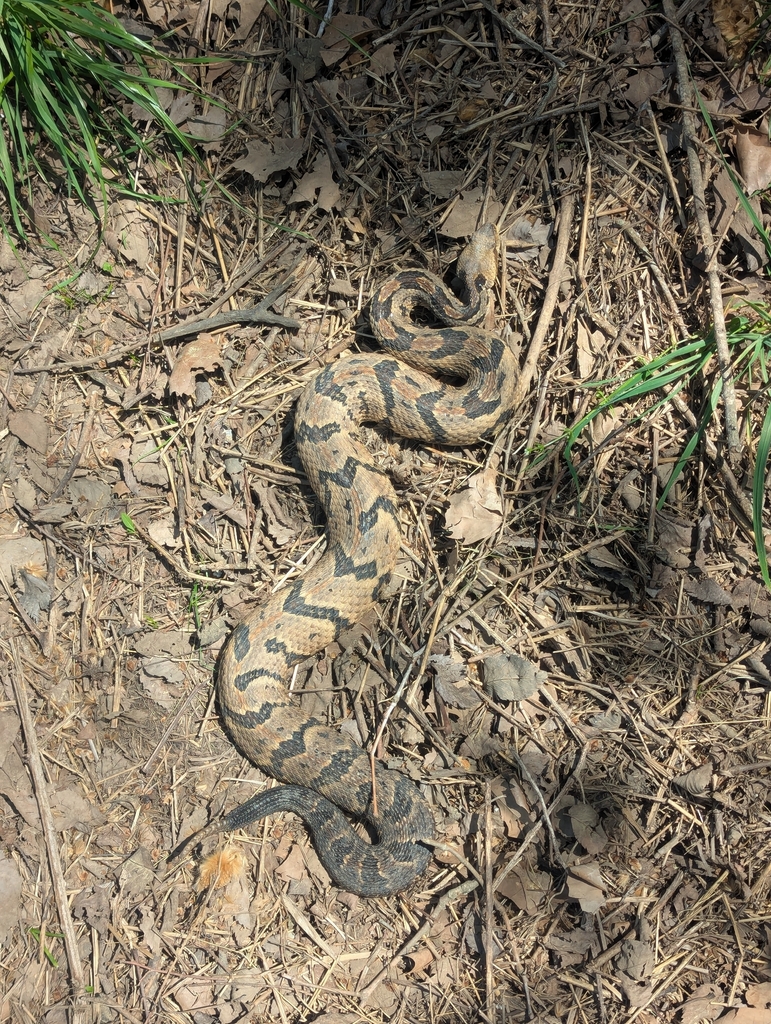
The timber rattlesnake, Crotalus horridus, is one of the most widespread venomous snakes in the eastern United States and a classic creature of mature hardwood forests. It is a large, slow-moving pit viper with a reputation for being remarkably calm, often holding its position rather than fleeing or striking. Despite that mild temperament, it carries potent venom and deserves a wide berth wherever it lives.
Where it lives
The timber rattlesnake ranges across much of the eastern and central United States, from New England and the Appalachians south to the Gulf states and west to parts of Texas and the eastern Great Plains. In the north it favors rocky, wooded ridges and uses communal dens, called hibernacula, where many snakes overwinter together. In the south the lowland form is often called the canebrake rattlesnake, found in river bottoms, pine flatwoods, and cane thickets.
These two regional forms behave differently in ways that reflect their habitats. Northern timber rattlesnakes endure long, cold winters and may travel a mile or more between their summer hunting grounds and the rocky den they return to each fall. Southern canebrakes live in a milder climate and stay active for a larger share of the year. In both cases the snake spends much of its time coiled and motionless beside fallen logs or rodent trails, waiting to ambush prey.
Size and appearance
Adults usually measure 3 to 5 feet. The body is heavy and the background color ranges from yellow and tan to gray, brown, or nearly black, crossed by dark V-shaped or chevron bands. Many individuals show a rust-colored stripe down the spine. The southern canebrake form tends to be paler with a brownish stripe and sometimes a dark line through the eye. All timber rattlesnakes have a black, velvety tail tipped with the keratin rattle.
- Dark chevron or V-shaped crossbands, not diamonds
- Often a reddish-brown stripe down the back
- Solid black tail ahead of the rattle
- Broad triangular head and vertical pupils
Venom and danger to people
Timber rattlesnake venom is strong, and some populations carry an especially neurotoxic venom component in addition to the usual tissue-damaging effects. Even so, bites are rare. The species is famous for its reluctance to strike, frequently lying motionless and giving a long buzz of warning before doing anything else. As with every rattlesnake, the great majority of bites occur when people try to handle, move, or kill the animal.
Hikers and gardeners who simply watch where they step and reach are at very low risk. The danger rises sharply only when someone tries to interact with the snake, whether out of curiosity, bravado, or a misguided attempt to remove it. The smarter response to a timber rattlesnake on a trail is to stop, give it a wide berth, and wait or walk around it. It will not pursue you.
How to identify it
Look for chevron crossbands and a uniformly black tail, which together separate it from the diamond-patterned eastern diamondback and from harmless mimics like rat snakes and the milksnake. The black tail is a reliable field mark even on very dark individuals. To place it among the country's other pit vipers, see the guide to the most venomous snakes, and use the identification tool if you have a clear photo.
Notable facts
- Northern timber rattlesnakes can live more than 20 years and mature slowly, which makes them vulnerable to over-collection.
- Females may travel back to the same ancestral den every winter.
- The canebrake is not a separate species, just the southern lowland form of the timber rattlesnake.
- It is protected or considered threatened in several northeastern states.
There is also a strong conservation angle to leaving timber rattlesnakes alone. Because they mature slowly and reproduce infrequently, populations recover poorly from killing and collecting, and many states now give the species legal protection. A timber rattlesnake encountered in the woods is usually best treated as a glimpse of healthy forest, not a problem to solve.
The timber rattlesnake shows that a venomous snake can be both potentially dangerous and genuinely gentle in temperament. The safest approach is simple: know where it lives and keep your distance. Find out which snakes share your area with the county browser, or explore more profiles on the species hub.