
Regional guide
Snakes in California: Which Ones Are Venomous?
A clear guide to snakes in California: the only venomous ones are rattlesnakes, while gopher snakes, kingsnakes, and garter snakes are common and harmless.
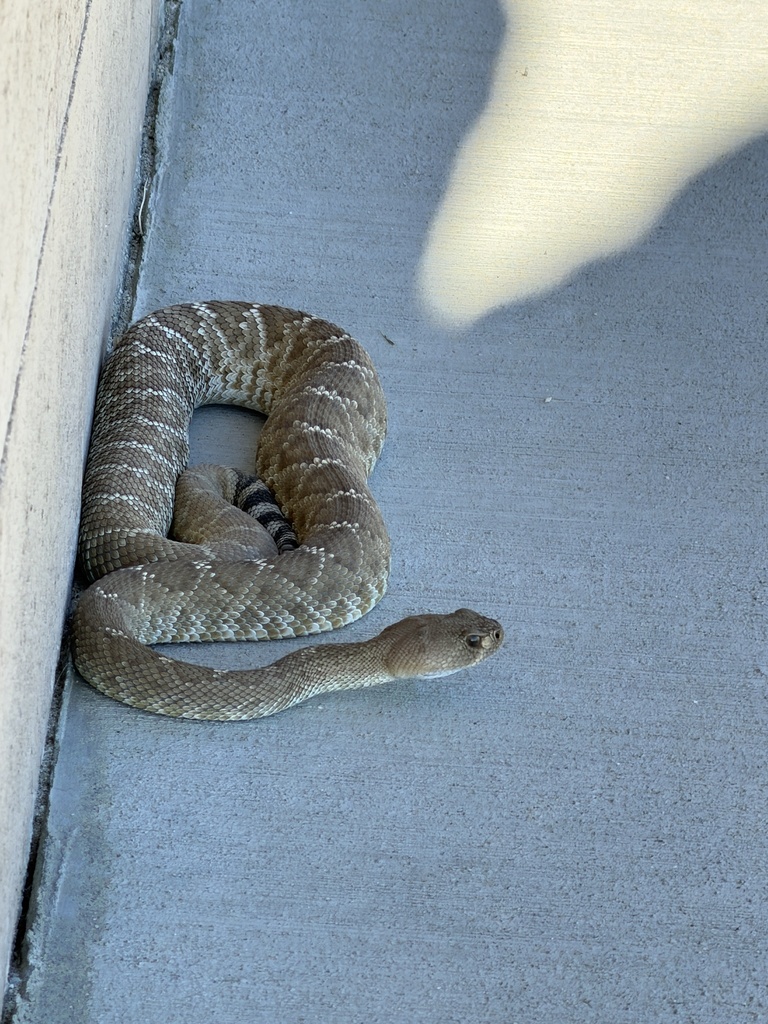
California has more snake species than almost any other state, but the picture is simpler than it looks. The only venomous snakes in California are rattlesnakes. Everything else you are likely to meet, from gopher snakes to kingsnakes to garter snakes, is harmless to people. This guide covers the rattlesnakes worth knowing and the common look-alikes that get mistaken for them.
The only venomous snakes are rattlesnakes
Across its deserts, foothills, and coast ranges, California is home to several rattlesnake species, all in the genus Crotalus. They share the pit viper traits: a broad triangular head, vertical pupils, a heat-sensing pit between eye and nostril, and a rattle at the tip of the tail. No other native California snake is dangerously venomous, so once you can recognize a rattlesnake, you have covered the real risk.
- The western rattlesnake, the wide-ranging species of the northern and central state (this group includes the northern Pacific and southern Pacific forms)
- The Mojave rattlesnake of the southeastern deserts, known for an especially potent venom
- The sidewinder, a small desert rattlesnake that moves in a looping, sideways motion
- The red diamond rattlesnake, a reddish, large-bodied species of the far south
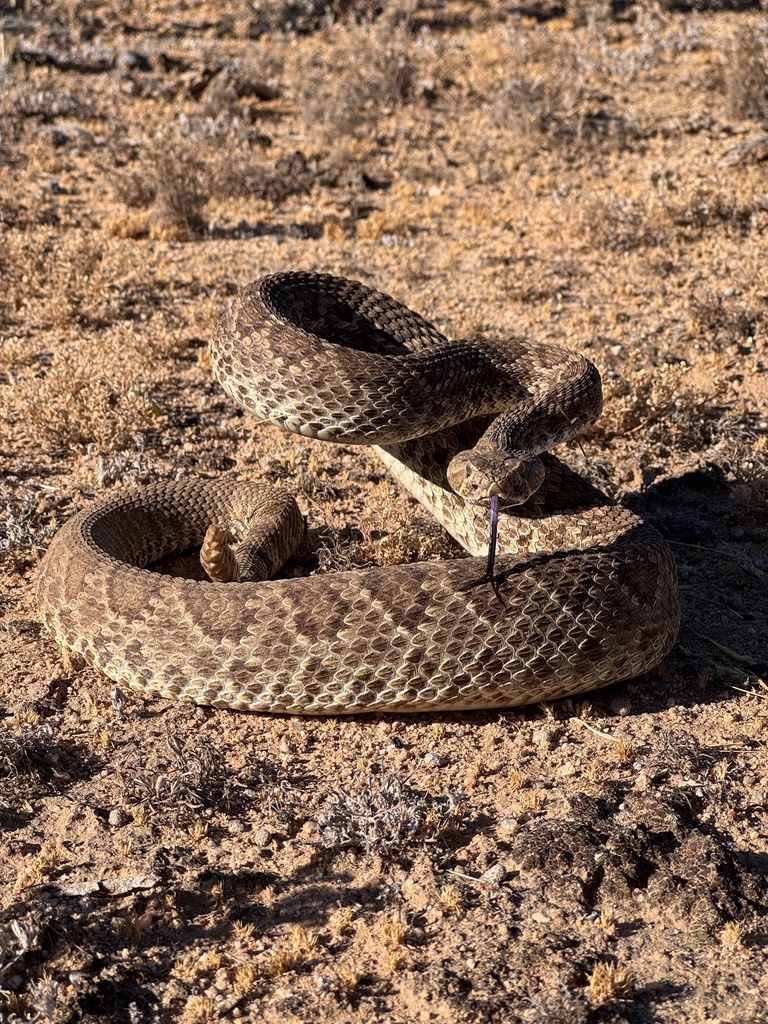
How to recognize a rattlesnake
The rattle is the clearest sign, a set of interlocking keratin segments that buzz when the snake is alarmed. But a rattlesnake will not always rattle before it moves, and young ones have only a small button, so do not rely on sound alone. The heavy body, blotched or diamond pattern, triangular head, and blunt tail are all useful clues. If you are not sure, keep your distance and use our photo identification tool.
Common harmless snakes
Most snakes Californians see are not rattlesnakes at all. The gopher snake is the one most often killed by mistake; it is a large, blotched, non-venomous constrictor that will hiss, flatten its head, and even vibrate its tail in dry leaves to mimic a rattler. Look for its narrow head, round pupils, and the lack of a true rattle.
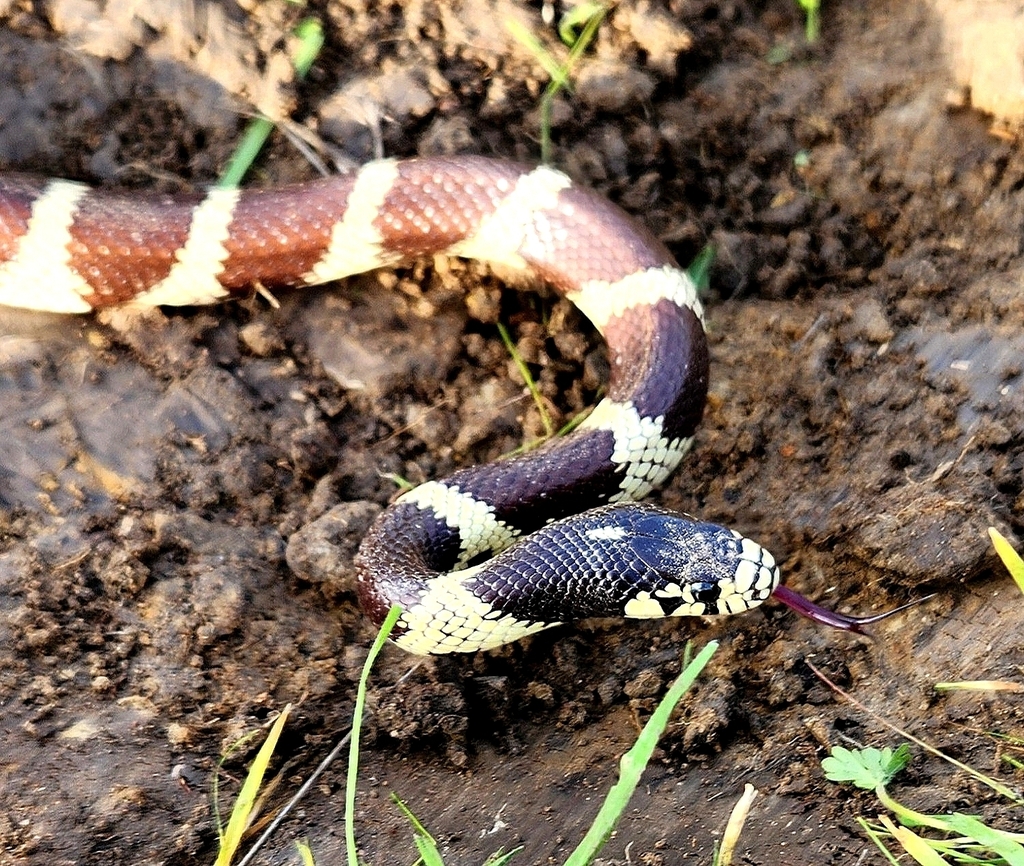
The California king snake is another favorite, usually banded in dark brown or black and cream. Kingsnakes are valuable neighbors because they eat rodents and even other snakes, including rattlesnakes, to which they are largely immune. Garter snakes such as the common garter snake are slender, striped, and harmless, often found near water and gardens.
Gopher snake or rattlesnake?
Because the gopher snake puts on such a convincing rattlesnake act, it causes a lot of confusion. The reliable differences are the head shape and tail. A gopher snake has a slim head only a little wider than its neck, round pupils, and a pointed tail with no rattle. A rattlesnake has a distinctly triangular head, vertical pupils, and that segmented rattle. When you cannot get a safe, clear look, treat the snake as if it could be venomous and leave it alone.
Where snakes turn up in California
California's huge range of habitats means snakes can show up almost anywhere, from coastal scrub and oak woodland to high desert and suburban yards. Rattlesnakes favor warm, rocky, sunny spots and the edges of trails, while gopher snakes and kingsnakes roam grassland, farmland, and gardens hunting rodents. Garter snakes stay close to water. Most encounters happen in spring and early summer when snakes are most active, and again in early fall before they shelter for the cooler months. Keeping yards clear of debris piles, woodpiles, and tall grass reduces the cover and prey that draw snakes near homes.
What to do if you see one
Give any rattlesnake room. They are not aggressive and would rather escape than strike, but most bites happen when people try to catch, move, or kill them. Step back, keep pets leashed, and let the snake leave on its own. If a rattlesnake is somewhere it truly cannot stay, call a local animal control or licensed removal service rather than handling it yourself. To see exactly which species live in your county, browse the California snakes page, and learn the broader rules on our venomous snakes hub.
California's snakes are overwhelmingly harmless, and even the venomous ones play an important role controlling rodents. With a little knowledge of what lives near you, almost every encounter can end calmly, with both you and the snake going your separate ways.