
Identification
Hognose Snake vs. Rattlesnake: The Great Pretender Explained
A hognose snake vs rattlesnake guide. The harmless hognose flattens a cobra-like hood, hisses, and plays dead. Here is how to tell it from a real rattlesnake.
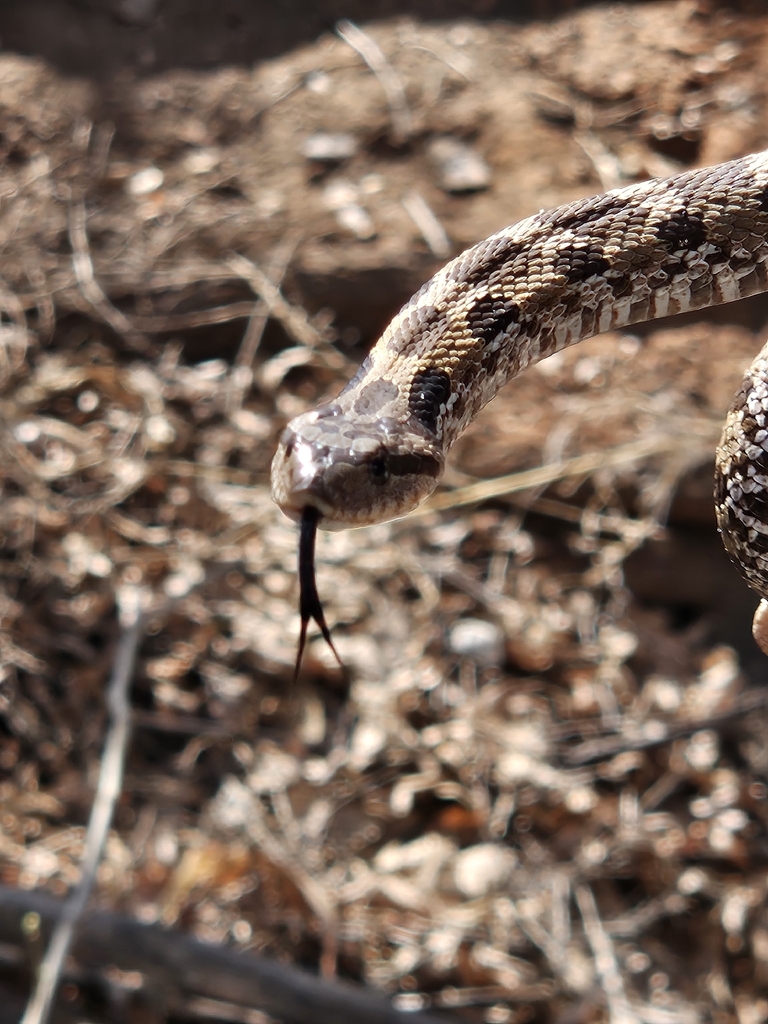
The hognose snake is one of the best actors in the snake world. When it feels threatened it flares the skin of its neck into a wide, cobra-like hood, hisses loudly, and may strike with its mouth closed. If that bluff fails, it flips onto its back, writhes, and plays dead, sometimes with its tongue lolling out. All of this can make people think they have cornered a rattlesnake or worse. In reality the hognose is a harmless, mild, rear-fanged snake, and a few calm checks tell it apart from a true rattler.
The hognose bluff, step by step
The hognose runs through a whole defensive routine. First it spreads its neck and the front of its body flat and wide, raising its head to look bigger and more dangerous. Then it hisses hard and may lunge with open jaws but rarely makes contact, often striking with the mouth shut. If you do not retreat, it switches tactics entirely and plays dead, rolling belly-up, going limp, and even releasing a foul musk. Turn it right side up and it will often flip back over, giving the trick away.
The upturned snout is the giveaway
The clearest field mark is the nose. The hognose snake has a distinctly upturned, shovel-like snout that it uses to dig in sandy soil for toads, its favorite food. No rattlesnake has this pig-like upturned nose. If you can see that little upturned scale on the tip of the snout, you are almost certainly looking at a hognose, not a viper.
Look at the tail
A rattlesnake has a true rattle, a chain of dry keratin segments at the tail tip that it holds up and shakes. The hognose has a plain, tapering tail that ends in a simple point. A nervous hognose may vibrate that tail in dry leaves, which can sound buzzy, but there is no rattle to see. A visible segmented rattle means treat the snake as venomous and step back.
Head, pupils, and body, from a photo
Rattlesnakes are pit vipers, with a broad triangular head, vertical cat-like pupils, and a heat-sensing pit between the eye and nostril. A hognose has round pupils, no facial pit, and that telltale upturned snout. Keep in mind the hognose flattens its neck and head when bluffing, which can fake the viper triangle, so combine head shape with the snout and tail rather than judging shape alone. Only assess pupils from a clear, zoomed photo, never up close.
Quick comparison
From a safe distance or a zoomed photo, run through these:
- Snout: upturned, pig-like nose means hognose; a plain blunt snout fits a rattlesnake.
- Tail: plain pointed tail means hognose; a visible segmented rattle means rattlesnake.
- Display: a flared cobra-like hood and playing dead are hognose behaviors, not rattlesnake ones.
- Build: rattlesnakes are heavy-bodied with a blunt tail base; hognose snakes are stout but mid-sized with a thin tail.
Are hognose snakes actually venomous?
Hognose snakes are technically rear-fanged and produce a mild saliva that helps them subdue toads, but they are not considered dangerous to people. Their small fangs sit at the back of the mouth, they almost never bite in defense, and on the rare occasion a bite does happen it typically causes nothing worse than mild local swelling. This is a completely different situation from a rattlesnake, whose front-fanged bite delivers medically serious venom. For practical purposes, treat the hognose as harmless and the rattlesnake as a genuine medical threat.
Color and pattern variation
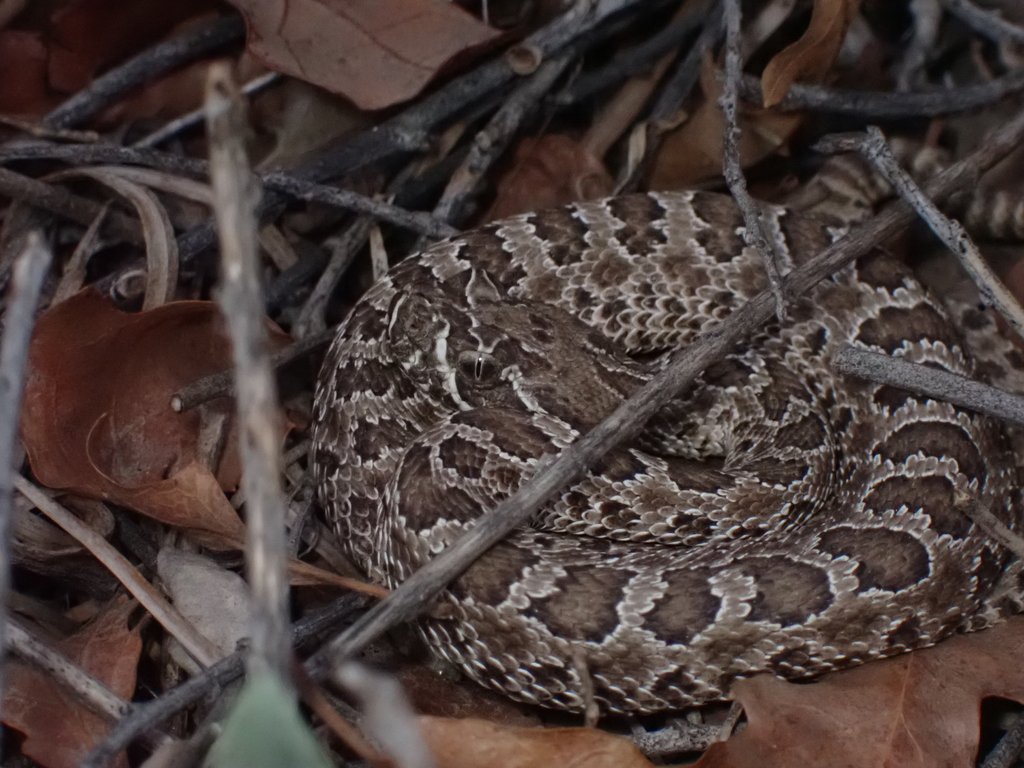
One reason hognose snakes get misidentified is that their color is highly variable. Depending on the region and individual, a hognose can be tan, yellow, orange, gray, brown, or nearly solid black, with or without dark blotches down the back. That patchy, blotched look can resemble a rattlesnake's markings at a glance. The upturned snout and the plain pointed tail stay consistent across all those color forms, which is exactly why those two features are the ones to trust.
Range and what lives near you
Hognose snakes are found across much of the central and eastern United States, often in sandy or loose soils, and many rattlesnake species share that ground. Before assuming the worst, check which snakes actually live in your area with the state and county browser, and review the dangerous species on the venomous snakes guide.
Confirm it the safe way
Read the full profiles for the eastern hognose snake and a typical rattler like the prairie rattlesnake, or upload a clear photo to our identification tool. For the general rules, see how to tell if a snake is venomous, and test yourself with the snake ID quiz.
The hognose is harmless and, frankly, more theatrical than threatening. You never need to handle a snake to identify it, though. Watch the show from a distance, look for the upturned snout and the plain tail, and let the great pretender go on its way.