
Species spotlight
Eastern Diamondback Rattlesnake: The Largest Venomous Snake in North America
The eastern diamondback rattlesnake is the heaviest venomous snake in North America. Learn where it lives, how to identify it, and how to stay safe near it.
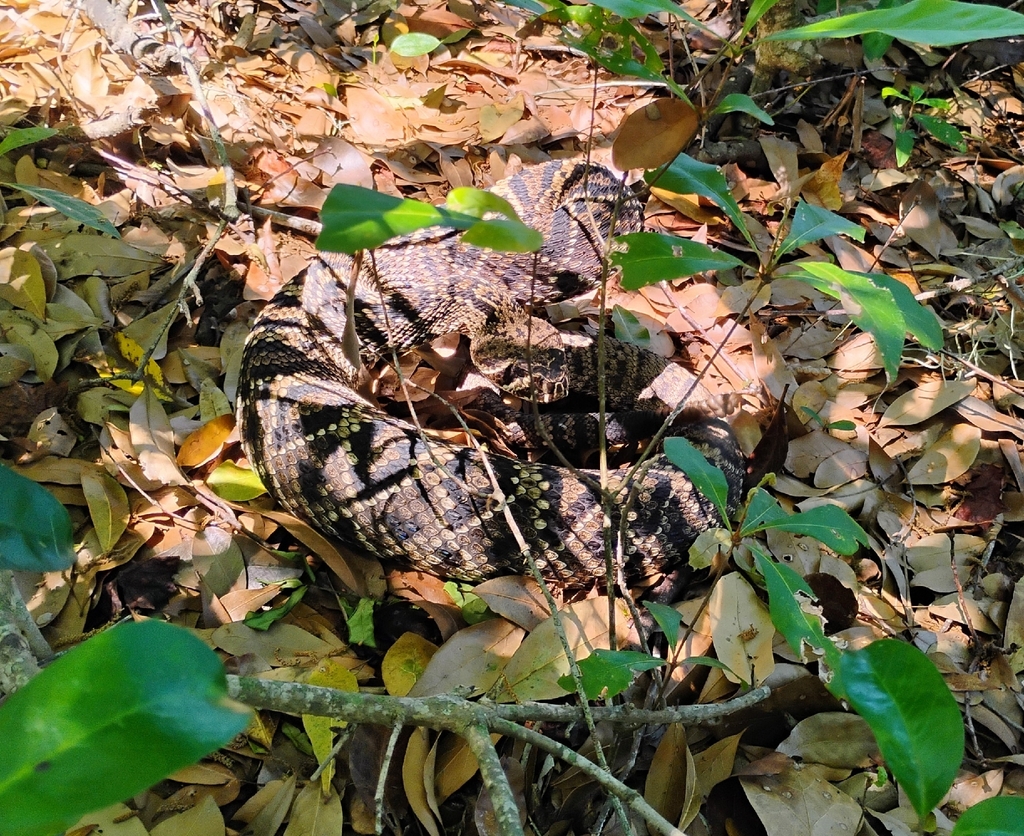
The eastern diamondback rattlesnake, Crotalus adamanteus, is the largest venomous snake in North America and one of the heaviest rattlesnakes on Earth. It is a thick-bodied pit viper of the southeastern United States, instantly recognized by the chain of dark, light-edged diamonds running down its back. Despite its fearsome reputation, it is a shy ambush hunter that would rather sit still and stay hidden than confront a person.
Where it lives
The eastern diamondback is found across the coastal plain of the southeastern United States, from southern North Carolina down through Florida and west along the Gulf to eastern Louisiana. It is strongly tied to longleaf pine flatwoods, sandhills, palmetto scrub, and the edges of coastal marshes. It often shelters in gopher tortoise burrows and stump holes, which give it cool refuge in summer and protection in cold snaps.
Habitat loss has reduced its range, and it is now absent from many areas where it was once common. Where it remains, it is a key predator of rodents and rabbits, helping keep those populations in check. The decline of the gopher tortoise, whose burrows the snake depends on for shelter, has hit some diamondback populations especially hard.
Because the species favors a specific kind of fire-maintained pine habitat, it is often a useful indicator of healthy southeastern ecosystems. Where longleaf pine and natural burning have been preserved, diamondbacks tend to persist. Where that landscape has been cleared for development or fragmented by roads, they fade out, which is one reason sightings now feel rarer than the snake's old reputation suggests.
Size and appearance
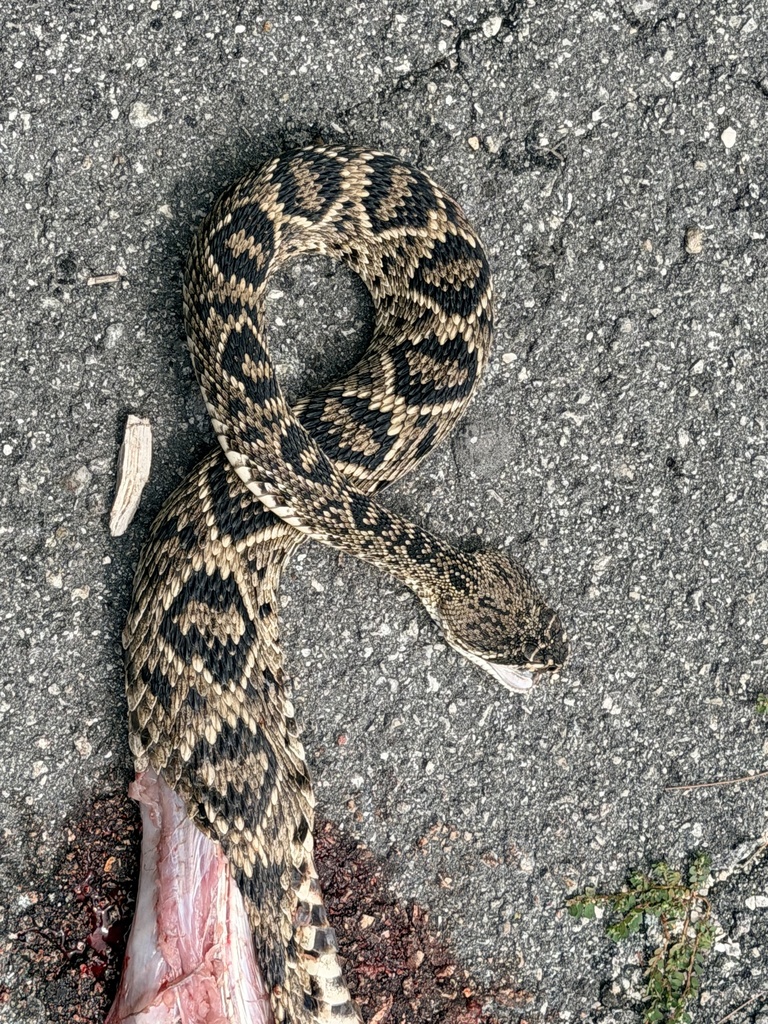
Adults commonly reach 4 to 5.5 feet, and large individuals can exceed 6 feet and weigh several pounds. The pattern is the giveaway: a row of brown or black diamonds with cream or yellowish borders, set against a tan, gray, or olive background. The tail ends in the segmented keratin rattle shared by all rattlesnakes, and the head carries two diagonal light stripes across the face.
- Heavy, muscular body with a broad, triangular head
- Sharp diamond pattern outlined in pale scales
- Two light diagonal lines on each side of the face
- Banded black-and-white tail ending in a rattle
Venom and danger to people
The eastern diamondback delivers a large volume of potent hemotoxic venom through long, hinged fangs, and a bite is a genuine medical emergency. The venom attacks blood and tissue, and an untreated serious bite can be life threatening. That said, bites are uncommon and most happen when people try to handle, corner, or kill the snake. Left alone, a diamondback usually relies on camouflage first, then a loud sustained rattle as a warning before it ever strikes.
When a diamondback does feel cornered, it tends to pull into a defensive S-coil, lift its head, and buzz steadily, behavior that is best understood as a clear request to leave it alone. Striking is a last resort, because venom is metabolically expensive to produce and is meant for capturing prey, not for wasting on something far too large to eat. Giving the snake room almost always defuses the encounter.
How to identify it
In its range the diamond pattern, the facial stripes, and the heavy body separate it from most look-alikes. Harmless rat snakes and the eastern hognose snake are sometimes mistaken for it, but neither has a true rattle or the crisp diamond chain. Compare it directly with the western diamond-backed rattlesnake, its larger-ranging cousin, or browse all venomous snakes to see how the rattlesnake group fits in. If you have a photo, the identification tool can help narrow it down.
Notable facts
- It is the heaviest venomous snake in the Americas and among the largest rattlesnakes anywhere.
- It is an excellent swimmer and has been recorded crossing to barrier islands.
- It can strike from a coiled position to roughly one-third to one-half of its body length.
- Populations have declined enough that several states now restrict or discourage killing them.
The eastern diamondback is a striking example of how a dangerous-looking animal can also be a quiet, ecologically important neighbor. Knowing what lives near you turns fear into respect: check exactly which species share your county using the county browser, and read more about the rattlesnake family on the species hub.