
Identification
Kingsnake vs. Copperhead: How to Tell the Snake-Eater From the Pit Viper
A kingsnake vs copperhead guide. Kingsnakes are harmless and even eat venomous snakes. Learn the banding, pattern, and head differences that tell them apart.
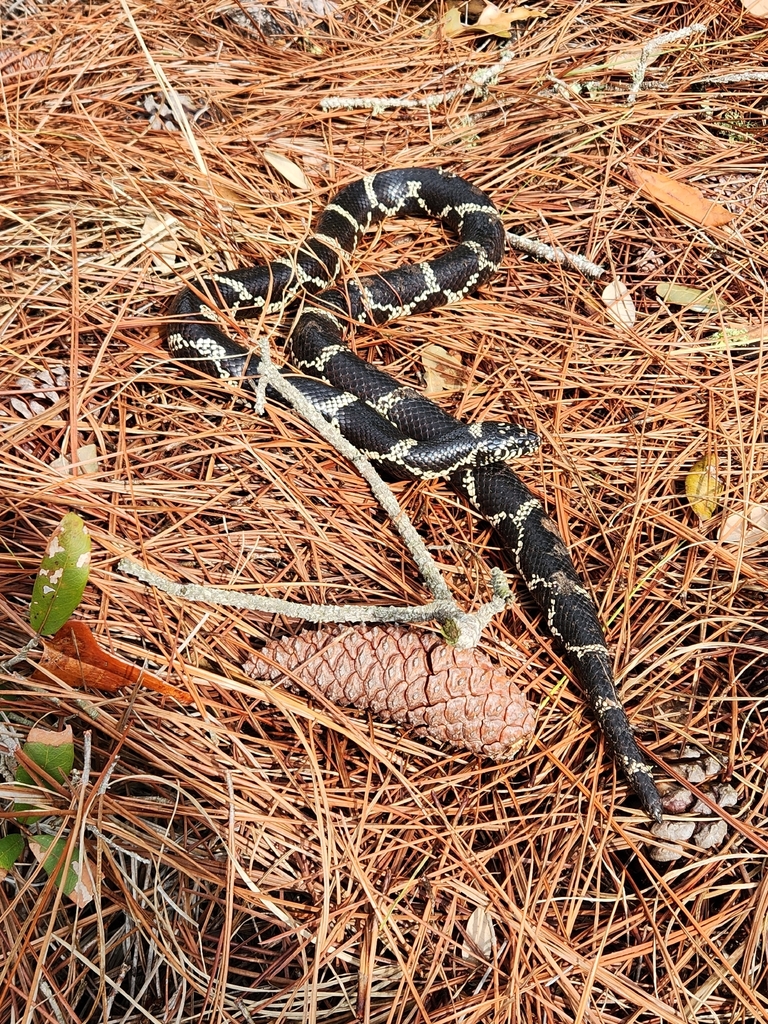
The kingsnake is one of the most useful snakes in the eastern United States, and one of the most often killed by mistake. It is completely harmless to people, and it actively hunts and eats venomous snakes, including the copperhead. Yet because both can show bands of color and live in the same woods and yards, nervous homeowners sometimes destroy the very snake that keeps copperheads in check. A short look at pattern and head shape sorts them out reliably.
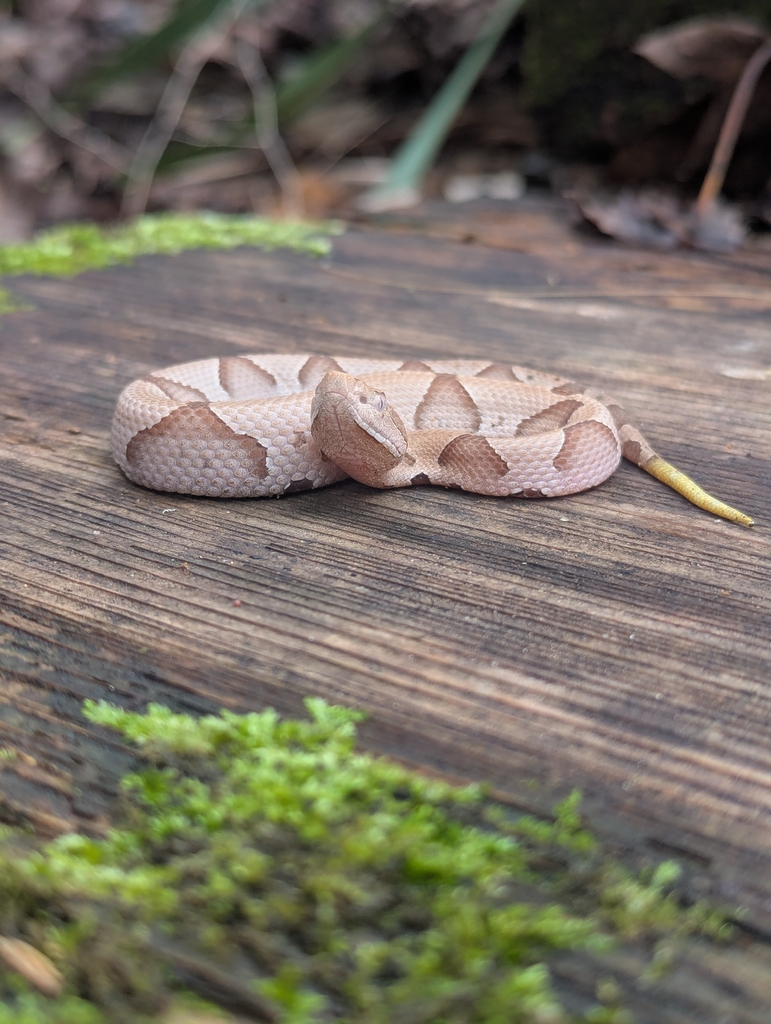
Start with the pattern, because the way each snake's markings are shaped is the clearest difference.
Pattern: chain bands and speckles vs. hourglass crossbands
A copperhead wears a series of dark, hourglass-shaped crossbands on a tan to coppery background. Each band is wide on the sides and pinched narrow across the spine, like a saddle or a dumbbell seen from above. A kingsnake looks nothing like that up close. Depending on the species and region, kingsnakes show smooth chain-link bands of cream over dark brown or black, or a fine speckling of light dots scattered across a dark body. Hourglass crossbands point to copperhead. Chain links or speckles point to kingsnake.
Head shape and pupils
Copperheads are pit vipers, with a broad, triangular head clearly wider than the neck, vertical cat-like pupils, and a heat-sensing pit between the eye and nostril. Kingsnakes have a narrow, rounded head that blends into the neck, round pupils, and no facial pit. You should never get close enough to study a snake's pupils in person, so treat eye and pit details as confirmation from a clear photo taken at a distance, not something to check on a live animal.
Body, sheen, and behavior
Kingsnakes tend to be glossy and smooth-scaled, with a slim, muscular build, and they are constrictors that overpower prey by squeezing. They are usually quick to flee, though a cornered one may musk, vibrate its tail, and bite harmlessly. Copperheads are stouter for their length, with keeled, more matte scales, and they often rely on camouflage, freezing in place rather than fleeing. A calm, glossy snake gliding away is far more likely a kingsnake.
Why the kingsnake is worth protecting
Kingsnakes are partly immune to the venom of native pit vipers and regularly prey on them. A few reasons to leave one alone:
- They eat copperheads, rattlesnakes, and cottonmouths, helping keep venomous populations down near homes.
- They also take rodents, which is what draws many other snakes to a property in the first place.
- They are harmless to people and pets and pose no venom risk at all.
Range overlap
Kingsnakes and copperheads share much of the eastern and central United States, so location will not decide an ID by itself. It will tell you which species are even possible near you. Check what actually lives in your county on our state and county pages, and review venomous versus nonvenomous traits so the differences stick.
If you find one near the house
A kingsnake on the property is good news, not a problem to solve. It controls rodents and patrols for the venomous snakes you would rather not have around. The right response is to leave it alone and let it move through. If a snake is somewhere truly inconvenient, like inside a garage, give it an open path to leave and it will usually take it on its own. Resist the urge to grab or relocate any snake by hand, because handling is exactly when harmless bites happen and when a misidentified venomous snake becomes a real risk. If you genuinely cannot tell what it is and it must be moved, call a local wildlife professional rather than handling it yourself. When in doubt, watch from a distance and photograph it for a calm, accurate identification later.
Compare the species side by side
Read the full profiles for the eastern kingsnake and the eastern copperhead, see the rest of the country's venomous snakes, or upload a photo to our identification tool. You can also test yourself with the snake ID quiz.
The bottom line is simple. If a snake near your home is eating copperheads for you, it is on your side. And whether or not you can name a snake, the safe response is the same: give it space and let it move on.