
Identification
Corn Snake vs. Copperhead: Blotches vs. Hourglass Bands
Corn snake vs copperhead: the harmless corn snake has bold blotches, not the copperhead's hourglass crossbands. Use head, pattern, and belly to tell them apart.
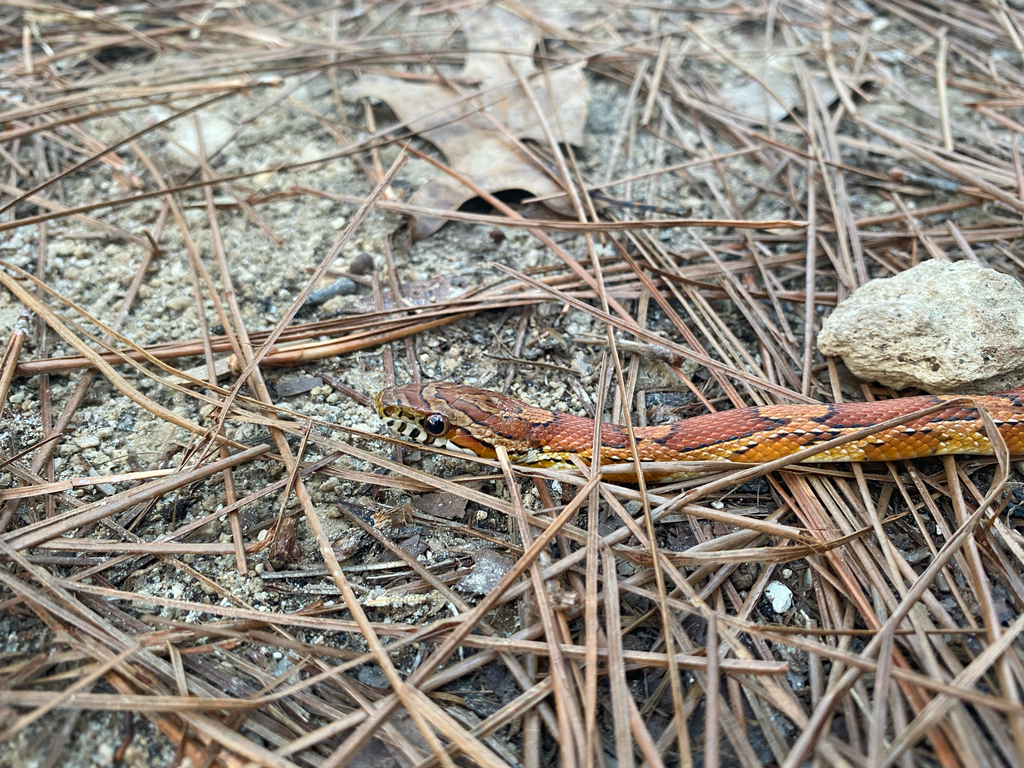
The corn snake, also called the red rat snake, is harmless, beautiful, and one of the most popular pet snakes in the world. In the wild it shares the southeastern United States with the venomous copperhead, and the two get confused because both can look orange, reddish, or tan with darker markings. The difference, once you see it, is hard to unsee: corn snakes wear bold blotches, while copperheads wear pinched hourglass crossbands. Here is how to read it.
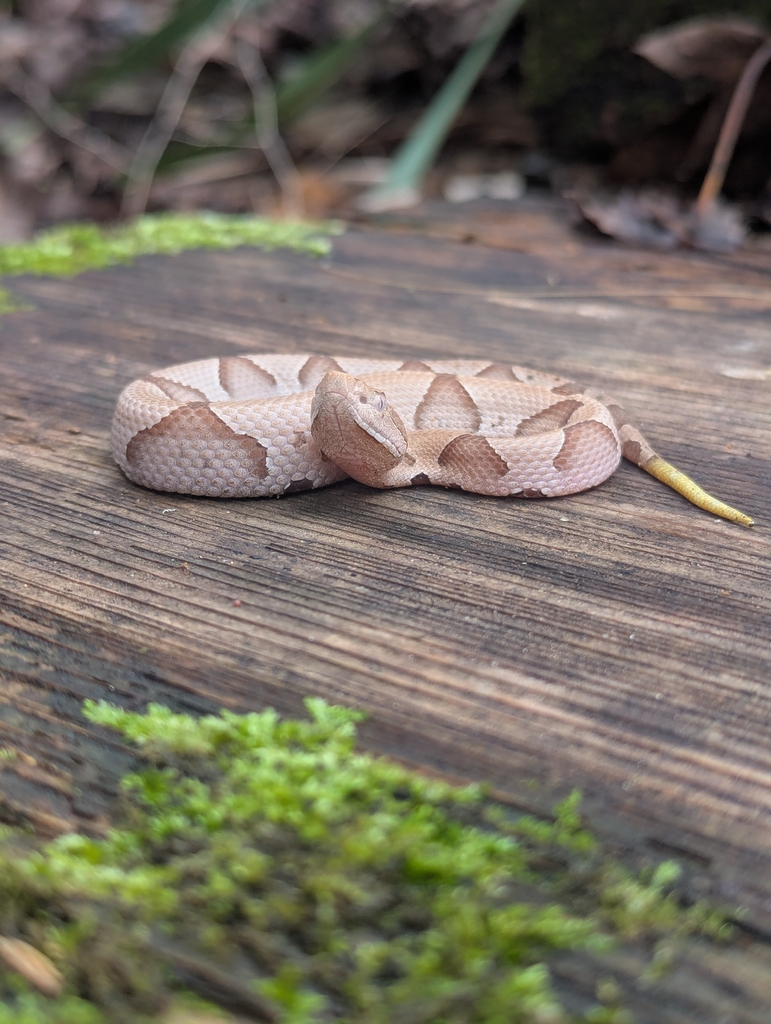
Pattern is the fastest, most reliable difference between these two, so start there.
Pattern: bold blotches vs. hourglass crossbands
A corn snake has large, rounded saddle blotches running down its back, usually deep orange to red, each one ringed with a thin black border, over an orange, tan, or gray background. The blotches sit on top of the back and do not wrap around as bands. A copperhead has dark hourglass crossbands that span the full width of the back, wide on the sides and pinched narrow across the spine. So the question to ask is whether the marks are blotches that sit on the back, or bands that cross it and pinch in the middle. Blotches mean corn snake. Pinched hourglass bands mean copperhead.
The belly is a giveaway
Corn snakes have a striking belly: a bold black-and-white checkerboard pattern that looks like the kernels on an ear of Indian corn, which is one story behind the name. Copperheads have a plainer, mottled belly without that crisp checkerboard. You will not always see the belly in the field, but in a clear photo it is a strong confirming clue.
Head and eyes
Copperheads are pit vipers, with a broad, triangular head clearly wider than the neck, vertical cat-like pupils, and a heat-sensing pit between the eye and nostril. Corn snakes have a narrower, more rounded head that flows into the neck, round pupils, and no facial pit. They are slim, agile constrictors built for climbing and chasing rodents. Never get close enough to study pupils on a live snake; use head details to confirm an ID from a photo taken at a safe distance.
Behavior and where you find them
Corn snakes and copperheads behave quite differently when you meet them:
- Corn snakes are fast, alert, and quick to flee or climb, and they often turn up around barns, fields, and abandoned buildings hunting mice.
- Copperheads rely on camouflage and tend to freeze in place, trusting their pattern, rather than racing away.
- A nervous corn snake may vibrate its tail and bluff, but its bite is harmless, while a copperhead is venomous and best left undisturbed.
Wild corn snakes vs. pet color morphs
Most photos you see online are of captive-bred corn snakes in selectively bred color morphs, which can throw off an identification of a wild one. Pet corn snakes come in amelanistic oranges, snows, and other patterns that look nothing like the animal you would meet outdoors. A wild corn snake in the Southeast usually shows the classic orange-to-gray body with red, black-edged saddle blotches and that checkerboard belly. If you are comparing a wild snake to a vivid pet photo and the colors do not match, do not let the mismatch convince you it must be a copperhead. Judge the structure of the markings, blotches versus pinched hourglass bands, rather than the exact hue.
Range overlap
Corn snakes and copperheads overlap broadly across the Southeast and lower Mid-Atlantic, so location alone will not decide an ID. It tells you which species are possible near you. Check what actually lives in your county on our state and county pages, and review the venomous versus nonvenomous traits so the differences stay clear.
Compare the species side by side
Read the full profiles for the red cornsnake and the eastern copperhead, see the country's other venomous snakes, or upload a photo to our identification tool. You can also test yourself with the snake ID quiz.
Corn snakes are harmless rodent hunters and gentle enough to be beloved pets, but the safe field rule never changes. Whether a snake turns out to be a corn snake or a copperhead, do not handle it, give it space, and let it move along on its own.