
Identification
Brown Snake vs. Copperhead: Why the Tiny DeKay's Snake Gets Mistaken for a Baby Copperhead
A brown snake vs copperhead guide. The tiny, harmless DeKay's brownsnake is often killed as a baby copperhead. Learn the size, pattern, and head differences.
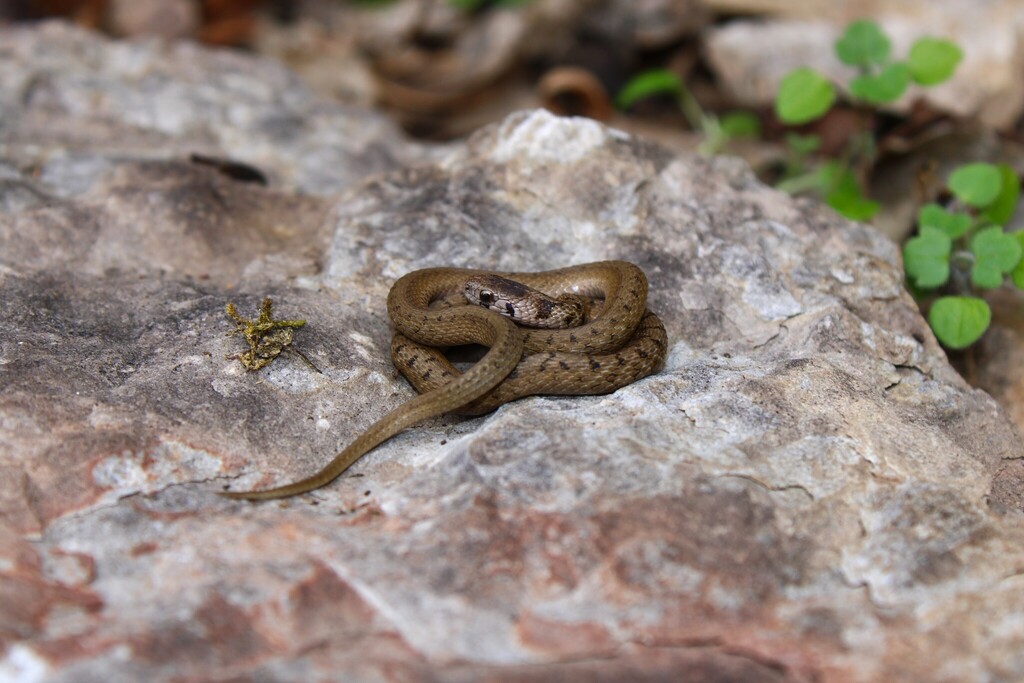
Few snakes are killed out of fear as often as the DeKay's brownsnake, a small, gentle, harmless species that lives in gardens, parks, and city lots across the eastern United States. Because it is brown and turns up where people garden, it gets mistaken for a baby copperhead and destroyed. The two are not hard to tell apart once you know what to look for. Size alone resolves most cases, and the pattern resolves the rest.
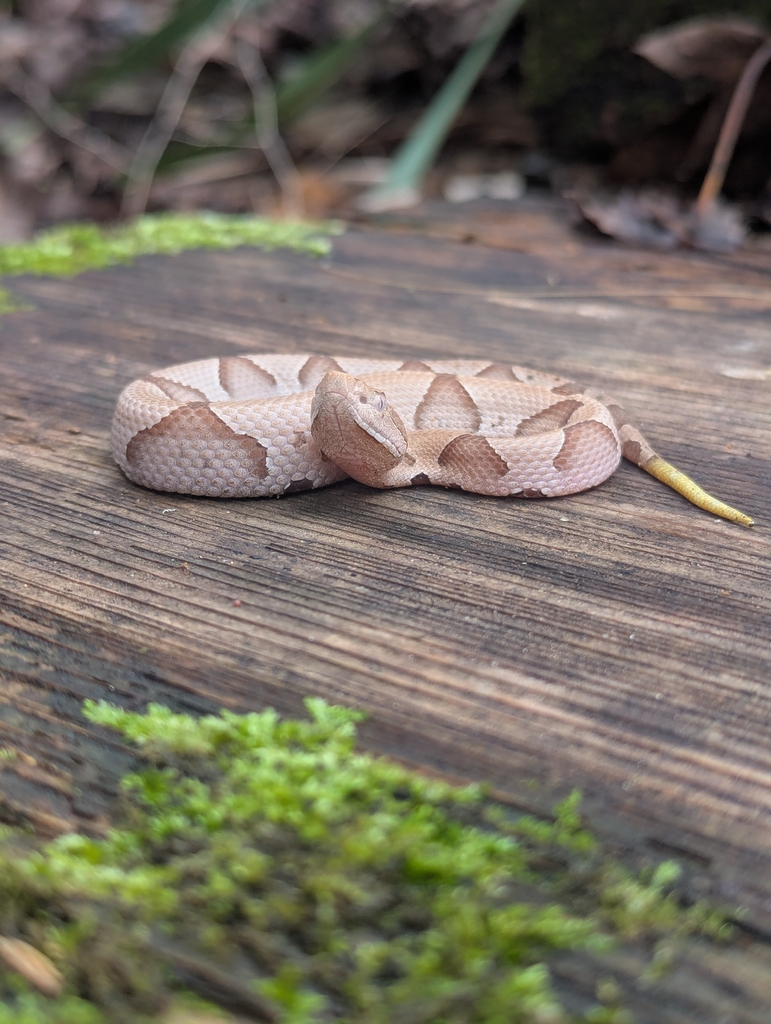
Start with how small the brownsnake really is, because the difference in size is dramatic.
Size: a pencil vs. a real snake
An adult DeKay's brownsnake is tiny, usually around nine to thirteen inches long and no thicker than a pencil. Even a newborn copperhead is heavier-bodied and obviously a small pit viper, not a worm-like little snake. Adult copperheads reach two to three feet and are thick and muscular. If the snake is short, slim, and would coil comfortably in your palm, you are almost certainly looking at a harmless brownsnake or a similar small species, not a copperhead.
Pattern: faint stripes and spots vs. hourglass bands
The brownsnake has a plain brown to grayish back with a faint lighter stripe down the center, flanked by two rows of small dark spots, and often a smudge of dark behind the eye. It does not have bold crossbands at all. A copperhead wears distinct dark hourglass crossbands, wide on the sides and pinched narrow across the spine, over a tan or coppery body. Bold hourglass bands point to copperhead. Faint paired spots and a quiet center stripe point to brownsnake.
Head and overall shape
Copperheads, as pit vipers, have a broad, triangular head clearly wider than the neck, vertical pupils, and a heat pit between the eye and nostril. The brownsnake has a small, rounded head that is barely wider than its slim neck, round pupils, and no facial pit. The brownsnake's whole profile reads as delicate and unremarkable, while even a young copperhead reads as a stocky, blunt-headed viper. Use head details to confirm from a clear photo, never on a live animal up close.
Behavior and lifestyle
Brownsnakes are secretive and mild. A few things they do that copperheads do not:
- They hide under leaf litter, logs, mulch, flat stones, and even sidewalk slabs, eating slugs, snails, and earthworms.
- They almost never bite, and when handled they tend to flatten slightly and musk rather than strike.
- They thrive in suburban and urban yards, which is exactly where worried gardeners encounter them.
Other small snakes people mistake for baby copperheads
The brownsnake is not the only harmless little snake that gets killed under the wrong name. Several small species turn up in yards and get labeled baby copperheads simply for being brown or banded. Common cases include young garter snakes, ringneck snakes, and worm snakes, none of which have the copperhead's hourglass crossbands. The reliable habit is the same every time: look for the pinched-in-the-middle bands and the stout, blunt-headed viper build, and if either is missing you are almost certainly looking at a harmless species. A clear photo settles nearly all of these from a safe distance.
Range overlap
DeKay's brownsnakes and copperheads share much of the eastern and central United States, so location will not settle the ID by itself. It tells you which species are possible. Check what actually lives in your county on our state and county pages, and brush up on telling a venomous snake from a harmless one.
Compare the species side by side
Read the full profiles for the DeKay's brownsnake and the eastern copperhead, see the country's venomous snakes, or upload a photo to our identification tool. You can also test yourself with the snake ID quiz.
The brownsnake is a harmless garden helper that quietly controls slugs and snails, and it is no threat to people, children, or pets. Still, the safe rule applies to every snake the same way: you never need to handle or identify one to stay safe. Give it room, never try to pick it up or kill it, and let it go about its day in the garden.