
Regional guide
Are Sea Snakes Venomous? Sea Snakes Explained
Are sea snakes venomous? Yes, they are highly venomous elapids, but they rarely bite people. Here is where they live and how they differ from eels.
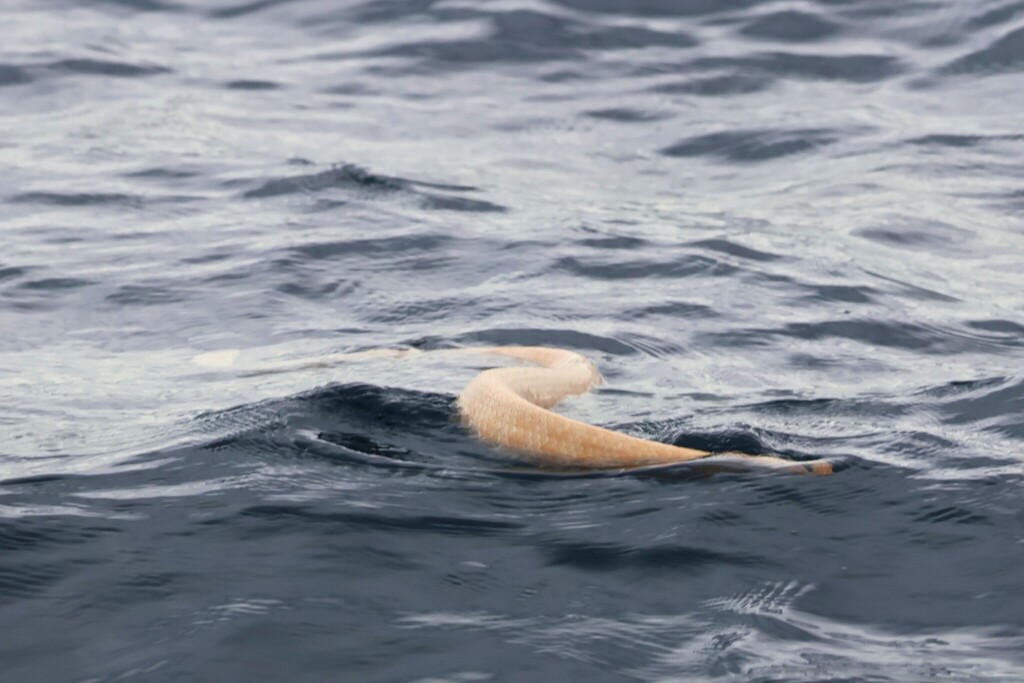
Sea snakes are among the most venomous snakes on Earth, yet they cause very few human deaths. The reason is simple: they are not aggressive, they have small mouths and short fangs, and they spend their lives away from where most people swim. This guide explains what sea snakes are, where they live, how to tell them from eels, and why their fearsome venom rarely poses a real threat.
Are sea snakes venomous?
Yes. Sea snakes are elapids, the same family as cobras, mambas, and coral snakes, and they carry potent neurotoxic venom. Drop for drop, several species rank among the most venomous snakes in the world. But venom potency and danger to people are not the same thing. Sea snakes are generally placid, deliver little venom in a defensive bite, and almost never bite swimmers or divers who leave them alone. Most bites that do happen involve fishers handling snakes caught in nets.
Where sea snakes live
Sea snakes live in the warm waters of the Indian and Pacific Oceans, from the east coast of Africa across to the islands of the Pacific and the coasts of Asia and Australia. They are most common in shallow tropical seas, coral reefs, and coastal mangroves. Crucially, there are no sea snakes in the Atlantic Ocean or the Caribbean, so swimmers there have nothing to worry about on this front.
How they differ from eels
Sea snakes are reptiles and eels are fish, and the differences are clear once you know what to look for. A sea snake breathes air and must surface, has scales rather than the slimy skin of an eel, and has a flattened, paddle-shaped tail for swimming. Eels have gills, fins along the body, and a tapering tail. If you see an animal in the sea coming up to breathe and bearing scales, it is a snake, not an eel.
- Sea snakes breathe air and surface; eels breathe water through gills
- Sea snakes have scales and a flat, paddle-like tail; eels have smooth skin and fins
- Sea snakes are reptiles in the elapid family; eels are fish
The yellow-bellied sea snake
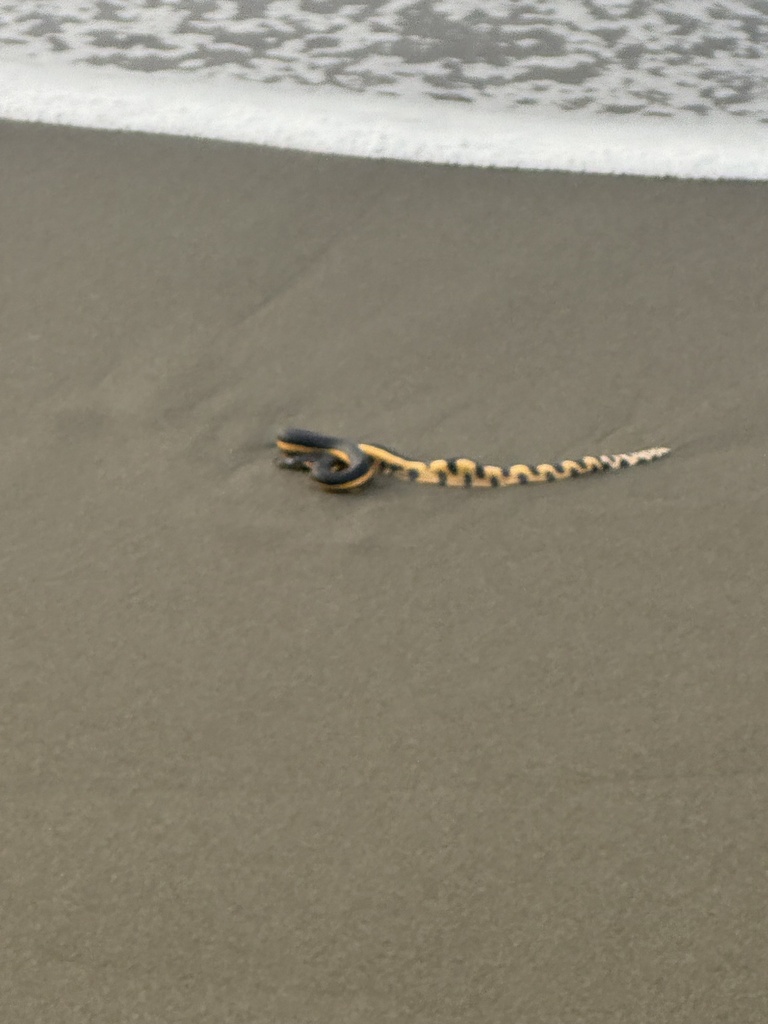
The most widespread species is the yellow-bellied sea snake, the only sea snake that lives entirely in the open ocean rather than near a coast. It is unmistakable, with a dark brown to black back, a bright yellow belly, and a paddle tail often patterned with spots. It drifts on ocean currents and has the largest range of any snake, occasionally washing up far from the tropics after storms. A stranded one on the sand is helpless and should never be picked up.
How sea snakes live
Sea snakes are extraordinarily well adapted to ocean life. Most give birth to live young in the water and never need to come ashore, and their flattened tails make them graceful swimmers. They have special glands to shed excess salt and can absorb some oxygen through their skin, which lets them stay submerged for long stretches between breaths. Their venom is so potent partly because their prey, mostly fish and eels, must be subdued instantly before it can dart away into the reef. A handful of relatives, the sea kraits, split their time between land and water and come ashore to rest and lay eggs, but the true sea snakes are creatures of the open sea.
Staying safe around sea snakes
If you snorkel or dive in the tropical Indo-Pacific, you may see a sea snake gliding by or resting on the reef. Watch, enjoy the sight, and do not touch or corner it. Give it a clear path to the surface, since it needs to breathe. The same rule applies to any sea snake stranded on a beach: leave it alone and keep children and dogs away. To explore the snakes of coastal countries, browse our country guides and read more about venom on the venomous snakes hub.
Sea snakes are a striking example of how a snake can be extraordinarily venomous and still pose almost no threat to ordinary people. Treat them with respect and distance, and a sea snake sighting becomes one of the more remarkable things you can witness in the water.