
Identification
Rat Snake vs. Black Racer: Sorting Out the Big Harmless Snakes
A rat snake vs black racer guide. Both are long, fast, and harmless. Here is how to tell them apart by color, scale texture, body build, and behavior.
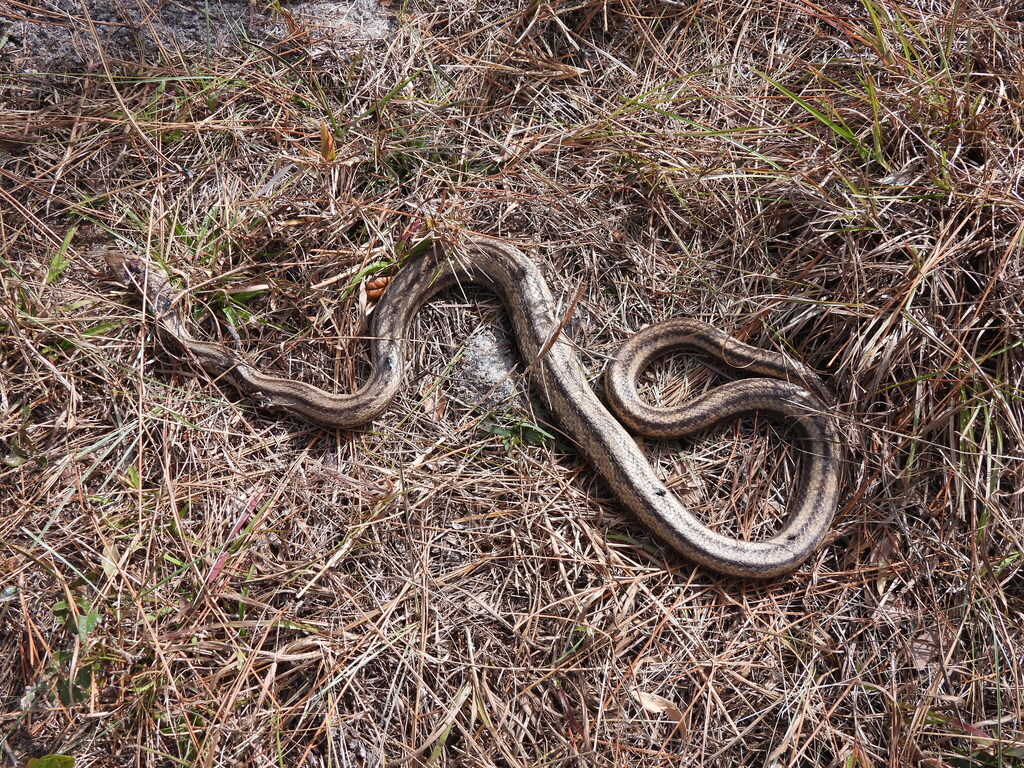
Rat snakes and black racers are two of the most common large snakes across the eastern United States, and people confuse them all the time. Both are long, both can be dark, and both can move surprisingly fast. They are also both completely harmless, non-venomous snakes that earn their keep by eating rodents. So this is an identification puzzle, not a danger call, and a handful of clues separate them.
Color and sheen
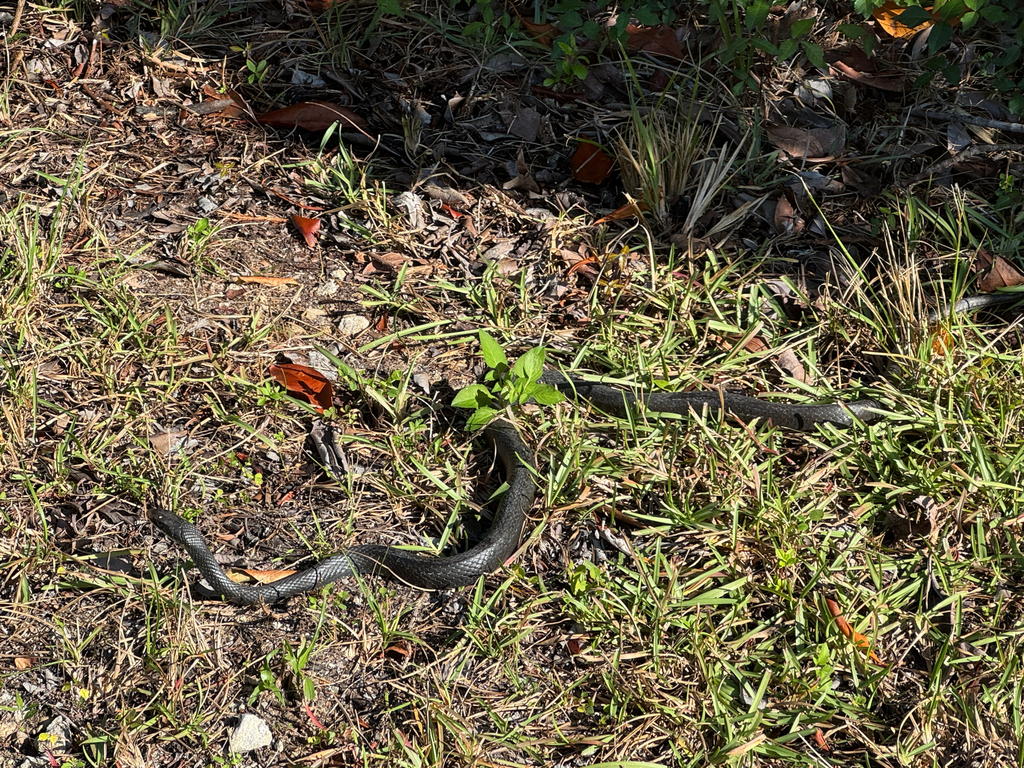
An adult black racer is uniformly satin-black or very dark gray over the back, usually with a white or pale chin and throat and a smooth, matte-to-glossy look. Rat snakes are more variable: depending on the species and region they can be black, gray, or brownish, and many show at least a faint blotched or patterned background even when they look dark overall. A racer is plainly one solid dark color; a rat snake often has hints of pattern, especially when sunlight catches it.
Scale texture is a strong tell
Run your eyes, not your hands, over the back. Rat snakes have weakly keeled scales, meaning each scale has a slight ridge down the middle, giving the body a slightly rough or dull texture. Racers have smooth scales, which look sleeker and shinier. From a clear photo in good light, a faint ridged texture leans rat snake, while a slick mirror-like back leans racer.
Body shape in cross-section
Rat snakes have a distinctive build often described as a loaf of bread, with flatter sides and a more squared-off belly that meets the back at an angle. Racers are rounder and more cylindrical, like a smooth cable. Watching how the snake's body sits against the ground can give this away: a racer looks tubular, while a rat snake looks a bit more angular along the lower sides.
Behavior and movement
Racers earn their name. They are nervous, alert, fast-moving snakes that often hold their heads up off the ground to look around, and they bolt at high speed when disturbed. Rat snakes are generally calmer and more deliberate; they are excellent climbers and are often found up in trees, barns, and rafters hunting birds and eggs. A snake that freezes, then explodes away in a flat-out dash is usually a racer; one that climbs steadily or holds still and slowly moves off is often a rat snake.
Quick comparison
From a safe distance or a clear photo, run through these:
- Color: solid satin-black with a pale chin suggests a racer; variable dark with faint pattern suggests a rat snake.
- Scales: smooth and shiny leans racer; weakly keeled and slightly ridged leans rat snake.
- Body shape: round and cylindrical fits a racer; flatter-sided, loaf-shaped fits a rat snake.
- Behavior: fast, jumpy, head-up bolting fits a racer; calm, climbing, deliberate fits a rat snake.
Juveniles can fool you
Young rat snakes and young racers look very different from the adults, which trips people up. Juvenile rat snakes are strongly blotched, gray with dark saddles down the back, looking nothing like a solid black adult and sometimes mistaken for a young rattlesnake or copperhead. Juvenile racers are also blotched and gray when small, then darken to solid black as they mature. Because both start out patterned, a blotched gray snake of either kind is best identified by the same clues used for adults: scale texture, body shape, and how it behaves.
Where you find them
Habitat offers another hint. Rat snakes are superb climbers and are often found well off the ground, in trees, barns, attics, and along rafters, hunting birds, eggs, and rodents. Racers are ground hunters that patrol open fields, brushy edges, and roadsides at speed, sometimes with the head raised to scan ahead. A large dark snake high up in a structure or tree is far more likely to be a rat snake than a racer.
Range and what lives near you
Rat snakes and racers overlap across much of the eastern and central United States, so it pays to know which species are local to you. Check what actually lives in your county with the state and county browser and browse the wider species library to see the dark snakes in your region.
Confirm it the easy way
Read the full profiles for the eastern ratsnake and the North American racer, or upload a clear photo to our identification tool. For the bigger picture on which snakes are dangerous and which are not, see the venomous snakes guide and test yourself with the snake ID quiz.
Both the rat snake and the black racer are harmless, valuable rodent hunters that most yards are lucky to have. You never need to handle a snake to identify it. Give either one room and it will move along on its own, fast in the racer's case, at a more leisurely pace in the rat snake's.