
Identification
Cottonmouth vs. Watersnake: How to Tell Them Apart
The most common dangerous mix-up in the eastern U.S. Here is how to tell a venomous cottonmouth from a harmless watersnake using calm, reliable field marks.
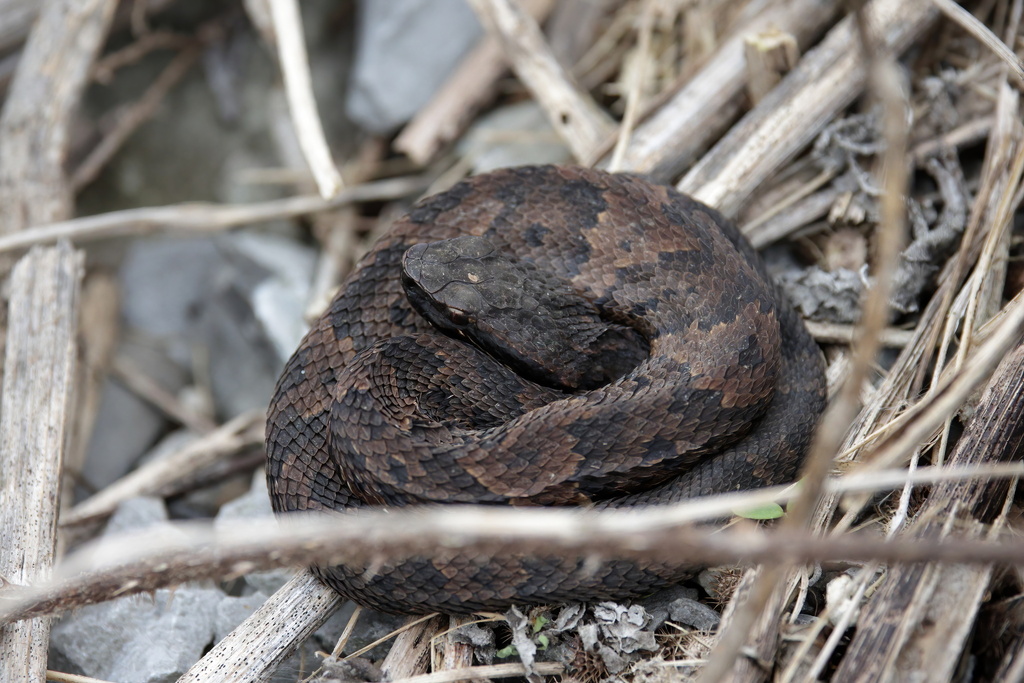
Across the southeastern United States, no two snakes get confused more often than the northern cottonmouth, a venomous pit viper, and the common watersnake, which is harmless. Both swim, both bask near water, and both will flatten and posture when cornered. Most watersnakes are killed every year by people who mistook them for cottonmouths. The good news is that a few steady observations, made from a safe distance, sort them out reliably.
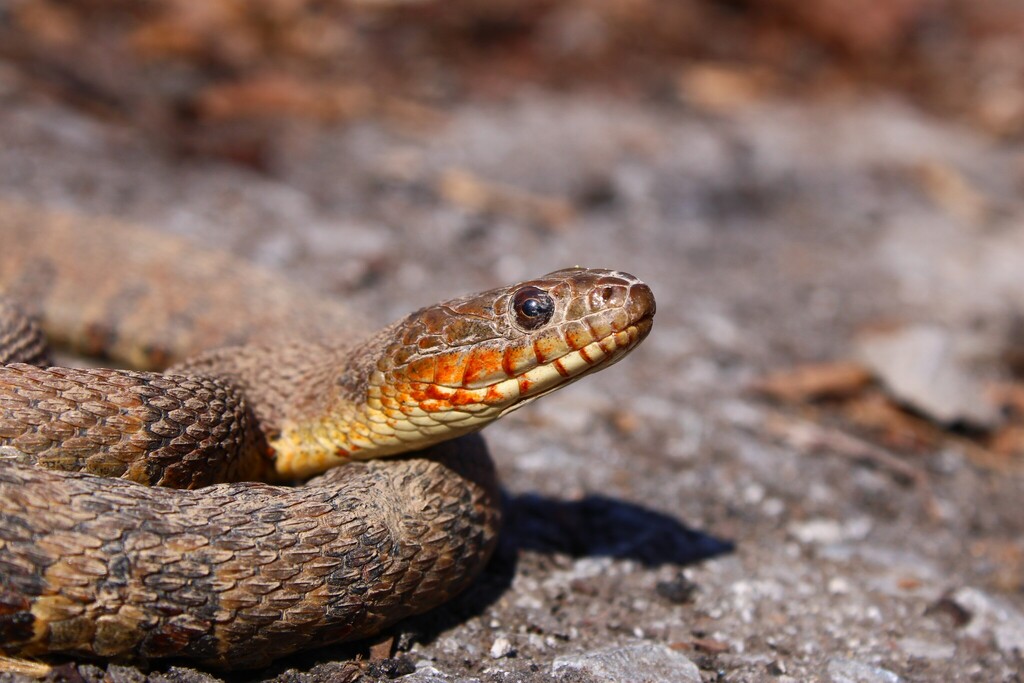
Look at the head and body shape
The cottonmouth has a broad, blocky, almost triangular head that is clearly wider than its neck, and a thick, heavy body for its length. Watersnakes have a more slender, tapered head that blends into the neck, and a leaner body. Be careful with this one rule alone: watersnakes can flatten their heads when threatened to look more triangular, so use head shape as one clue among several, not the whole answer.
Watch how it swims
This is one of the most useful tells. A cottonmouth tends to swim high, with most of its body riding on top of the water and its head held up. A watersnake usually swims with its body mostly submerged, only the head and a little of the neck showing. It is not a perfect rule, but combined with the others it helps a lot.
The eyes and the facial pit
Cottonmouths, like all U.S. pit vipers, have vertical, cat-like pupils and a heat-sensing pit between the eye and the nostril. Watersnakes have round pupils and no facial pit. You should never get close enough to study a snake's pupils in person, so treat this as a rule for confirming an identification from a clear photo taken at distance, not for a live encounter.
Behavior when cornered
A cornered cottonmouth often holds its ground, coils, and gapes its mouth wide to show the white, cottony lining that gives it its name. Watersnakes are more likely to flee into the water, though a trapped one will bite hard and musk. Gaping the white mouth is a strong cottonmouth sign, but absence of it does not prove a snake is harmless.
Range matters
Cottonmouths live in the Southeast and lower Midwest. Watersnakes are far more widespread. If you are north or west of cottonmouth range, a snake in the water is almost certainly a watersnake or another harmless species. Check what actually lives in your county before assuming the worst by browsing your state and county pages.
Compare the species side by side
Read the full profiles for the northern cottonmouth and the common watersnake, or upload a photo to our identification tool. You can also test yourself with the snake ID quiz.
The simplest safe rule of all: you do not need to identify a snake to stay safe from it. Give any snake near water a wide berth, and it will almost always leave on its own.